 Pin It
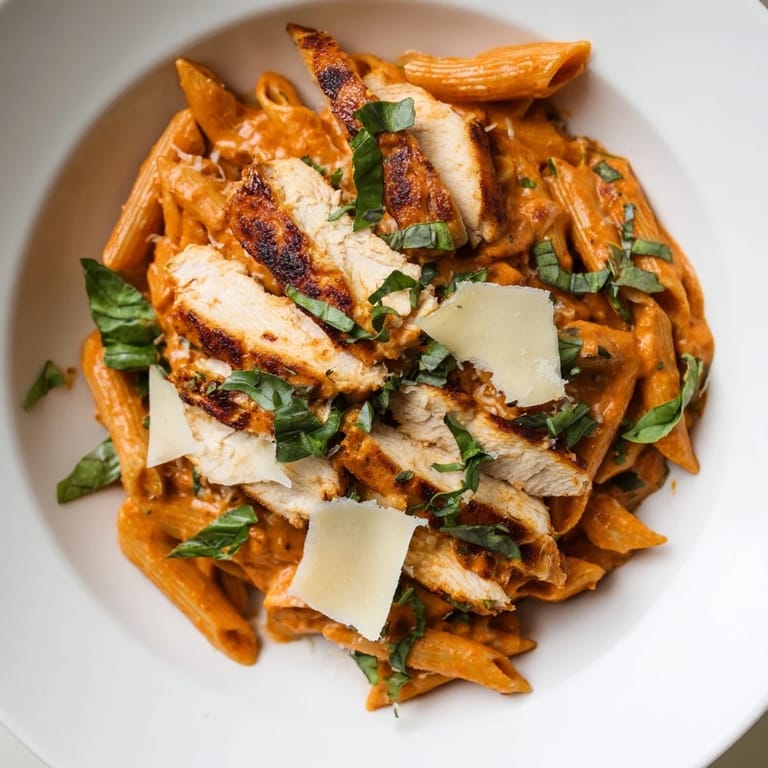
 There's something about a weeknight when you don't want to think too hard but still want to feel like you've made something real. That's when this creamy tomato basil chicken pasta finds its way to my table. I stumbled into this version while cleaning out my pantry one evening—heavy cream left over from the weekend, a can of tomatoes, some basil I'd almost forgotten about—and realized I could build something restaurant-worthy in under forty minutes. It became the dish I make when I want comfort without the fuss, when I want people to linger at the table just a little longer.
I'll never forget the first time I made this for my partner's parents. I was nervous about impressing them, so I kept stirring the sauce and watching it anxiously, convinced something would go wrong. Instead, the kitchen filled with this incredible smell—garlic and basil and tomato cream—and by the time I plated it, everyone was already hovering. That moment when someone takes a bite and just goes quiet for a second? That's when I knew this recipe had staying power.
Ingredients
- Penne pasta, 12 oz: Use good quality dried pasta that holds sauce well; reserve that starchy cooking water because it's your secret weapon for silky sauce.
- Boneless, skinless chicken breasts, 1 lb: Pound them to even thickness before cooking so they finish at the same time and stay juicy.
- Salt and black pepper: Season the chicken generously before it hits the pan—this is when most of the flavor sticks.
- Olive oil, 1 tbsp: Use a heat-safe oil for the high-heat sear; don't be shy about getting the pan properly hot.
- Unsalted butter, 2 tbsp: The foundation of your sauce base; better to control salt yourself than battle pre-salted butter.
- Yellow onion, 1 medium: Finely chop it so it melts into the sauce rather than remaining in chunks.
- Garlic, 3 cloves minced: Mince finely and watch it carefully in the butter so it turns fragrant and golden, not burnt and bitter.
- Red pepper flakes, 1/2 tsp: Optional but worth it; they add subtle heat that makes people wonder what they're tasting.
- Crushed tomatoes, 14 oz can: The backbone of the sauce; the quality of the can matters more than you'd think.
- Heavy cream, 1/2 cup: This is what makes it creamy without being heavy; don't skip it or substitute it lightly.
- Parmesan cheese, 1/3 cup freshly grated: Grate it yourself from a block; pre-grated cheese has anti-caking agents that affect the texture.
- Fresh basil, 1/2 cup chopped: Add it in two stages—some cooked into the sauce, some fresh at the end for brightness.
Tired of Takeout? 🥡
Get 10 meals you can make faster than delivery arrives. Seriously.
One email. No spam. Unsubscribe anytime.
Instructions
- Get your pasta water ready:
- Salt your pasta water generously until it tastes like the sea. Cook the penne until just barely al dente—it'll continue cooking when it hits the sauce, so resist the urge to cook it soft.
- Prep and sear the chicken:
- While pasta cooks, season both sides of the chicken with salt and pepper, then let it sit for a minute so the seasoning adheres. Heat your skillet until it's genuinely hot, then sear the chicken for 5–6 minutes per side until the exterior is golden and the center reaches 165°F inside.
- Build your sauce base:
- Slice the rested chicken and set it aside. In the same unwashed skillet, melt butter with the chopped onion, letting it soften and turn translucent over medium heat.
- Layer in the aromatics:
- Add minced garlic and red pepper flakes to the soft onion, stirring constantly for just one minute until the kitchen smells incredible and the garlic turns golden.
- Add the tomatoes:
- Pour in the crushed tomatoes and let them simmer gently for about 5 minutes, which mellows the acidity and lets the flavors settle into each other.
- Create the cream sauce:
- Lower the heat and pour in the heavy cream slowly, stirring as you go to build a silky, cohesive sauce that coats the back of a spoon.
- Finish with cheese and herbs:
- Stir in the grated parmesan and half your fresh basil, letting the heat melt the cheese without cooking it so hard it gets grainy. Taste and adjust salt and pepper until it sings.
- Bring it all together:
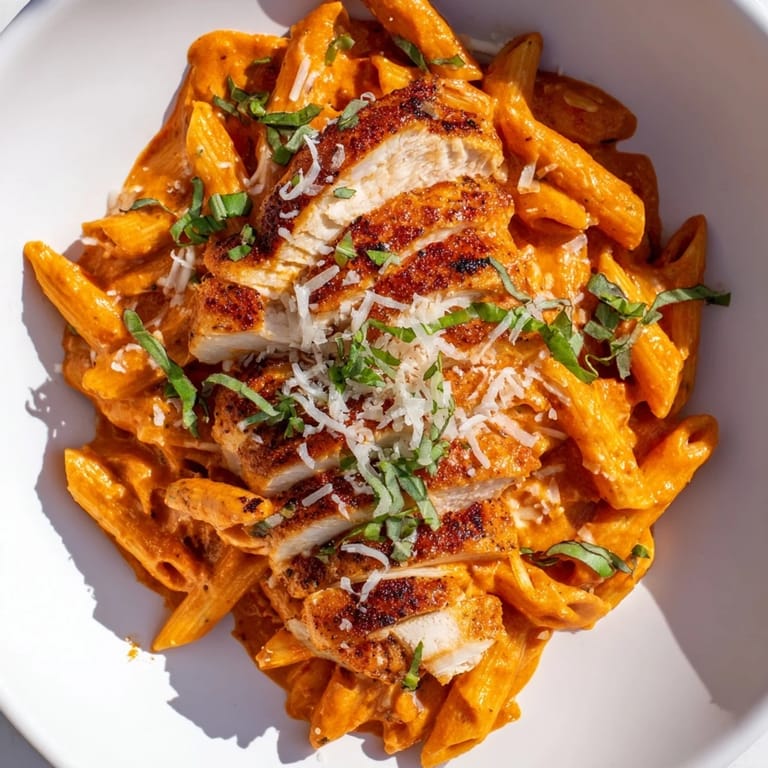
- Add your sliced chicken and drained pasta to the sauce, tossing gently and adding reserved pasta water a splash at a time until you reach that silky, clingy consistency where the sauce hugs every piece.
 Pin It
 There's a particular kind of quiet that happens at dinner when people stop talking because the food is genuinely good. This dish has created that quiet more times than I can count—the kind of moment that reminds you why cooking for people matters at all.
Why This Sauce Works
The magic here is balance. Tomato brings acidity and depth, cream brings richness, and basil brings brightness—together they stop each other from being too much of any one thing. When I first started making cream sauces, I thought more cream meant better, but I learned that the tomato actually needs room to sing. The ratio here lets each ingredient be heard without drowning out the others, and that's what keeps people coming back for seconds.
Variations That Actually Work
I love a recipe that stays true to itself but bends with what you have on hand. You can trade the basil for fresh spinach if that's what's in your fridge—just add it at the very end so it stays bright green. Sun-dried tomatoes add this unexpected sweetness if you want to shift the flavor profile. Sometimes I'll add a splash of white wine after the garlic cooks, letting it bubble down before the cream goes in, and it adds this subtle sophistication that feels special without being complicated. Roasted red peppers stirred in at the very end also work beautifully, adding a soft sweetness that plays nicely with the tomato.
The Details That Change Everything
Small choices add up to big flavor. Grating your own parmesan genuinely matters because it melts better and tastes sharper than the pre-grated kind—I learned this the hard way by making this sauce ten times before investing in a block of real parmigiano-reggiano. Chopping your basil by hand rather than in a food processor keeps it from browning and losing its fresh taste. Let your chicken rest after cooking so it stays tender when you slice it; rushing this step means stringy, tough meat. The pasta water seems humble until you realize it's the invisible ingredient that makes everything work together.
- Always taste before plating because salt is the final adjustment that makes flavors pop.
- If your sauce seems too thick when finished, a splash of pasta water fixes it instantly without diluting flavor.
- Serve immediately while everything is still steaming—this dish loves eating straight away.
 Pin It
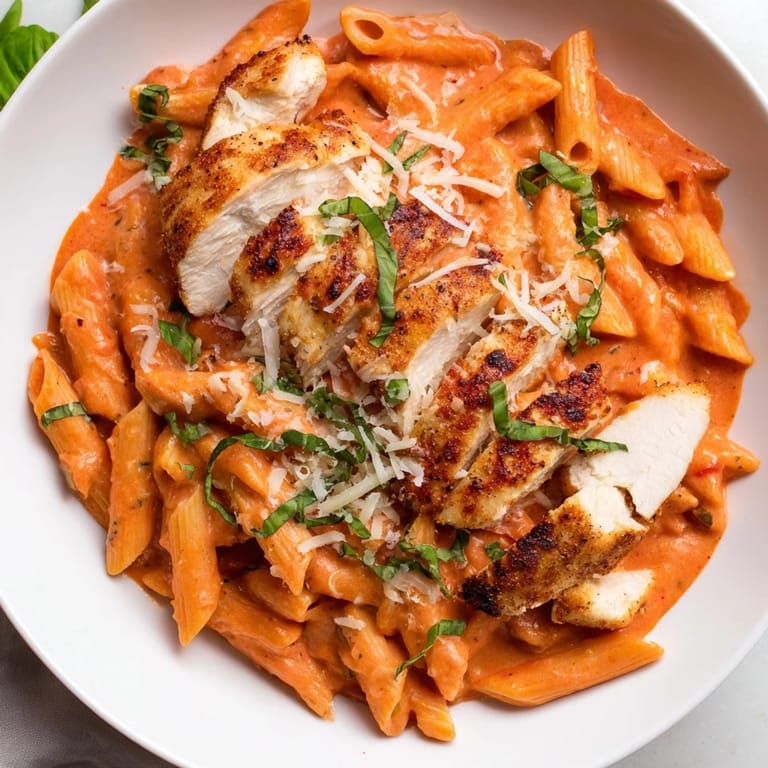
 This is the kind of dish that makes a regular Tuesday feel like something worth celebrating. It's simple enough that you won't dread making it, but thoughtful enough that it feels like actual cooking.
Recipe FAQs
- → Can I use a different pasta type?
Yes, penne works best, but rigatoni or fusilli would also hold the sauce well.
- → How do I ensure chicken stays tender?
Cook the chicken over medium-high heat until golden and allow it to rest before slicing to retain juices.
- → Is fresh basil essential?
Fresh basil adds brightness, but dried basil can be used in a pinch, added earlier in cooking.
- → Can this be made spicier?
Yes, increase red pepper flakes or add a pinch of cayenne for more heat.
- → How to keep the sauce creamy without curdling?
Simmer the cream sauce gently and avoid high heat once cream is added to maintain smooth texture.