 Pin It
 There's something about the smell of garlic hitting hot olive oil that makes you pause mid-conversation in the kitchen. I discovered this soup on a chilly afternoon when my pantry felt sparse but somehow still full of possibility—a handful of vegetables, dried herbs from last summer, and the kind of curiosity that leads to something genuinely good. What started as a way to use up vegetables became the soup I now make when I want to feel grounded and fed without fuss.
My neighbor once said the aroma of this soup drifting through the hallway made her reconsider cooking altogether. I ladled her a bowl, and she sat at my kitchen counter with the kind of quiet gratitude that said more than words could. That's when I understood this wasn't just a recipe—it was an invitation to slow down.
Ingredients
- Olive oil (2 tablespoons): The foundation of everything Mediterranean—don't skimp on quality here, as it carries the flavor from the very first moment.
- Onion and garlic (1 medium onion, 2 cloves): These two are your aromatic base; mincing the garlic fine means it melts into the oil almost immediately.
- Carrots and celery (2 medium carrots, 2 stalks): They provide sweetness and structure, softening into the broth while maintaining just enough texture.
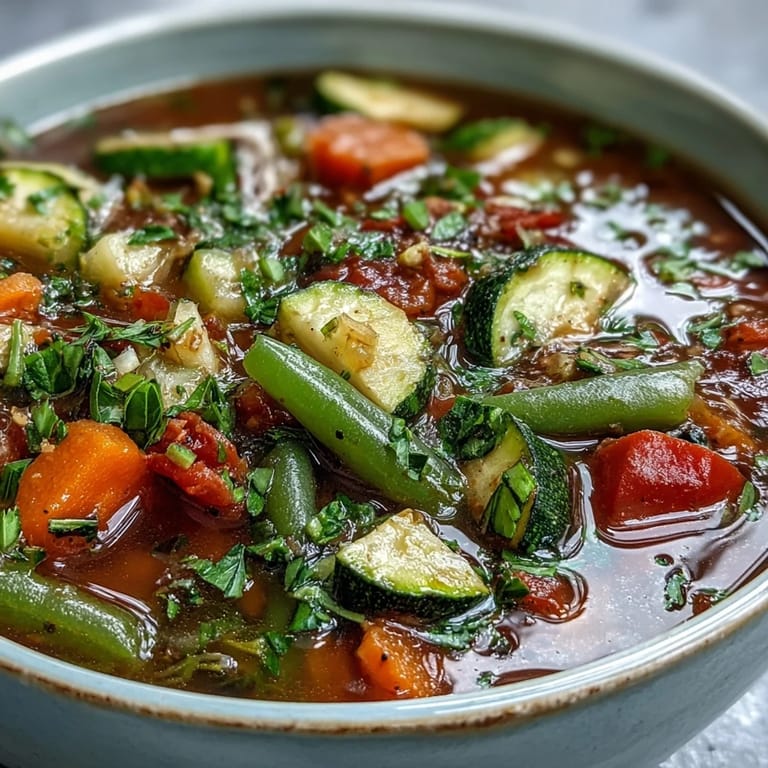
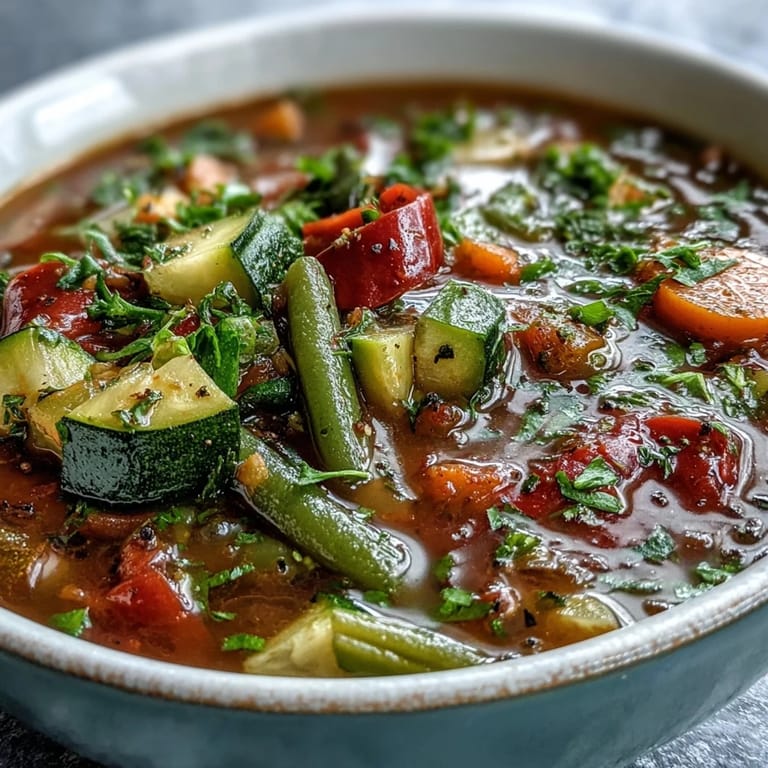
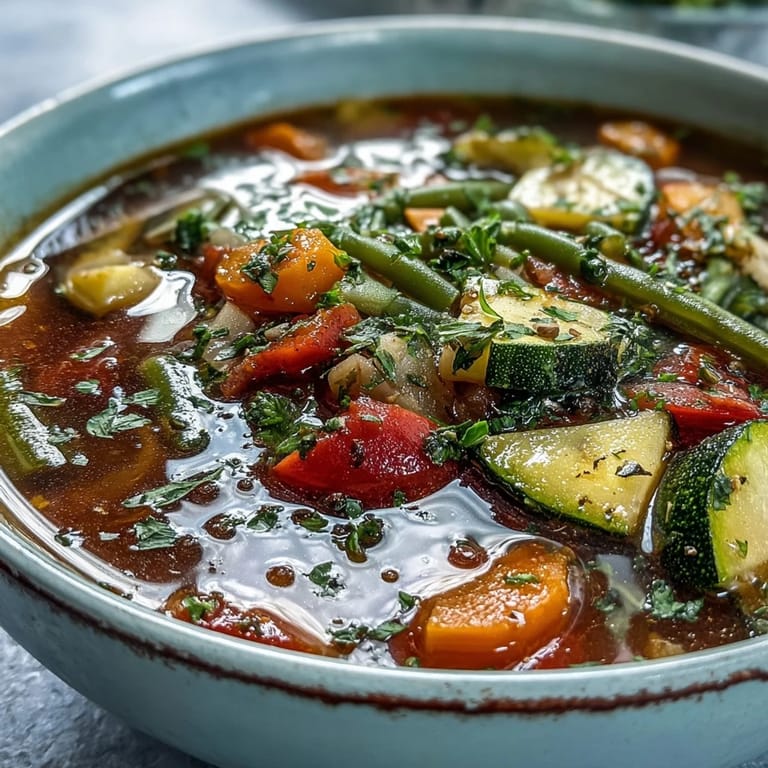
- Zucchini, bell pepper, and green beans (1 medium zucchini, 1 red pepper, 1 cup beans): These vegetables bring color, freshness, and a light summery note that keeps the soup from feeling heavy.
- Diced tomatoes (14 oz can with juices): The canned version works beautifully here—the acidity and umami deepen everything around it.
- Vegetable broth (4 cups): Use a good-quality broth; it's the canvas everything else paints on.
- Potato (1 medium, peeled and diced): This adds earthiness and a subtle creaminess without any cream whatsoever.
- Baby spinach (2 cups): Add it at the very end so it retains brightness and tender texture.
- Dried oregano, basil, thyme, and rosemary (1 teaspoon, 1 teaspoon, 1/2 teaspoon, 1/2 teaspoon): These herbs are the voice of the soup; their dried form concentrates flavor in ways fresh herbs can't match here.
- Bay leaf (1): A quiet whisper of sophistication that you must remember to fish out before serving.
- Salt and black pepper (to taste): Always taste at the end; the broth already carries salt, so adjust gently.
- Cannellini beans, fresh parsley, and Parmesan (optional but encouraged): The beans add protein and substance, while parsley and cheese become your finishing touch.
Tired of Takeout? 🥡
Get 10 meals you can make faster than delivery arrives. Seriously.
One email. No spam. Unsubscribe anytime.
Instructions
- Start with the aromatics:
- Heat olive oil in a large pot over medium heat, then add diced onion and minced garlic. Watch them sauté for 2 to 3 minutes until they turn translucent and fragrant—this is when you know the foundation is set. The garlic should soften but not brown, as any bitterness would echo through the finished soup.
- Build the vegetable layer:
- Stir in carrots, celery, zucchini, red bell pepper, and green beans, then cook for 5 to 6 minutes while stirring occasionally. You're looking for the vegetables to begin releasing their moisture and becoming slightly tender at the edges—this is when their flavor starts to deepen.
- Combine the liquids and seasonings:
- Add canned tomatoes with their juices, vegetable broth, and diced potato, then sprinkle in oregano, basil, thyme, rosemary, bay leaf, salt, and pepper. Stir thoroughly so the herbs distribute evenly and wake up in the warmth.
- Let it simmer gently:
- Bring the soup to a boil, then immediately lower the heat and let it simmer uncovered for 20 to 25 minutes until vegetables are fork-tender. The uncovered simmer allows flavors to concentrate rather than steam away.
- Add beans if using:
- Stir in drained cannellini beans and simmer for another 5 minutes to warm them through. They'll absorb some of the broth's flavor and add a satisfying earthiness.
- Finish with fresh spinach:
- Remove the bay leaf from the pot, then stir in spinach leaves and cook for just 1 to 2 minutes until wilted. The residual heat is enough to soften them while keeping that fresh, bright character intact.
- Taste and adjust:
- Sample the soup and adjust seasoning as needed—sometimes it wants a whisper more of salt, sometimes a grind of pepper. Trust your palate here; you know what makes you happy.
 Pin It
 There was an evening when I made this soup for someone going through a rough time, and they sat at my table for longer than planned, just eating and talking. Food has this quiet power to say 'I see you' without needing words.
When to Add Pasta or Extra Heartiness
If you want something more substantial, small pasta shapes like ditalini or orzo can be stirred in about 10 minutes before the soup finishes simmering. The pasta absorbs broth and adds a comforting density without overwhelming the delicate vegetable flavors. I usually add it after the initial 20-minute simmer, which gives it just enough time to cook through while staying al dente.
Freezing and Make-Ahead Strategy
This soup is one of those reliable dishes that actually improves after a day in the refrigerator—the flavors settle and deepen. To freeze, let it cool completely, then store in airtight containers for up to three months. When you're ready to eat it, thaw overnight in the refrigerator and reheat gently on the stovetop, stirring occasionally to ensure even warming.
Serving and Customization Ideas
Serve this soup in wide bowls to showcase the vegetables, and let everyone at the table add their own garnishes so it feels personal. A drizzle of good olive oil on top, a handful of fresh parsley, and a scatter of Parmesan transform the simple into something restaurant-worthy. The beauty is that you can make it dairy-free by skipping the cheese, or add crusty bread on the side for soaking up every last drop.
- A squeeze of fresh lemon juice wakes everything up right before serving.
- Red pepper flakes add a gentle heat if you want a little kick without overpowering the herbs.
- A dollop of pesto swirled in at the end brings brightness and a different kind of freshness than the parsley alone.
 Pin It
 This soup reminds me that simple ingredients in the right proportion become something memorable. Make it when you need comfort, share it when you want to show care, and adjust it fearlessly each time you cook.
Recipe FAQs
- → Can I make this soup ahead of time?
Absolutely. This soup actually improves after sitting overnight as the flavors have time to meld together. Store in an airtight container in the refrigerator for up to 4 days. Reheat gently on the stovetetop, adding a splash of broth if needed to adjust consistency.
- → Can I use fresh herbs instead of dried?
Yes, fresh herbs work beautifully. Use three times the amount of fresh herbs compared to dried. Add delicate herbs like basil and parsley near the end of cooking to preserve their bright flavor, while sturdier herbs like rosemary and thyme can be added earlier.
- → Is this soup freezer-friendly?
This soup freezes exceptionally well for up to 3 months. Cool completely before transferring to freezer-safe containers, leaving some space for expansion. Thaw overnight in the refrigerator before reheating. Note that the texture of potatoes may soften slightly after freezing.
- → What can I serve with this soup?
Crusty bread or garlic knots are perfect for soaking up the flavorful broth. A simple green salad with vinaigrette provides a fresh contrast. For a more substantial meal, serve alongside a grilled cheese sandwich or bruschetta topped with diced tomatoes and basil.
- → How can I add more protein to make it a complete meal?
Add drained cannellini or kidney beans during the last 10 minutes of cooking. Alternatively, stir in small pasta shapes like ditalini or orzo. For a non-vegetarian version, brown some Italian sausage or ground turkey with the onions in step one.
- → What vegetables can I substitute based on what I have?
This soup is very flexible. Swap zucchini for yellow summer squash, use kale or chard instead of spinach, or add diced butternut squash for sweetness. Other great additions include chopped kale, leeks, fennel, or even chopped cabbage in winter months.