 Pin It
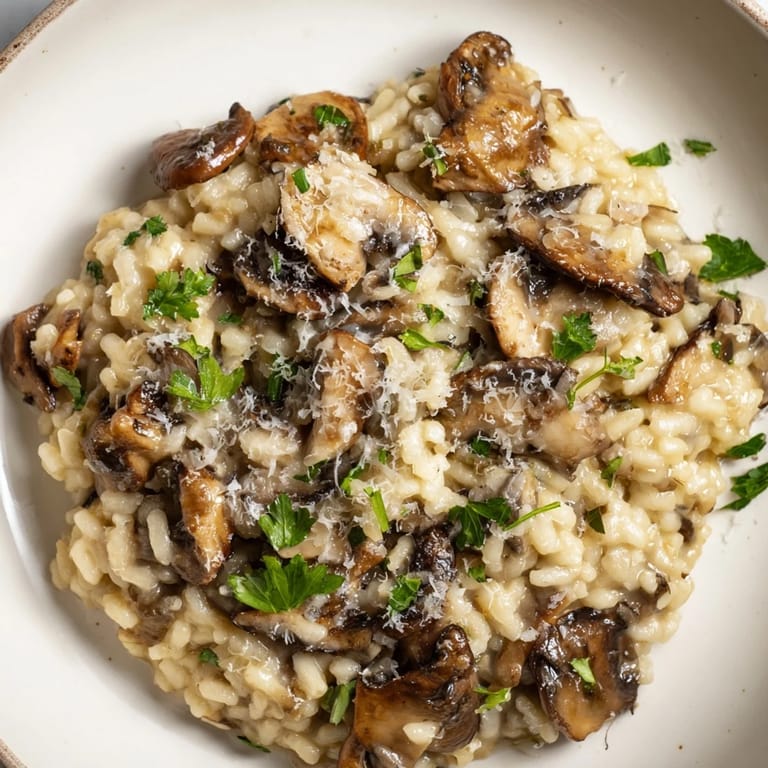
 There's a particular Tuesday evening I still think about, when my roommate came home complaining about missing Italian restaurants, and I realized I had everything for risotto sitting in my pantry. I'd been intimidated by the technique for years, convinced it required some mysterious Italian nonna magic, but that night I discovered it was actually just patience and attention. The smell of garlic and wine hitting the hot pan, the gradual transformation of rice from individual grains to something silky and alive—it felt less like following a recipe and more like having a conversation with the food. Thirty minutes later, watching her face when she tasted it convinced me that risotto deserved a permanent spot in my cooking rotation.
I made this for a dinner party where someone mentioned being tired of the same old pasta dishes, and the risotto became the unexpected star of the evening. People actually paused mid-conversation to compliment it, which made me realize how often we settle for ordinary when something genuinely special takes just a little more intention. That night, I learned that the quiet rhythm of stirring risotto isn't a chore—it's the moment where you disappear from the noise around you and create something tangible with your hands.
Ingredients
- Arborio rice (1 ½ cups): This short-grain rice is essential because it releases starch as it cooks, creating that creamy texture without cream. Don't substitute regular long-grain rice or you'll end up with something mushy or gritty instead.
- Cremini or button mushrooms (12 oz), sliced: The earthiness of mushrooms grounds the dish beautifully. Cremini have slightly deeper flavor than whites, but either works. Slice them thickly so they keep some texture through cooking.
- Olive oil (1 tbsp) and unsalted butter (1 tbsp): The combination gives the mushrooms a golden, nutty sear that makes them taste almost meaty.
- Yellow onion (1 medium), finely chopped: Finely chopped means it dissolves into the rice rather than appearing as chunks, creating a silky base.
- Garlic (2 cloves), minced: Added after the onion so it doesn't burn and turn bitter, it adds a gentle warmth rather than overpowering heat.
- Vegetable broth (4 cups), kept warm: Warm broth absorbs into the rice more evenly than cold. If your broth is cold when you start, it will slow the cooking dramatically.
- Dry white wine (½ cup): The acid and alcohol flavor marry beautifully with the mushrooms and cheese. A Pinot Grigio or Sauvignon Blanc works perfectly.
- Parmesan cheese (½ cup), grated fresh: Pre-grated cheese contains anti-caking agents that can make the risotto gritty. Fresh-grated melts smoothly and tastes infinitely better.
- Unsalted butter (2 tbsp): Added at the end with the cheese for richness and to help the risotto become glossy and creamy.
- Salt and black pepper (½ tsp and ¼ tsp): Taste as you go because the Parmesan adds salt, and you might need less than the recipe suggests.
- Fresh parsley (2 tbsp), chopped: Optional, but it adds a fresh color and slightly herbaceous brightness to cut through the richness.
Tired of Takeout? 🥡
Get 10 meals you can make faster than delivery arrives. Seriously.
One email. No spam. Unsubscribe anytime.
Instructions
- Sear the mushrooms until they're golden:
- Heat the oil and butter in a large skillet over medium heat until the butter foams. Add the sliced mushrooms and let them cook undisturbed for a minute or two so they develop color, then stir occasionally until they're deep golden and any liquid they release has evaporated. This takes about 6 to 8 minutes. The mushrooms will shrink noticeably and smell almost caramelized—that's exactly right. Set them aside on a plate.
- Build the aromatic base:
- In the same pan, add the chopped onion and cook gently until it becomes translucent and soft, about 3 minutes. You're not trying to color it, just make it tender. Add the minced garlic and cook for another minute, stirring constantly so it becomes fragrant without turning brown.
- Toast the rice:
- Stir the Arborio rice into the onion and garlic, coating each grain with the butter and oil. Cook, stirring frequently, until the edges of the grains become translucent and the center stays opaque, about 2 minutes. You'll notice the rice smells slightly nutty when it's ready. This step is crucial because it seals the outside of the grain so it releases starch slowly rather than all at once.
- Add the wine and let it absorb:
- Pour in the white wine carefully—it will sizzle and steam slightly. Stir constantly until the rice has absorbed almost all the liquid, which takes about 2 to 3 minutes. The wine adds brightness and a subtle complexity that makes you taste something but can't quite identify what.
- Begin the gradual broth addition:
- Pour a ladle of warm broth into the rice—about 1 cup at first. Stir frequently but not obsessively, letting the rice gradually absorb the liquid. When you can drag a wooden spoon through the rice and it briefly holds a line before flowing back together, it's time for the next ladle of broth. Add another ladle and repeat this process, waiting until most of each addition is absorbed before adding more. This takes about 18 to 20 minutes total and is the meditative heart of risotto—you're essentially coaxing the rice into releasing starch at a steady pace.
- Finish with the final flourishes:
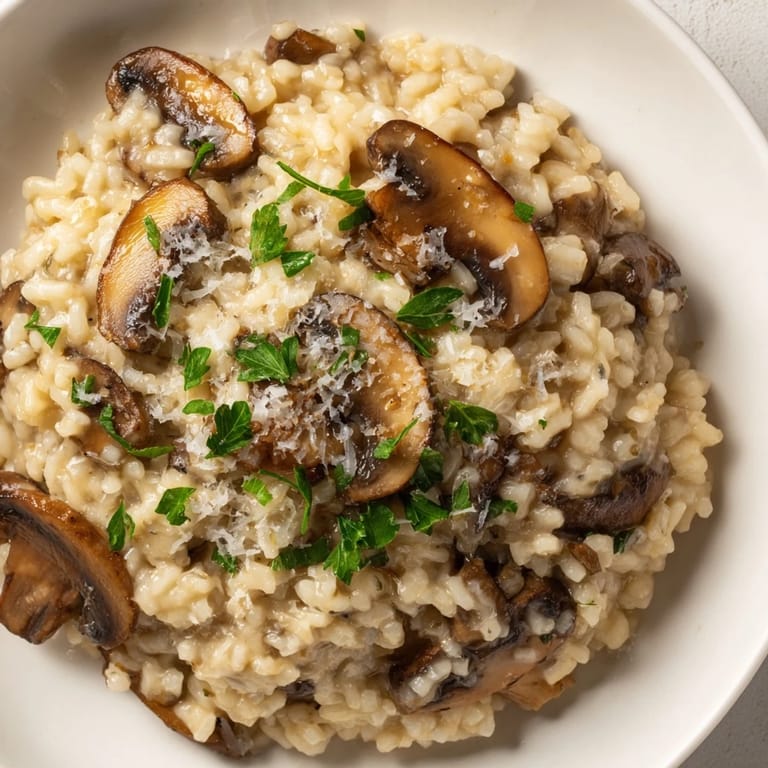
- When the rice is creamy and each grain is tender but still has a tiny bit of firmness when you bite it—that's al dente—stir in the reserved mushrooms, the final 2 tablespoons of butter, and the Parmesan cheese. Taste and adjust with salt and pepper. Cook for another 2 minutes, stirring gently, so everything warms and melds together.
- Serve immediately:
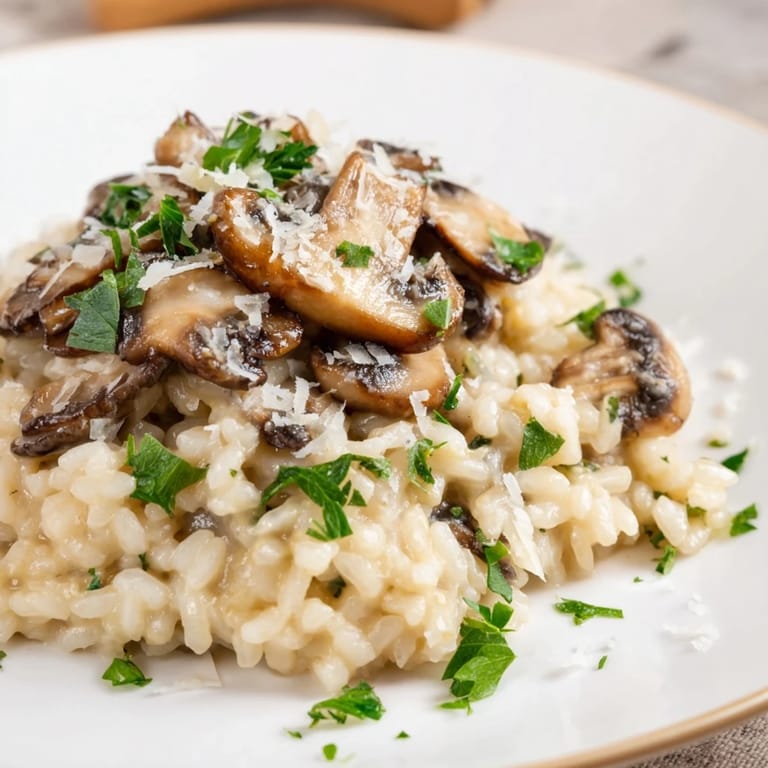
- Risotto waits for no one. Spoon it into bowls right away while it's still flowing slightly, and top with extra Parmesan and a light scatter of parsley if you're using it.
 Pin It
 I remember the first time I nailed the creamy texture without adding cream, and something shifted in how I understood cooking. It wasn't about fancy ingredients or complicated techniques—it was about understanding what the rice needed moment by moment and giving it attention. That's when risotto stopped being intimidating and started feeling like a conversation I was fluent in.
Why This Technique Actually Works
Arborio rice has a higher starch content than regular rice, and that starch is your secret. As you add broth and stir, you're breaking down the outside of the grains and releasing that starch into the liquid, which makes everything creamy. It's not magic—it's chemistry. The key is understanding that you're not just cooking rice in broth; you're creating an emulsion where rice, starch, butter, and liquid are all working together. Once you understand that, you realize you can adjust the technique for different dishes.
Variations That Actually Work
The mushroom base is forgiving, and once you understand the technique, you can swap mushrooms for other ingredients. I've made this with roasted butternut squash in autumn, with spring peas and fresh mint, with roasted cherry tomatoes. The technique stays exactly the same; you're just changing what you sauté at the beginning and finish with at the end. The ratio of rice to broth stays constant, and the stirring time stays around 20 minutes, but suddenly the same dish tastes completely different.
- Try a mix of cremini, shiitake, and oyster mushrooms for deeper earthiness.
- Add a pinch of fresh thyme or rosemary to the mushrooms as they cook for an extra savory note.
- If you want to go richer, finish with an egg yolk and a bit of Parmesan for a silkier, almost carbonara-like texture.
The Wine and Pairing Question
Using dry white wine isn't just about flavor; it adds acidity that balances the richness of the butter, cheese, and cream, which is especially important in a vegetarian dish without the umami that meat would bring. The alcohol burns off during cooking, so you're left with the subtle flavor complexity the wine leaves behind. If you pair it with a wine to drink alongside—a crisp Pinot Grigio or Sauvignon Blanc works beautifully—you get that same balance on your palate, and suddenly everything tastes more intentional, more alive, more like you planned a moment rather than just feeding yourself.
 Pin It
 Making risotto teaches you something about cooking that other dishes don't: the value of showing up and being present. There's no hiding behind complicated techniques or expensive ingredients, just rice, heat, and your attention. That quiet lesson has changed how I approach a lot of things in the kitchen.
Recipe FAQs
- → What type of rice is best for this dish?
Arborio rice is ideal because it releases starch during cooking, creating a creamy texture essential for the dish’s signature consistency.
- → Can I use other mushrooms instead of cremini?
Yes, wild mushrooms or button mushrooms can be used to vary flavor and texture, enhancing the earthy notes in the dish.
- → How do I achieve the perfect creamy texture?
Gradually adding warm broth and stirring frequently helps the rice release starch and cook evenly, resulting in a smooth, creamy consistency.
- → What wine pairs well with this dish?
Crisp white wines like Pinot Grigio or Sauvignon Blanc complement the richness and earthiness without overpowering the flavors.
- → Is it necessary to add butter and cheese at the end?
Adding butter and grated Parmesan cheese at the final stage enriches flavor and texture, giving the dish its characteristic silky finish.