 Pin It
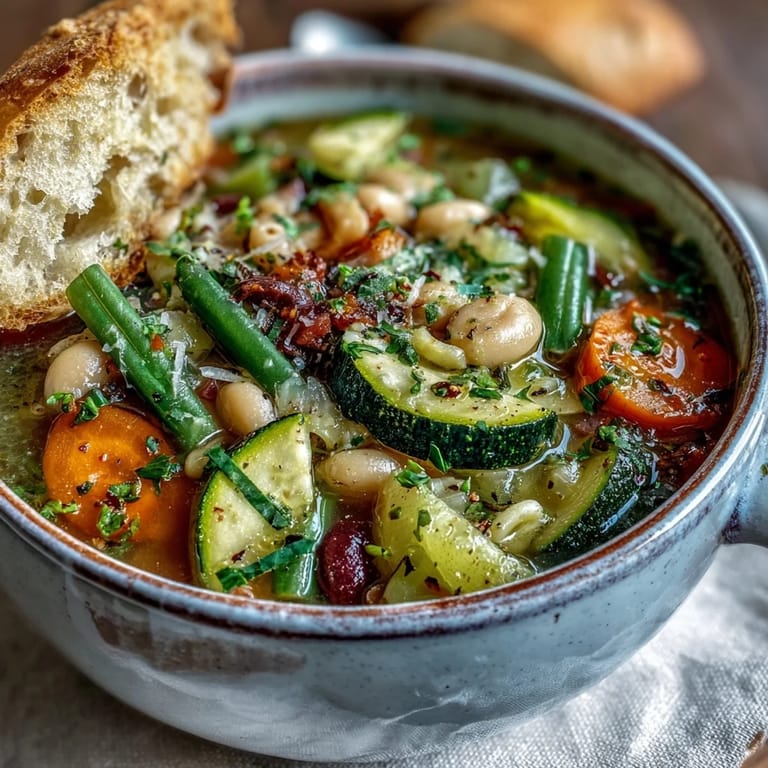
 There's something about minestrone that stops time in a kitchen. My neighbor Maria taught me to make this soup one crisp October afternoon, and what struck me most wasn't her technique but how she'd taste it, pause, then reach for the parsley jar like she was tuning an instrument. She told me minestrone isn't really a recipe—it's a conversation with what's growing outside your door. Every season rewrites it, and that's exactly the point.
I served this to my sister on a rainy Sunday when she'd just moved into her first apartment with nothing but bare cabinets. Watching her eat a full bowl and ask for the recipe felt like I'd given her permission to make a home, not just live in one. That soup became her anchor dish through that first overwhelming month.
Ingredients
- Olive oil (2 tbsp): This is your starting point—use decent oil because you'll taste it, and it carries all those vegetable flavors forward.
- Onion, carrots, and celery (1 medium onion, 2 carrots, 2 celery stalks, all diced): These three are the holy trinity in Italian cooking, and together they build the foundation that makes everything taste like home.
- Garlic (3 cloves, minced): Add this after the soffritto has mellowed, or it'll go sharp and bitter—timing matters more than quantity here.
- Seasonal vegetables (1 small zucchini or butternut squash, 1 cup green beans or kale, 1 medium potato optional): This is where you adapt: summer asks for zucchini and fresh green beans, winter demands squash and heartier greens like kale or spinach.
- Canned diced tomatoes (1 can, 400 g): Don't skip this or use fresh unless you have beautiful ripe tomatoes—canned ones are picked at peak and give you consistency year-round.
- Vegetable broth (1.5 liters): Make your own if you can, but quality store-bought is honest too—avoid the sodium bombs if your salt hand is heavy.
- Cannellini or borlotti beans (1 can, 400 g, drained and rinsed): Rinsing them matters because the can liquid is starchy and will cloud your soup.
- Small pasta (100 g ditalini, elbow, or shells): The pasta should be small enough that each spoonful holds a little bit of everything—that's the whole idea.
- Bay leaf (1): Drop it in early, remember it's there, and fish it out before serving or someone will get a surprise.
- Dried oregano and basil (1 tsp each): Add these late so they don't lose their punch to the long simmer, and taste before you finish because dried herbs vary.
- Fresh parsley (2 tbsp chopped, plus more for serving): This is your final brightness—it wakes the soup up and reminds you that you made something alive.
- Parmesan cheese (grated, for serving, optional): It's optional for vegetarians, unnecessary for vegans, but if you use it, grate it fresh because pre-grated has anti-caking agents that mute the flavor.
Tired of Takeout? 🥡
Get 10 meals you can make faster than delivery arrives. Seriously.
One email. No spam. Unsubscribe anytime.
Instructions
- Build your foundation:
- Heat the olive oil in a large pot over medium heat, then add the diced onion, carrots, and celery. Let them soften for about 5 minutes—you want them tender and starting to turn golden at the edges, not raw and not brown. This step is called making a soffritto, and it's where the soup's whole personality begins.
- Add the aromatics and fresh vegetables:
- Stir in the minced garlic, then your seasonal vegetables (zucchini or squash, green beans or kale) and let everything cook together for 3 minutes. You'll smell the garlic wake up and the raw vegetable taste start to mellow—that's your cue to move forward.
- Bring in the tomatoes and broth:
- Add the canned tomatoes and the diced potato if you're using one, then toss in the bay leaf. Let it cook for 2 minutes so the tomatoes start to break down, then pour in all the vegetable broth and stir everything together.
- Let it simmer and develop:
- Bring the pot to a boil, then lower the heat and let it simmer gently for 15 minutes. This isn't a rushing step—the vegetables need time to become tender and the broth needs time to become flavorful.
- Add the beans and pasta:
- Stir in the drained beans and the dry pasta, then simmer uncovered for 10 to 12 minutes until the pasta is tender and the beans have warmed through. Stir occasionally so the pasta doesn't stick to the bottom.
- Season with intention:
- Add the oregano and basil, then taste and season with salt and pepper until it tastes like something you actually want to eat. Remove the bay leaf at this moment—don't let it hide in a bowl.
- Finish with freshness:
- Stir in the fresh parsley, ladle the soup into bowls, and top with grated Parmesan if you like. A small drizzle of good olive oil on top never hurt anyone.
 Pin It
 My daughter came home from school upset about something small and wouldn't talk about it, so I put this soup on the stove. By the time it had simmered for 20 minutes, the kitchen smelled so warm and alive that she drifted in asking what I was making. We ended up sitting at the table for two hours, and she talked through whatever was bothering her while we ate. Sometimes soup is just soup, and sometimes it's an invitation.
Adapting Minestrone Through the Seasons
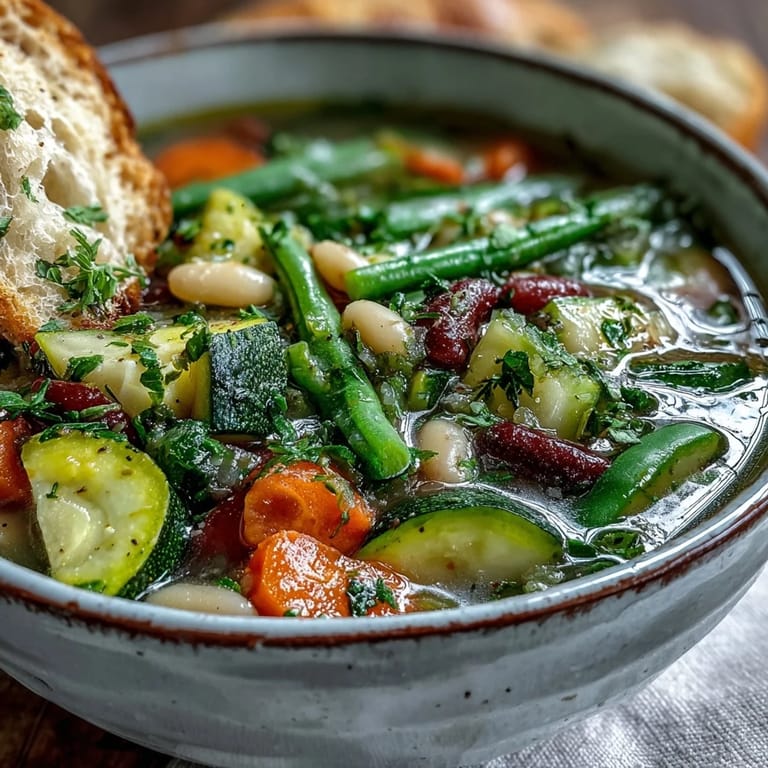
Spring minestrone is light and grassy—swap the hearty vegetables for fresh peas, diced leeks, and maybe some tender spinach added right at the end. The pasta should be delicate too, something like tiny shells or broken spaghetti. Summer version stays bright with zucchini and fresh green beans, keeping the broth temperature lower and tasting fresher somehow, like eating the garden.
Winter Variations and Storage
When cold months arrive, this is where minestrone becomes its most generous self. Butternut squash replaces zucchini, kale or savoy cabbage gets chopped in, and the broth becomes thicker and more restorative. The soup keeps beautifully in the refrigerator for 4 days, and it actually freezes well for up to 3 months—just cool it completely and portion it into containers before freezing.
Making It Your Own
The truth about minestrone is that there's no single correct version because it evolved from Italian home cooks using what they had. This means you're not breaking any rules by substituting vegetables, trying different beans, or changing the pasta shape. Some people add a Parmesan rind to the pot while it simmers—it melts into the broth and adds a savory depth that subtle and transformative.
- If you want extra umami depth, toss a Parmesan rind into the pot while simmering and fish it out before serving.
- For a vegan version, skip the cheese or use a nutritional yeast garnish, and the soup loses nothing in translation.
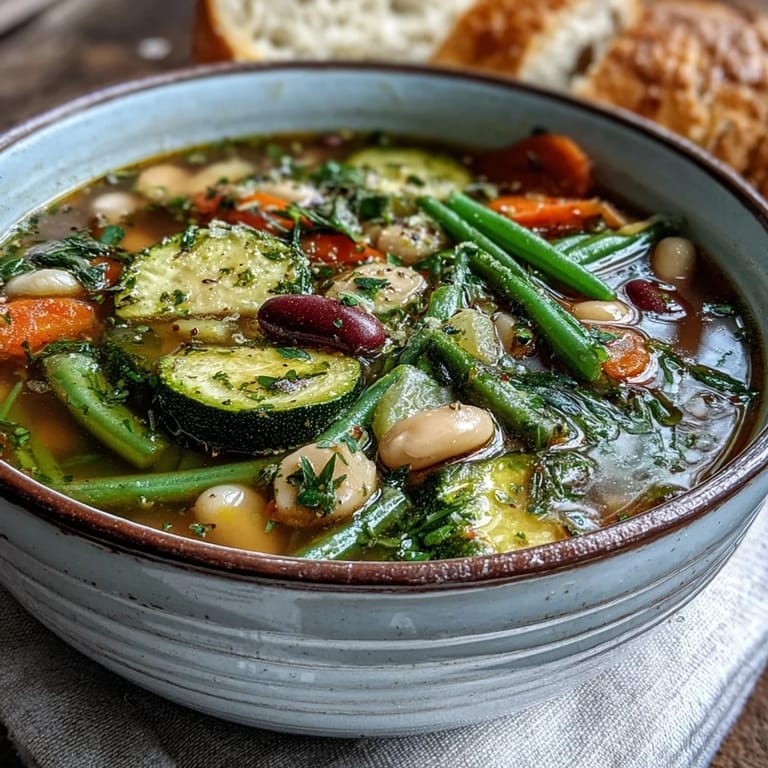
- Serve with crusty bread for dipping, and let people drizzle their own olive oil because that's when they'll taste exactly what they need.
 Pin It
 Minestrone taught me that cooking doesn't require perfection, just presence and willingness to adapt. Make this soup, eat it hot with good bread, and let it remind you that some of the best meals are the ones that shift with the seasons.
Recipe FAQs
- → What vegetables work best in minestrone?
Onions, carrots, celery, zucchini, green beans, and potatoes form the classic base. In winter, substitute butternut squash, kale, or spinach. Spring additions like peas, leeks, or cabbage work beautifully. The key is using whatever seasonal produce you have available.
- → Can I make minestrone gluten-free?
Absolutely. Simply replace traditional pasta with gluten-free varieties like brown rice pasta, corn pasta, or chickpea pasta. The cooking time may vary slightly, so check the package instructions and test for tenderness before serving.
- → How do I prevent pasta from becoming mushy?
Cook the pasta separately and add it to individual bowls when serving, or add it directly to the simmering broth during the last 10-12 minutes of cooking. The pasta should be al dente since it will continue absorbing liquid as it sits.
- → Can minestrone be frozen?
Yes, but freeze it without the pasta for best results. The pasta can become overly soft when frozen and reheated. Store cooled soup in airtight containers for up to 3 months. Thaw overnight in the refrigerator and reheat gently, adding fresh pasta when serving.
- → What's the secret to richer flavor?
Adding a Parmesan rind to the broth while simmering infuses deep umami notes—just remember to remove it before serving. A drizzle of high-quality extra virgin olive oil just before serving also enhances the overall taste and adds luxurious mouthfeel.
- → How long does minestrone keep in the refrigerator?
Properly stored in an airtight container, minestrone will keep for 4-5 days in the refrigerator. The flavors actually develop and improve after a day or two. Note that the pasta will continue absorbing liquid, so you may need to add more broth when reheating.