 Pin It
 My kitchen smelled like cinnamon and burnt sugar the afternoon I first made this pumpkin soup, though honestly the burnt part was accidental—I'd left the oven on too long while prepping vegetables. What saved the day was the soup itself, velvety and warm, that coaxed everyone to the table despite my minor kitchen mishap. There's something about the way pumpkin transforms when it simmers in spiced broth that feels almost alchemical, turning humble autumn squash into something elegant enough to serve when people drop by unexpectedly.
I made this soup for my neighbor last October when she mentioned feeling under the weather, and watching her take that first spoonful and actually smile felt like small kitchen magic. She came back asking for the recipe three days later, and I realized the soup had become her comfort measure through the whole season. Now whenever autumn rolls around, I find myself making it not just for myself, but for the excuse to share something warm with someone.
Ingredients
- Pumpkin, peeled and diced (1 kg): Fresh pumpkin gives the soup its true identity, though butternut squash works beautifully if that's what you have on hand, and honestly tastes richer.
- Onion, chopped (1 medium): This is your flavor foundation, so don't rush it—let it soften completely before moving forward, which takes longer than you'd think but matters.
- Garlic, minced (2 cloves): The moment you add garlic is when your kitchen stops smelling ordinary, so pay attention to that shift from sharp to fragrant.
- Carrot, diced (1 medium): Beyond color, carrots add natural sweetness that balances the spices without needing extra sugar.
- Vegetable broth (1 liter): Quality broth makes an actual difference here—I learned this the expensive way by tasting two batches side by side.
- Heavy cream or coconut milk (200 ml): This is where silkiness happens, so whether you choose dairy or not, don't skimp on the amount.
- Ground cumin (1 tsp): Cumin grounds the flavor in something savory and slightly earthy, keeping the soup from tasting like dessert.
- Ground nutmeg (1/2 tsp): A little goes a long way with nutmeg, and this amount is precisely the point where it enhances rather than dominates.
- Ground cinnamon (1/2 tsp): Cinnamon brings warmth without sweetness, the kind of spice that makes people pause and ask what that flavor is.
- Chili flakes, optional (1/4 tsp): If you add this, you're giving the soup a small kick that lingers pleasantly rather than burning.
- Salt and black pepper: Season at the very end after blending, since salt behaves differently once the soup reaches its final consistency.
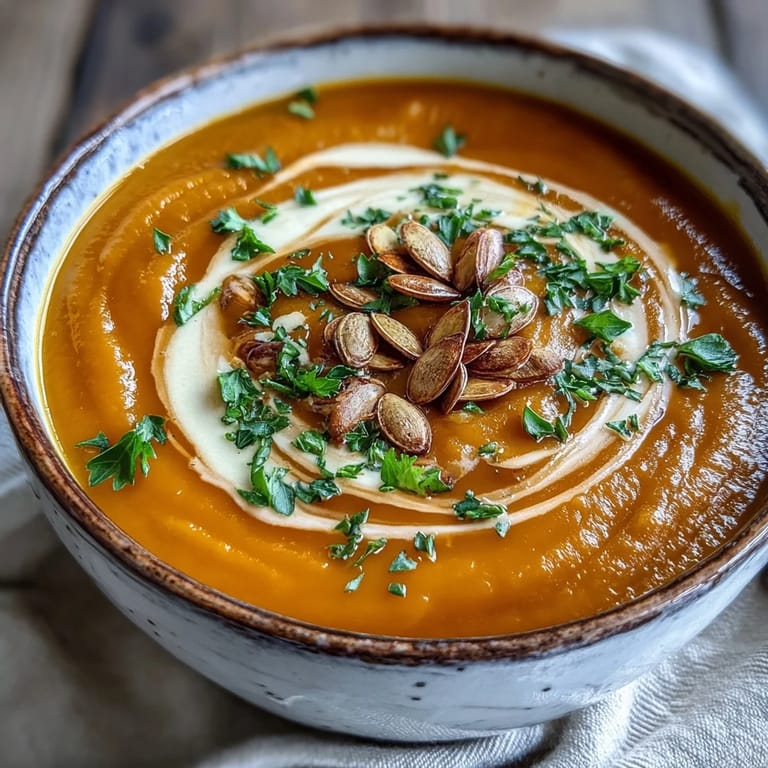
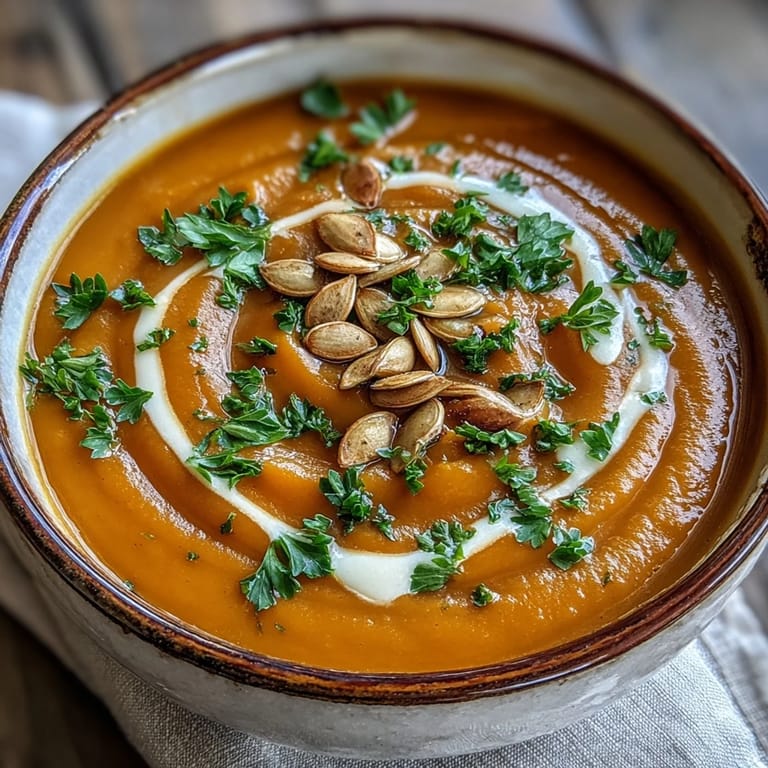
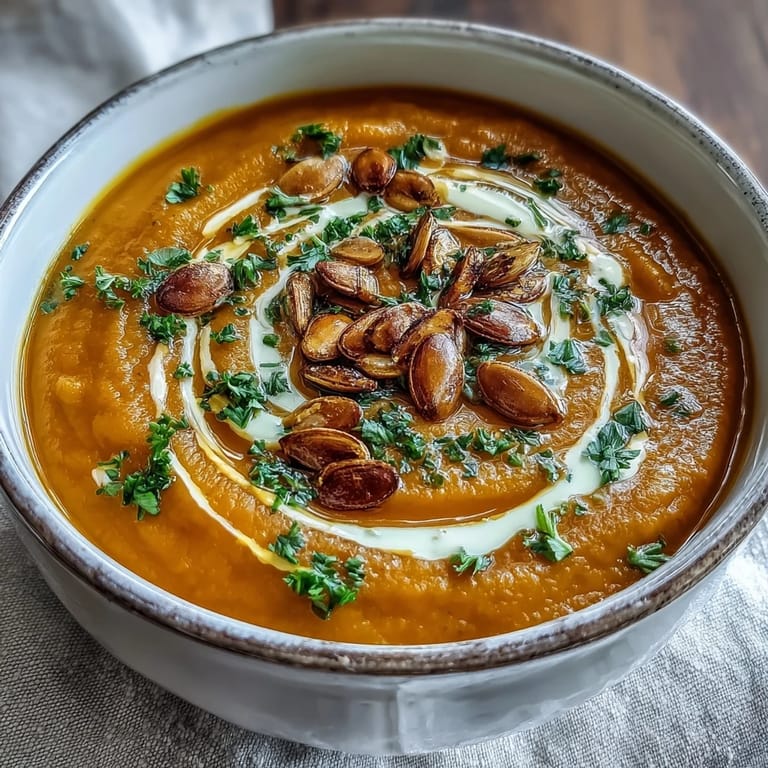
- Cream or coconut milk for garnish, toasted pumpkin seeds, fresh parsley or chives: These finishing touches turn a simple soup into something that looks like you spent hours on it.
Tired of Takeout? 🥡
Get 10 meals you can make faster than delivery arrives. Seriously.
One email. No spam. Unsubscribe anytime.
Instructions
- Start with heat and foundation:
- Warm oil in a large pot over medium heat, then add your chopped onion and let it soften for about three minutes—you'll know it's ready when the edges turn translucent and it releases its sweetness into the oil.
- Build your aromatics:
- Stir in minced garlic and diced carrot, letting them sauté together for two minutes until the whole pot smells like something you'd want to eat. This step is where impatience costs you flavor, so resist the urge to rush.
- Toast the spices briefly:
- Add your pumpkin pieces along with cumin, nutmeg, cinnamon, and chili flakes if using, stirring everything for two to three minutes so the spices wake up and coat each piece. You'll notice the aroma shifts from vegetable to something distinctly autumnal.
- Simmer until tender:
- Pour in your vegetable broth, bring everything to a boil, then lower the heat and let it simmer for twenty to twenty-five minutes until the pumpkin breaks apart easily when pressed with a spoon. This is the point where you can step away and do other things, though the soup smells good enough to keep you nearby.
- Blend into smoothness:
- Remove from heat and use an immersion blender to puree the soup until velvety, or work in batches with a regular blender if that's what you have—either way, blend longer than feels necessary because smooth is where the magic lives. Be careful with the steam if using a countertop blender, and never fill it more than halfway.
- Finish with cream and seasoning:
- Stir in your heavy cream or coconut milk, then taste and adjust salt and pepper until it feels right to you—soup seasoning is deeply personal. Reheat gently over low heat if it cooled during blending, but don't let it bubble vigorously or the cream might separate.
- Serve with intention:
- Ladle into bowls and add your chosen garnishes—a swirl of cream, scattered toasted pumpkin seeds, and fresh herbs if you have them. These final touches aren't just pretty; they add texture and flavor that make each spoonful feel complete.
 Pin It
 There was something unexpectedly moving about watching my daughter, who normally picks at everything, eat three bowls of this soup on a rainy afternoon, then ask to help me make it again the following week. That's when I understood this wasn't just a recipe—it had become something we do together, our hands working the same way, creating something neither of us wanted to stop eating.
The Science of Spice Balance
The spice ratio in this soup works because cumin, nutmeg, and cinnamon don't fight each other—they create something coherent that tastes bigger than its individual parts. I spent one kitchen evening testing different ratios, and what surprised me was discovering that slightly less of everything actually made the flavors sharper, not softer, so the proportions given here are carefully considered rather than arbitrary. The chili flakes are optional precisely because they're a personal preference, a small heat note that some people need and others don't, and that's entirely fine.
Cream or Coconut Milk: The Final Choice
Choosing between dairy cream and coconut milk isn't really a compromise—they create genuinely different soups, both excellent in their own ways. Cream gives you richness that feels almost indulgent, the kind of silkiness that coats your mouth pleasantly, while coconut milk adds a subtle coconut note that transforms the entire flavor profile into something more tropical. I've made this soup both ways for different people, and I've learned that the choice matters less than committing fully to whichever you choose and not second-guessing yourself mid-cooking.
Serving Suggestions and Variations
Crusty bread is the obvious pairing, but I've also discovered that this soup is excellent alongside a simple green salad, giving you something bright to cut through the richness. For a heartier meal, you could stir in cooked lentils or beans, which adds protein and makes it substantial enough for dinner rather than just a starter course. The soup also freezes beautifully for up to three months, which means you can make a large batch in autumn and taste it again on a winter evening when you need comfort.
- Roasting the pumpkin beforehand deepens the flavor in ways you won't forget once you've tried it.
- Taste constantly as you season, because soup needs more salt and pepper than you probably think it does.
- Garnish generously—those pumpkin seeds and herbs aren't decoration, they're essential to the eating experience.
 Pin It
 This soup became a ritual rather than a recipe, something I make when I want to slow down and remember that cooking is actually a form of kindness—first to yourself, then to whoever sits across from you. Every bowl feels like an invitation to something warm, whether you're eating alone or sharing it with someone who matters.
Recipe FAQs
- → Can I make this soup dairy-free?
Absolutely. Simply replace the heavy cream with full-fat coconut milk. The soup will still be creamy and delicious, with a subtle tropical note that complements the warming spices beautifully.
- → What type of pumpkin works best?
Sugar pie pumpkins or butternut squash yield the smoothest, sweetest results. Avoid large carving pumpkins as they tend to be watery and less flavorful. Roasting the pumpkin first adds caramelized depth.
- → How long can I store this soup?
The soup keeps well in an airtight container in the refrigerator for up to 4 days. The flavors often deepen and improve after a day. Reheat gently over low heat, adding a splash of broth or cream if needed.
- → Can I freeze this pumpkin soup?
Yes, freeze before adding the cream. Once cooled, transfer to freezer-safe containers and freeze for up to 3 months. Thaw overnight in the refrigerator, reheat, and stir in cream just before serving.
- → What can I serve with this soup?
Crusty bread, garlic knots, or homemade croutons are perfect for dipping. A crisp green salad with vinaigrette balances the richness. For a complete meal, pair with a grilled cheese sandwich or roasted vegetables.
- → How can I make the soup thicker?
Roast the pumpkin before simmering to concentrate flavors and natural thickness. Alternatively, reduce the broth amount slightly or add a peeled potato while cooking. Blend longer for an ultra-smooth, thicker texture.