 Pin It
 There's something almost meditative about watching wakame unfurl in a bowl of cold water, those dark ribbons slowly loosening and coming alive. My grandmother kept a small jar of it in her pantry, and on quiet mornings when neither of us felt like talking much, she'd quietly prepare this soup—not because it was fancy, but because it felt like taking care of ourselves. That 20 minutes from dry seaweed to steaming bowl became our language when words weren't needed.
I once brought this soup to a friend who'd been under the weather, expecting maybe a polite thank you. Instead, she asked me to text her the recipe before I'd even left her kitchen. Now, years later, she texts me photos of her homemade batches, and I realize this isn't just soup—it's become part of how we take care of each other.
Ingredients
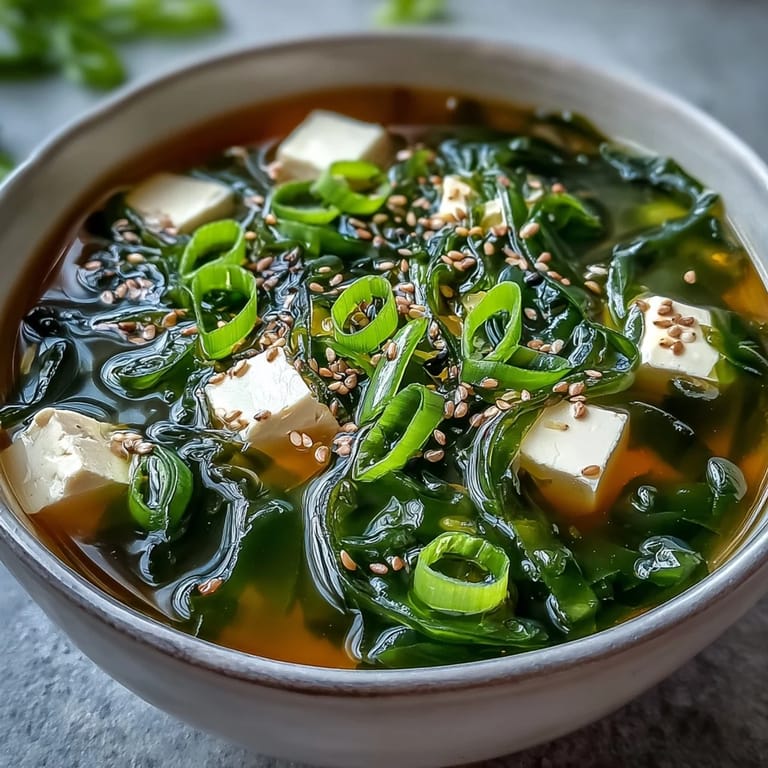
- Dried wakame seaweed: Those 8 grams are packed with iodine and minerals that dried seaweed does better than almost anything else; don't skip the rehydration step or you'll have chewy bits instead of tender ribbons.
- Dashi stock: Use vegetarian kombu and shiitake dashi if you're avoiding bonito, and yes, the quality of your stock really does matter—a fragrant one transforms this from basic to beautiful.
- Silken or firm tofu: Silken gives you delicate, creamy cubes that dissolve almost on your tongue, while firm tofu holds its shape better if you prefer more texture.
- Scallions: Slice them thin and add them at the very end so they stay bright and slightly crisp against the warm broth.
- White miso paste: This is gentler and slightly sweet compared to red miso, and tempering it in hot broth prevents it from clumping—a trick that took me three batches to get right.
- Soy sauce: Just a tsp is all you need; it whispers rather than shouts, letting everything else shine.
- Sesame oil: Optional but it adds a subtle nutty warmth that makes people ask what you did differently.
Tired of Takeout? 🥡
Get 10 meals you can make faster than delivery arrives. Seriously.
One email. No spam. Unsubscribe anytime.
Instructions
- Wake up the seaweed:
- Place dried wakame in a small bowl of cold water and let it sit for about 5 minutes—you'll watch it plump up and soften, transforming from brittle to tender. Drain it gently and set it aside, ready to add its mineral richness to your broth.
- Begin with the base:
- Pour your dashi stock into a medium saucepan and bring it to a gentle simmer over medium heat, letting the aroma fill your kitchen. Keep the heat steady; you want a quiet simmer, not an aggressive boil.
- Build the soup:
- Add the cubed tofu and rehydrated wakame to the simmering broth and let them warm through for 2 to 3 minutes. The tofu will stay tender if you don't let the broth get too hot, and the wakame will finish softening in the warmth.
- Blend in the miso:
- Scoop a ladle of hot broth into a separate bowl and whisk your white miso paste into it until completely smooth, breaking up any stubborn lumps. Pour this mixture back into the pot slowly, stirring gently so the miso distributes evenly without any grainy bits.
- Season and finish:
- Add your soy sauce and sesame oil if using, stir gently, and let everything warm together for about a minute—but don't let it boil or the miso's living cultures will fade. Taste and adjust if needed; sometimes a tiny splash more soy sauce is all it wants.
- Serve with intention:
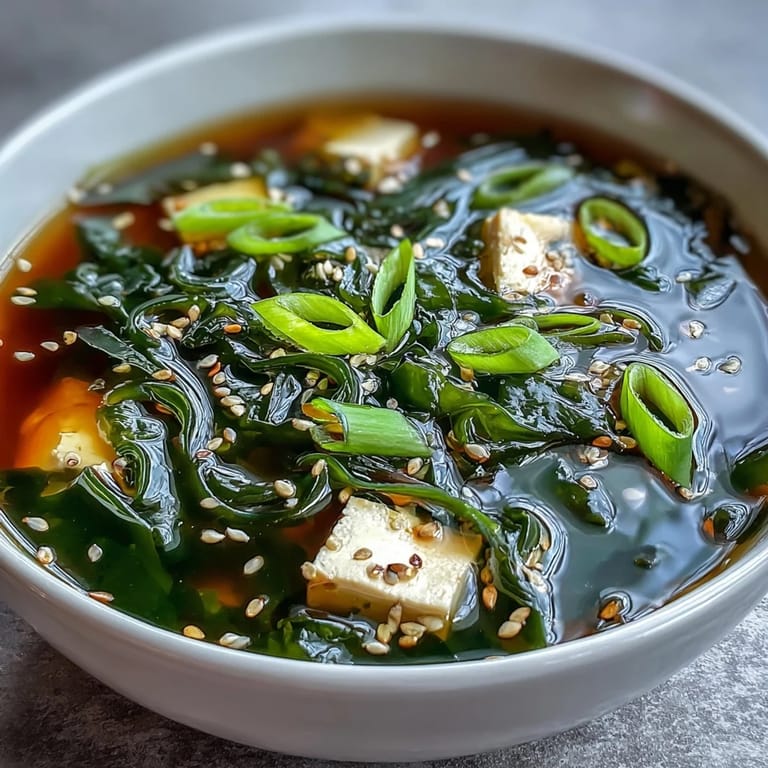
- Pour the soup into bowls while it's still steaming, then scatter the sliced scallions over the top so they stay vibrant green against the dark broth.
 Pin It
 There's a moment in winter when I make this soup and my partner walks into the kitchen and just closes their eyes, breathing in the steam. No one has to say it's healing; the soup says it itself, one small bowl at a time.
The Quiet Magic of Simplicity
This soup works because it doesn't try to be complicated. Every ingredient serves a purpose—the wakame for minerals and umami depth, the tofu for gentle protein and texture, the miso for warmth and that savory note that makes you want another spoonful. When you strip a recipe down to just what matters, that's when home cooking becomes honest.
Making It Your Own
While this recipe is perfect as written, I've learned that additions should be subtle. A handful of spinach wilts in beautifully, thin carrot slices add a delicate sweetness, and mushrooms—especially shiitake—deepen the umami without overshadowing the wakame. The trick is adding just enough to enhance, not enough to transform it into something else.
Serving and Pairing
I've served this soup before steamed rice, after sushi, alongside grilled fish, and even on its own as a quiet breakfast when the rest of the house was still sleeping. It's flexible enough to fit anywhere a light, nourishing moment is needed, yet substantial enough that you never feel like you're missing something. This is the kind of dish that works just as well at a formal dinner as it does at your kitchen table alone.
- Pair it with plain steamed rice and a small side of pickled vegetables for a perfectly balanced meal.
- Serve it as the opening course of a Japanese meal to prepare the palate for what comes next.
- Make it the anchor of a light lunch with fresh cucumber salad and warm miso-glazed fish on the side.
 Pin It
 This soup has taught me that sometimes the most nourishing meals are the ones that ask the least of us. Make it when you need to feel grounded again.
Recipe FAQs
- → What does wakame taste like?
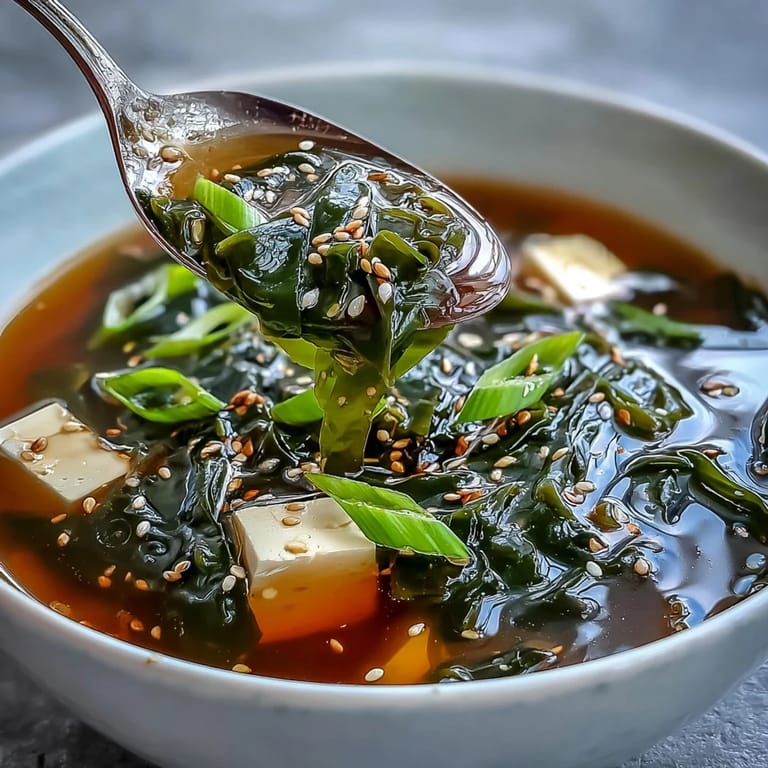
Wakame has a mild, slightly sweet flavor with a tender texture. When rehydrated, it becomes silky and absorbs the flavors of the dashi broth beautifully.
- → Can I use other types of seaweed?
While wakame is traditional, you can substitute with kombu (kelp) or nori. Keep in mind that different seaweeds have varying textures and rehydration times.
- → Is this soup suitable for vegetarians?
Yes, when prepared with vegetarian dashi made from kombu and shiitake mushrooms instead of traditional bonito flakes, this soup is completely vegetarian and vegan-friendly.
- → Why shouldn't I boil the miso paste?
Boiling miso paste destroys its beneficial enzymes and probiotics, and can make the flavor bitter. Always dissolve miso in warm broth separately and add it at the end.
- → How long can I store leftovers?
Store in an airtight container in the refrigerator for up to 2 days. Reheat gently over low heat without boiling to preserve the miso's benefits.
- → What can I add for more protein?
Add edamame, extra firm tofu cubes, or even cooked shrimp if not vegetarian. Miso itself contains some protein, and you can increase the tofu quantity.