 Pin It
 My first black currant tart happened by accident—I'd bought a punnet of these dark, jewel-like berries at a farmers market and had no idea what to do with them. A French neighbor mentioned casually that they made the most spectacular curd, and suddenly I was committed to this elegant little dessert. The combination of buttery crust, tart-sweet curd, and fresh berries on top felt like something I'd been missing without knowing it.
I made this for my sister's birthday dinner last summer, and watching her face when she tasted it told me everything—that slightly surprised smile that says you've just discovered something you didn't know you needed. The whole table got quiet for a moment, which is the highest compliment a dessert can receive.
Ingredients
- All-purpose flour: Use a quality flour and measure by weight if you can—it makes the dough more reliable and forgiving.
- Unsalted butter, cold and cubed: The cold butter is what creates those flaky, tender layers, so don't skip the chilling step.
- Powdered sugar: This dissolves into the dough for a subtle sweetness that lets the berries shine later.
- Fine sea salt: A small amount brightens everything without making it taste salty.
- Egg yolk: Just the yolk binds the dough and adds richness—the white would make it tough.
- Fresh or frozen black currants: Frozen work beautifully and are often more affordable; they release their juice more easily when cooked.
- Granulated sugar: This sweetens the curd while the cooking process thickens it naturally.
- Lemon juice: The acidity prevents the eggs from scrambling and adds brightness that black currants need.
- Eggs and egg yolk: These create the silky curd texture—they must be whisked in gently to avoid lumps.
- Unsalted butter for the curd: Added at the end, this makes the curd luxuriously smooth and glossy.
- Fresh berries for topping: The color contrast is stunning, and they add a fresh bite against the rich curd.
Tired of Takeout? 🥡
Get 10 meals you can make faster than delivery arrives. Seriously.
One email. No spam. Unsubscribe anytime.
Instructions
- Build your crust foundation:
- Pulse your flour, powdered sugar, and salt together, then work in the cold butter until it resembles coarse breadcrumbs—you want pea-sized pieces visible so the crust stays flaky. The egg yolk and cold water bring it together just enough that you can shape it without it becoming tough.
- Chill and relax the dough:
- Wrapping your dough disk and refrigerating it for 30 minutes lets the gluten relax and the butter firm up again, which prevents shrinking in the oven. This isn't a shortcut to skip; it genuinely changes the outcome.
- Line and blind bake your shell:
- Roll the dough gently into your tart pan, prick the bottom with a fork to prevent puffing, and line it with parchment and pie weights—dried beans work perfectly. Bake partially first with weights to set the structure, then finish baking uncovered until it's golden and crisp, about 25 minutes total.
- Cook down your black currants:
- Heat the berries with sugar and lemon juice until they burst and soften, releasing their deep purple color and tart flavor. Stirring occasionally helps them break down evenly.
- Strain for silky curd:
- Push the cooked currants through a fine-mesh sieve to remove all the skins and seeds—this step is worth the extra minute and gives you that professional, glossy curd texture.
- Create the curd base:
- Return your strained purée to the pan and whisk in your eggs slowly, then cook over low heat while stirring constantly. You're looking for it to thicken enough to coat the back of a spoon—don't let it boil or the eggs will scramble.
- Finish with butter:
- Once thickened, remove from heat and whisk in the butter in pieces until it melts completely, giving you that silky, luxurious texture. Let it cool and set slightly in the fridge before spreading.
- Assemble with care:
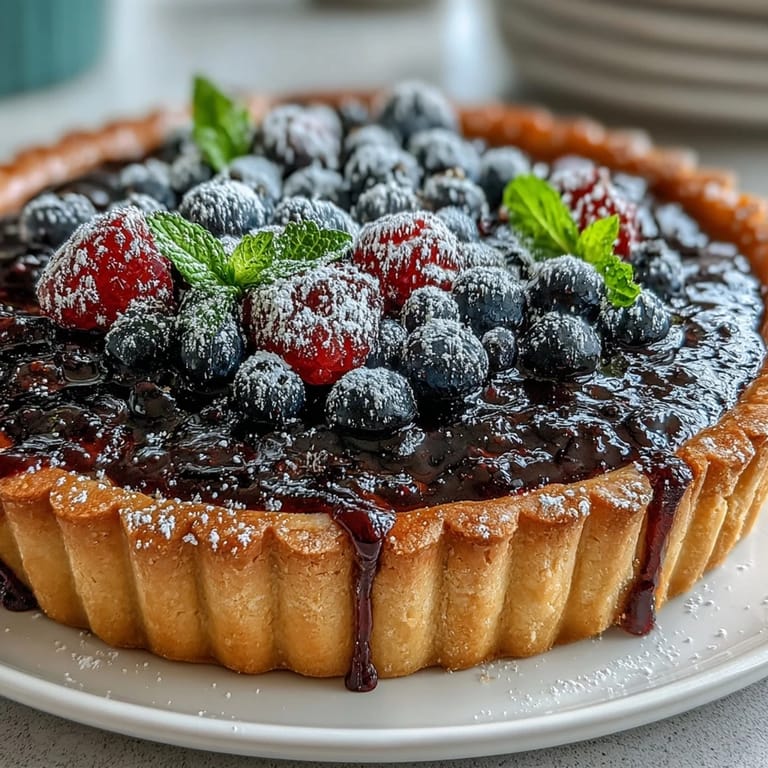
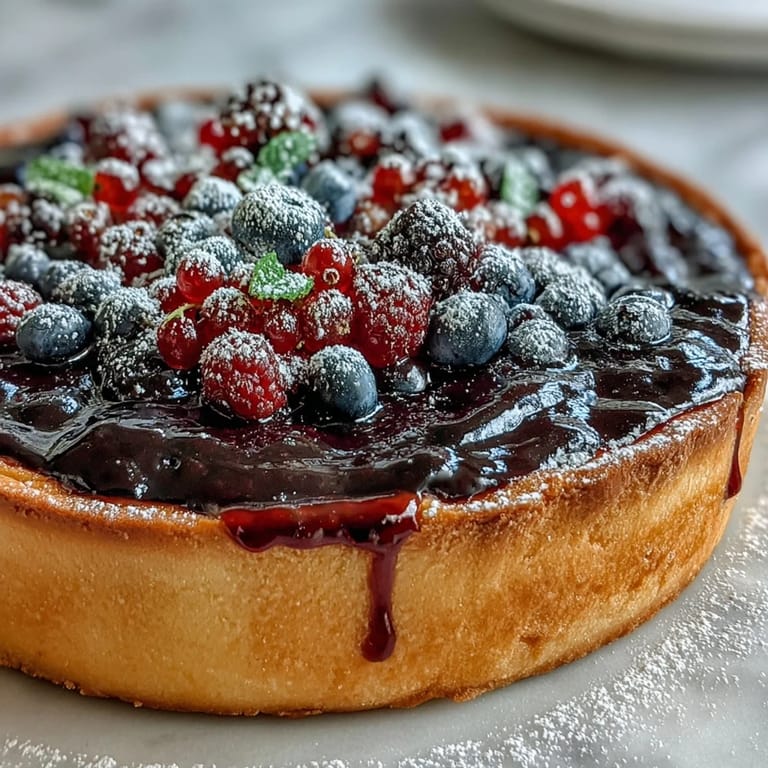
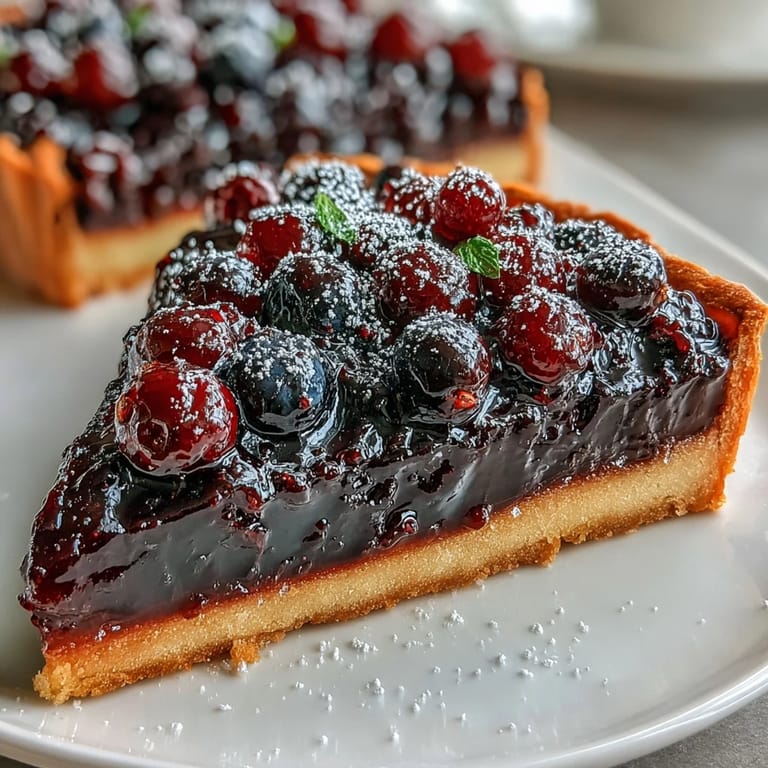
- Spread your cooled curd evenly into the tart shell, then arrange fresh berries on top in whatever pattern makes you happy. Chill the finished tart for at least an hour so everything sets and flavors meld.
 Pin It
 What I love most about this tart is how it sits at the intersection of impressive and actually achievable—no fancy techniques, just good ingredients treated with care and patience. Once you understand why each step matters, it becomes something you'll want to make again and again.
The Black Currant Advantage
Black currants have this sophisticated, almost wine-like depth that regular berries don't quite capture. They're tart enough to balance richness, and when you cook them down, they become this jewel-toned curd that looks like you spent all day in a French patisserie. If you can't find black currants, red currants work beautifully with a slightly different flavor profile—equally elegant, just more delicate.
Make-Ahead Magic
This tart is actually a brilliant make-ahead dessert because you can bake the crust a day or two ahead, make the curd the morning of your gathering, and assemble everything a few hours before serving. The flavors actually marry better when things have time to settle and cool completely—there's no rushing this one, and that's part of its charm.
Serving and Variations
A slice of this tart tastes incredible with barely whipped cream or vanilla ice cream, which melts into the warm curd and softens the crisp crust just enough. You can also play with the toppings—a light dusting of powdered sugar adds elegance, a brush of warmed apricot jam gives a professional gloss, or fresh mint leaves bring a whisper of garden freshness.
- If black currants aren't available where you live, red or white currants make exceptional substitutes with their own tartness.
- You can make the curd up to 3 days ahead and store it covered in the refrigerator, bringing it to room temperature before spreading.
- Don't stress about the berry arrangement—a casual scatter looks just as beautiful as precise rows and feels more genuine to home cooking.
 Pin It
 This tart reminds me that some of the best things to cook are the ones that challenge you just a little, then reward you completely. Make it once and you'll understand why it's been beloved in French kitchens for generations.
Recipe FAQs
- → Can I use frozen black currants for the curd?
Yes, frozen black currants work perfectly for making the curd. Thaw them slightly before cooking, and proceed with the recipe as directed. The flavor and texture will be just as delicious as using fresh fruit.
- → How long does this tart need to chill before serving?
The assembled tart should chill for at least 1 hour to allow the curd to set properly. For best results, you can refrigerate it for up to 4 hours before serving. The crust can also be prepared a day in advance and stored at room temperature wrapped in plastic.
- → Can I substitute other berries in this tart?
Absolutely. You can replace black currants with red currants, raspberries, or a mix of berries. The curd color and flavor will vary slightly, but the technique remains the same. Fresh berries for topping can also be mixed and matched based on availability and preference.
- → Why do I need to chill the tart dough twice?
Chilling the dough prevents the butter from melting too quickly during baking, which ensures a flaky, tender crust. The first chill relaxes the gluten after mixing, while the second chill after lining the pan helps the tart hold its shape in the oven without shrinking or slumping.
- → How should I store leftovers?
Store any leftover tart in the refrigerator, covered loosely with plastic wrap or placed in an airtight container. It will keep well for 2-3 days, though the crust may soften slightly over time. For best texture, serve at room temperature after removing from the fridge.
- → What can I use if I don't have pie weights?
Dried beans, rice, or even pennies work excellently as pie weights. Simply line the tart shell with parchment paper and fill with your chosen weight. These items can be reused specifically for blind baking and stored separately from your pantry staples.