 Pin It
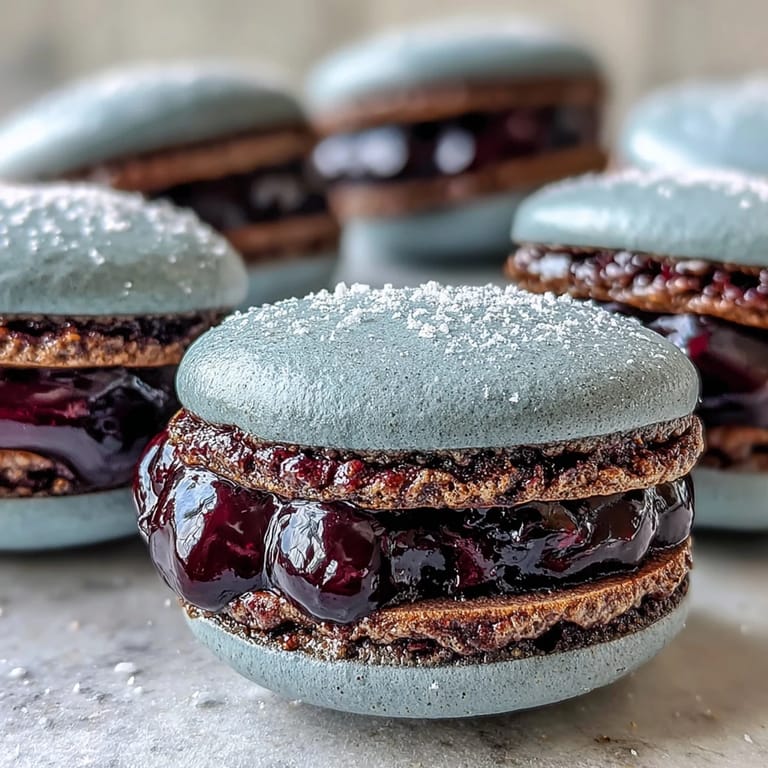
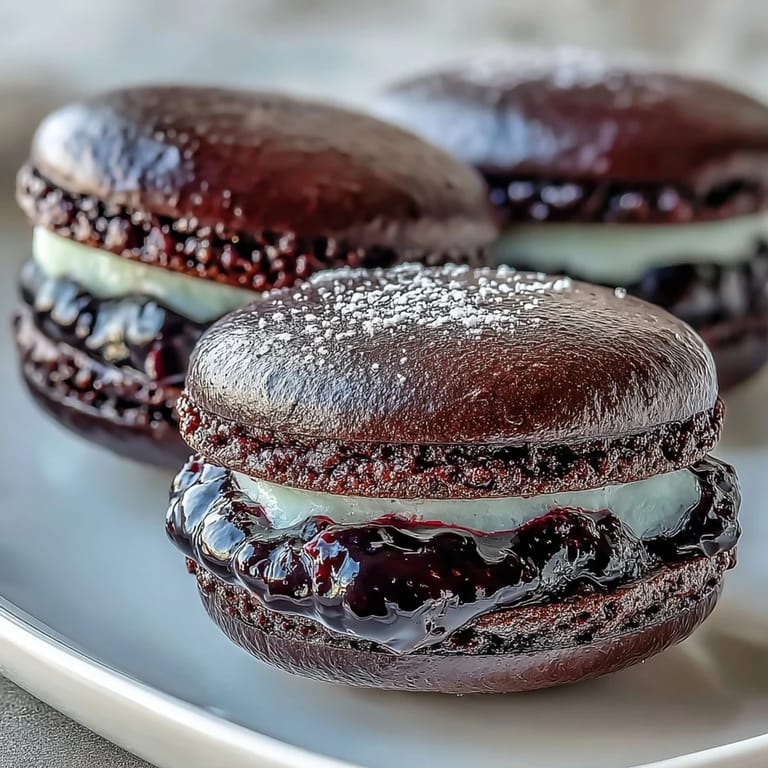
 The first time I attempted macarons, I was convinced they were impossible—until a friend casually mentioned she'd been aging her egg whites in the fridge like some sort of secret weapon. Something about that detail clicked, and suddenly the whole process felt less like magic and more like patience. These black currant shells, with their jewel-toned centers and that tart-sweet ganache, became my proof that delicate French pastries weren't just for bakeries. Now whenever I pipe those little circles, I remember the quiet satisfaction of that first perfectly formed macaron foot.
I made these for my sister's engagement party on a rainy March afternoon, and I'll never forget how she picked one up, took a bite, and got that look—the one where you know the flavors just transported her somewhere. The ganache had matured for exactly 24 hours, and the balance between the delicate almond shell and that tart currant filling was just right. That's when I realized macarons aren't really about impressing people with technique; they're about giving someone a moment of genuine joy wrapped in a crisp shell.
Ingredients
- Egg whites (aged, 120 g): Aging them in the fridge for a full day or two actually stabilizes the meringue and gives you better volume, so don't skip this step even though it feels counterintuitive.
- Powdered sugar and almond flour (200 g and 120 g): Sifting these together removes lumps and creates that silky dry mixture that folds so beautifully into the meringue.
- Granulated sugar (100 g): This goes into the meringue gradually while you beat, and watching it transform into glossy peaks never gets old.
- Salt (pinch): A tiny amount actually enhances both the sweetness and the almond flavor in ways you won't expect.
- Gel food coloring (optional): The gel kind doesn't water down your meringue like liquid coloring would, which keeps your shells perfectly textured.
- Blackcurrant purée (100 g, strained): Straining out the seeds keeps your ganache silky instead of gritty, and the deep flavor is tart enough to balance the sweetness of white chocolate.
- White chocolate (120 g, finely chopped): Chop it small so it melts evenly when the hot purée hits it, creating that smooth ganache.
- Unsalted butter (30 g, softened): This adds richness and helps the ganache set to the perfect pipeable consistency.
- Lemon juice (1 tsp): Just a tiny squeeze brightens the black currant flavor and prevents the ganache from tasting one-note sweet.
Tired of Takeout? 🥡
Get 10 meals you can make faster than delivery arrives. Seriously.
One email. No spam. Unsubscribe anytime.
Instructions
- Prepare your workspace:
- Line your baking sheets with parchment paper or silicone mats and set them nearby where you'll need them. Having everything ready means you won't panic when your piping bag is full and your hands are covered in meringue.
- Combine the dry ingredients:
- Pulse the almond flour and powdered sugar in a food processor until they're super fine and well blended, then sift everything into a bowl to catch any stubborn lumps. This step determines whether your shells will be smooth and shiny or rough and cracked, so don't rush it.
- Build the meringue:
- Beat your aged egg whites with a pinch of salt on medium speed until foamy, then gradually add the granulated sugar and keep beating until the peaks are stiff and glossy—they should look like clouds. When you lift the beaters, the peaks should stand straight up without flopping over.
- Add color:
- Mix in your gel food coloring until the meringue is evenly tinted that gorgeous purple-black shade. The color should be consistent throughout without any streaks.
- Fold with intention:
- Gently fold the dry almond mixture into the meringue in three separate additions, using a rubber spatula and a gentle hand—this is where overmixing ruins everything. You're looking for a batter that flows like thick ribbons and can draw a figure-8 without breaking.
- Pipe with confidence:
- Fill your piping bag and pipe small circles about 3.5 cm across onto your prepared sheets, spacing them slightly apart. The batter should flow out smoothly, and if it's too stiff, you've overmixed; if it's too loose, fold a bit longer.
- Release the air bubbles:
- Tap the trays firmly on the counter a few times to pop any hidden air bubbles, then use a toothpick to gently burst any remaining ones you see on the surface. This prevents little holes and cracks in your finished shells.
- Let them skin over:
- Leave the shells at room temperature for 30–45 minutes until they develop a slight skin and no longer feel tacky when you touch them lightly. This resting period is non-negotiable if you want those signature feet.
- Bake low and slow:
- Preheat to 150°C (300°F) and bake one tray at a time for 13–15 minutes, rotating halfway through so they bake evenly. The shells should be set but still slightly soft when you gently lift them—they'll continue cooking slightly as they cool.
- Cool completely:
- Let the shells rest on the baking sheet until they're at room temperature before attempting to peel them off. Warm macarons will stick and tear, so patience here matters.
- Make the ganache:
- Chop your white chocolate fine and place it in a heatproof bowl, heat your black currant purée until it's just simmering, then pour it over the chocolate and wait one full minute before stirring. The heat will melt the chocolate perfectly, and that minute of patience prevents it from seizing.
- Finish the ganache:
- Stir gently until everything is smooth and melted, then whisk in the softened butter and lemon juice until fully incorporated. Let it cool until it's thickened but still pipeable—test by drizzling a little on a plate.
- Pair and fill:
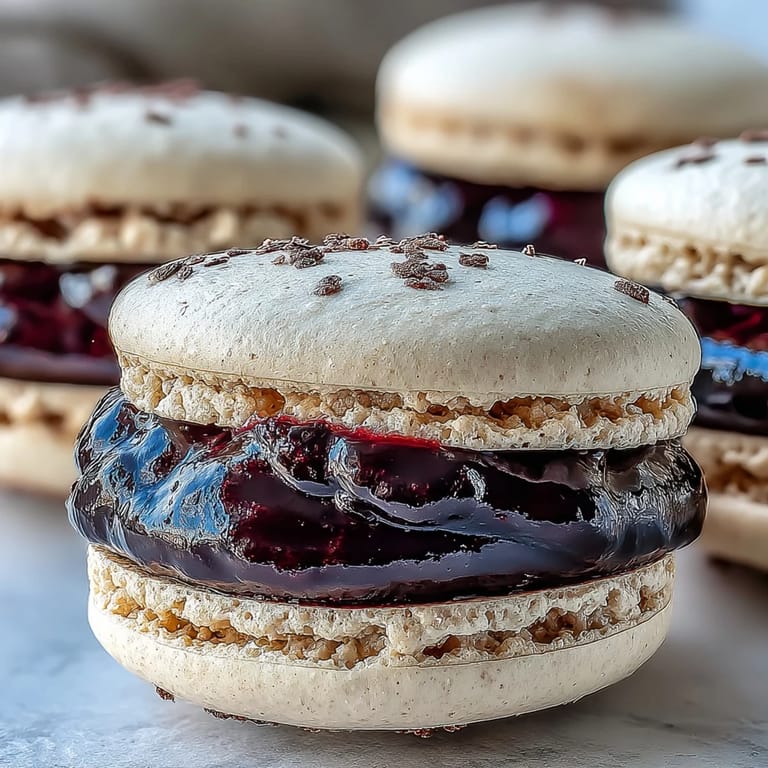
- Match up your cooled shells by size, pipe a small dollop of ganache onto one shell of each pair, and gently sandwich them together. The shells should hold the ganache without it squishing out the sides.
- Let them mature:
- Place your finished macarons in an airtight container and refrigerate for at least 24 hours so the flavors marry and the texture becomes perfect. They actually taste better on day two, which is the best excuse for not eating them all immediately.
 Pin It
 There's something almost meditative about watching a batch of macarons come together—the careful folding, the patient waiting, the gentle piping. When my nephew tried one at a family dinner and asked if I'd actually made them myself, I realized that these delicate little cookies had become my way of saying 'I made something beautiful just for you.'
The Aging Egg Whites Secret
Aging egg whites for 24–48 hours in the fridge sounds weird until you understand what's actually happening—the proteins relax and stabilize, giving you more volume and a more stable meringue that doesn't deflate mid-fold. I started doing this by accident when I prepped ingredients the night before, and my macarons came out noticeably better. Now I plan ahead every time because I know those aged whites are my insurance policy against meringue disasters.
Why Black Currant Works
Black currant is tart in a way that white chocolate alone could never be, and that contrast is exactly why these macarons sing instead of just tasting sweet. The lemon juice in the ganache pushes that tartness forward, and suddenly you've got a flavor that tastes refined and sophisticated but also genuinely delicious. I've made these with raspberry and strawberry, but black currant has this deep, almost mysterious quality that lingers on your tongue and makes people ask what that flavor is.
Storage and Serving Wisdom
Macarons are strange little things in that they're actually better after a day or two in the fridge—the shells soften slightly and the ganache flavors develop fully, creating this perfect balance of textures. They keep for about three days in an airtight container, and bringing them to room temperature before serving makes them taste their absolute best. If you want to get fancy, brush the tops lightly with a blackcurrant liqueur mixed with edible glitter for extra shine, though honestly they're already beautiful enough on their own.
- Always store in an airtight container at room temperature or in the fridge, never at counter temperature where they'll dry out.
- If you're giving them as a gift, arrange them in a single layer in a small box with parchment between the layers so they don't stick together.
- Make them two days before you need them so you can actually enjoy them at their peak instead of stressing about timing.
 Pin It
 These black currant macarons remind me that some of the best things in life take patience and precision but reward you with something genuinely special. Once you nail the technique, you'll find yourself making them again and again, each batch easier and more confident than the last.
Recipe FAQs
- → Why must egg whites be aged before making macarons?
Aging egg whites for 24-48 hours allows them to lose moisture and become more stable, creating a stronger meringue that holds its shape better during piping and baking. This process helps achieve those desirable smooth shells with proper feet.
- → How do I know when macaron batter is properly mixed?
The batter is ready when it flows in thick ribbons from your spatula and you can draw a figure-8 without the stream breaking. The mixture should appear glossy and slightly runny but not watery. Overmixing causes flat shells while undermixing leads to lumpy ones.
- → What's the purpose of letting shells rest before baking?
Resting allows a skin to form on the surface of each shell, which prevents cracking during baking and helps develop the characteristic ruffled feet. When shells are no longer tacky to the touch after 30-45 minutes, they're ready for the oven.
- → Can I use frozen blackcurrants instead of purée?
Absolutely. Blend thawed frozen blackcurrants and strain thoroughly to remove seeds before heating. You may need to simmer slightly longer to achieve the right consistency for combining with white chocolate. Frozen berries work just as well as fresh.
- → Why must macarons refrigerate for 24 hours before serving?
This crucial resting period allows moisture from the ganache to soften the shells slightly, creating that perfect chewy interior texture. The flavors also meld and mature during this time, resulting in a more balanced and cohesive taste experience.
- → How should I store finished macarons?
Keep assembled macarons in an airtight container in the refrigerator for up to 5 days. They can also be frozen for up to 1 month. Always bring to room temperature 15-20 minutes before serving to enjoy the optimal texture and flavor profile.