 Pin It
 My coworker brought a Korean beef bowl to lunch one Tuesday, and the entire office smelled like gochujang and sesame within minutes. I watched her eat it with this quiet satisfaction, layering bites of spicy beef with cool cucumber and tangy kimchi, and I realized I'd been missing out on something genuinely delicious. That evening, I stood in my kitchen with a jar of gochujang and no real plan, just determination to recreate that balance of heat, funk, and brightness I'd been craving all afternoon.
I made this for friends who were skeptical about gochujang, and something shifted when they tasted it. The sweetness and umami hit first, then the chili warmth crept in, and suddenly they were reaching for more rice to temper the heat. By the end of the meal, one of them was asking for the gochujang brand name, and another was already planning to make it at home.
Ingredients
- Ground beef: Use 85/15 if you have it; the fat renders into the sauce and keeps everything silky rather than dense.
- Gochujang: This fermented chili paste is the backbone, bringing depth and complexity that hot sauce can't touch, so don't skip it or substitute lightly.
- Garlic and ginger: Mince them fine so they distribute evenly through the meat and create that fragrant foundation the sauce builds on.
- Soy sauce: Adds salt and umami; if you're gluten-free, tamari works beautifully without the taste difference.
- Rice vinegar: The brightness that keeps this dish from feeling heavy, and it's in both the sauce and the quick pickle for layered tang.
- Toasted sesame oil: Just a teaspoon goes a long way; it's potent and nutty, so resist the urge to pour.
- Pickled vegetables: Carrot and daikon work because their natural sweetness plays against the brine, creating texture contrast in every bite.
- Cucumber and kimchi: These are your cooling elements, essential for balancing the heat and making the bowl feel complete rather than one-note.
- Toasted sesame seeds: The finishing touch that adds crunch and reminds you this dish has been thought through.
Tired of Takeout? 🥡
Get 10 meals you can make faster than delivery arrives. Seriously.
One email. No spam. Unsubscribe anytime.
Instructions
- Start your pickle:
- While your skillet heats up, combine rice vinegar, sugar, and salt in a small bowl and stir until the granules dissolve completely. Add your julienned carrot and daikon, give it a good toss, and let it sit untouched—the vegetables will soften and soak up the brine while you focus on the beef.
- Build your aromatics:
- Heat oil in a large skillet over medium-high heat until it shimmers, then add garlic and ginger, stirring constantly for about 60 seconds until the smell fills your kitchen. This bloom is crucial; you're waking up their flavor compounds so they perfume the entire dish.
- Brown the beef:
- Add ground beef and break it up immediately with a wooden spoon, pressing it against the pan so it browns in spots rather than steaming into gray mush. This takes 5 to 6 minutes; you want edges with color and texture, not a uniform paste.
- Create the sauce:
- Stir in gochujang, soy sauce, brown sugar, rice vinegar, and sesame oil, coating the beef evenly so the sauce adheres rather than pooling at the bottom. Let it bubble gently for 2 to 3 minutes, and you'll see it thicken and darken slightly—that's the sugar caramelizing and everything melding into one cohesive, glossy coating.
- Finish and assemble:
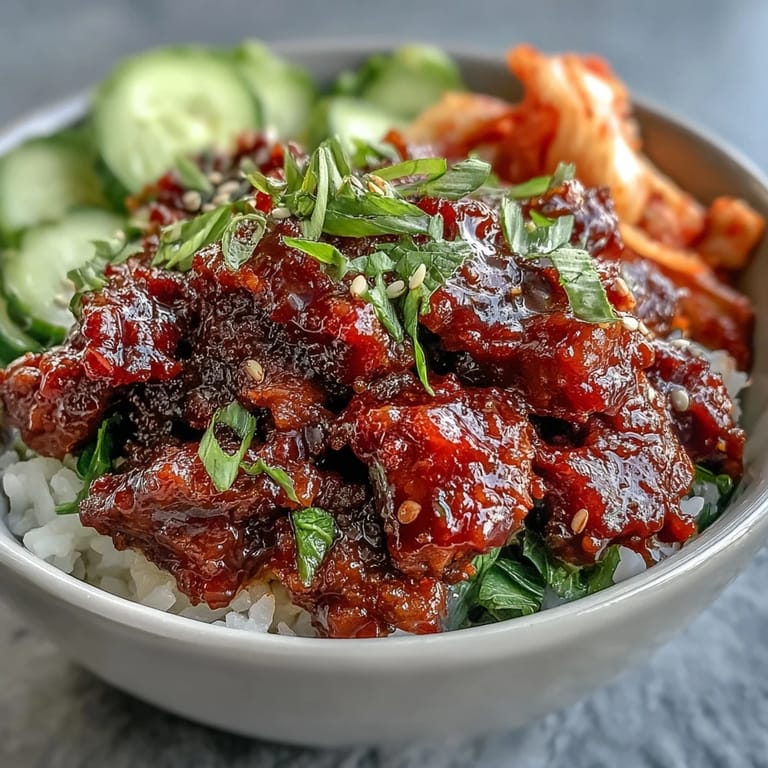
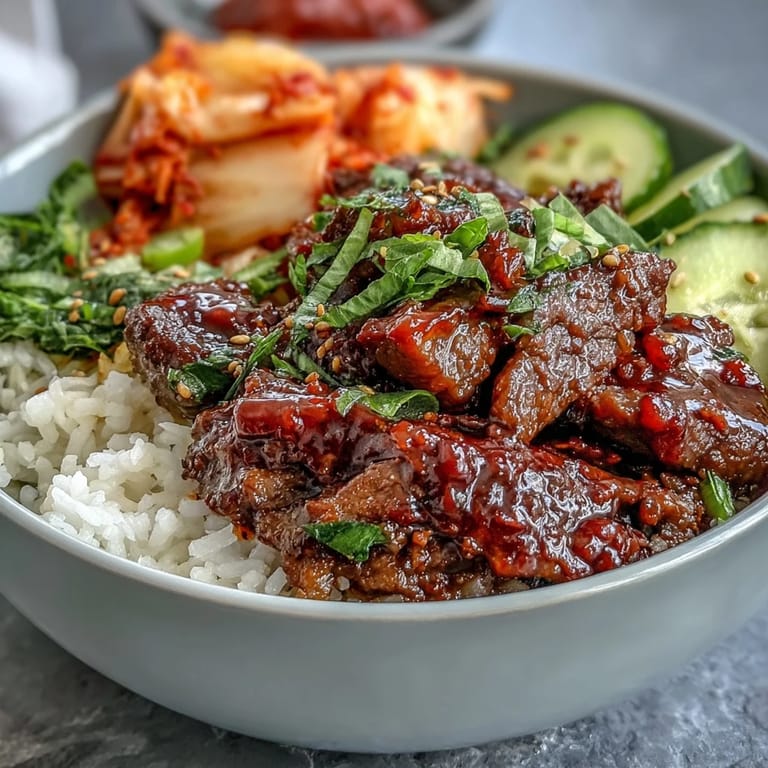
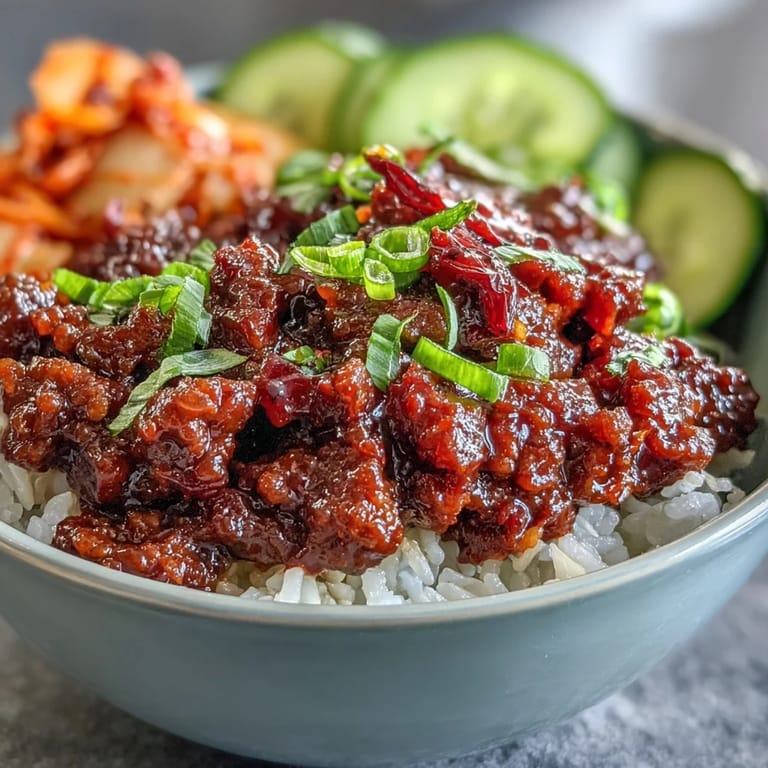
- Remove from heat, stir in half the green onions, then divide your rice into bowls and crown each portion with a generous spoonful of the beef mixture. Arrange your pickled vegetables, fresh cucumber, radish, and kimchi around the beef so each component is visible and accessible, then shower everything with remaining green onions and sesame seeds.
 Pin It
 This bowl became my go-to when I needed to feel like I had my life together but didn't have much time. There's something grounding about building your own bowl, layering cold and hot, crunchy and soft, spicy and cool, and watching it come alive under a scatter of sesame seeds.
The Art of the Quick Pickle
Quick pickling isn't fermentation; it's a fast flavor bath that softens vegetables while introducing acid and sweetness. The ratio of vinegar to sugar to salt matters, but not in a precious way—it's forgiving enough that you can taste as you go. I learned this by oversalting my first batch and then just adding more vegetables to balance it out, which actually worked and taught me the pickle is flexible as long as you have the basic formula down.
Why Gochujang Matters
Most people assume gochujang is just heat, but it's a whole ecosystem of fermented soybeans, chili, salt, and time. It brings funk and depth that cayenne or sriracha simply cannot replicate, making this bowl taste intentional rather than hastily spiced. Once you start using it, you'll find yourself adding it to marinades, soups, and even yogurt-based dressings, because it's that good.
Customizing Your Bowl
The beauty of this dish is that everyone gets to build exactly what they want, which means no one complains and everyone feels heard. Some people pile on extra kimchi and sriracha, others go light on heat and heavy on cucumber, and both are completely valid approaches. The base is sturdy enough to support whatever someone throws at it.
- For extra heat, drizzle sriracha over the beef or add a teaspoon more gochujang to the sauce.
- Brown rice works beautifully here and adds a nuttiness that plays well with the spice.
- If you don't have time for pickled vegetables, skip them, but know you're missing a crucial textural element.
 Pin It
 This bowl reminds you that bold flavors don't require complexity, just intention and a few good ingredients working together. Make it once, and it'll become the recipe you return to when you want to feel competent and satisfied.
Recipe FAQs
- → What makes gochujang sauce special?
Gochujang is a Korean fermented chili paste that delivers a unique combination of sweet, spicy, and umami flavors. It's thicker than sriracha and has a deeper complexity from fermentation, making it perfect for coating beef in this bowl.
- → Can I make this dish less spicy?
Absolutely. Reduce the gochujang to 1-2 tablespoons and add a bit more brown sugar to balance the flavors. You can also serve with plain white rice without the kimchi to dial down the heat level.
- → How long do the pickled vegetables keep?
The quick-pickled carrots and daikon will stay fresh in the refrigerator for up to one week when stored in an airtight container. They actually develop more flavor as they sit, making them great for meal prep.
- → What protein alternatives work well?
Ground chicken or turkey make excellent lighter substitutes. For a vegetarian version, use crumbled tofu or plant-based ground meat, and add a splash of tamari to maintain the savory depth.
- → Is this suitable for meal prep?
Yes, everything except the fresh cucumber toppings can be prepared ahead. Store the cooked beef, pickled vegetables, and rice separately in the refrigerator for up to 4 days. Reheat the beef and rice, then assemble with fresh toppings.
- → Can I use brown rice instead of white?
Brown rice works beautifully and adds nutty flavor plus extra fiber. Just note that brown rice takes longer to cook—about 45 minutes compared to 20 for white rice—so plan accordingly or use quick-cooking brown rice.