 Pin It
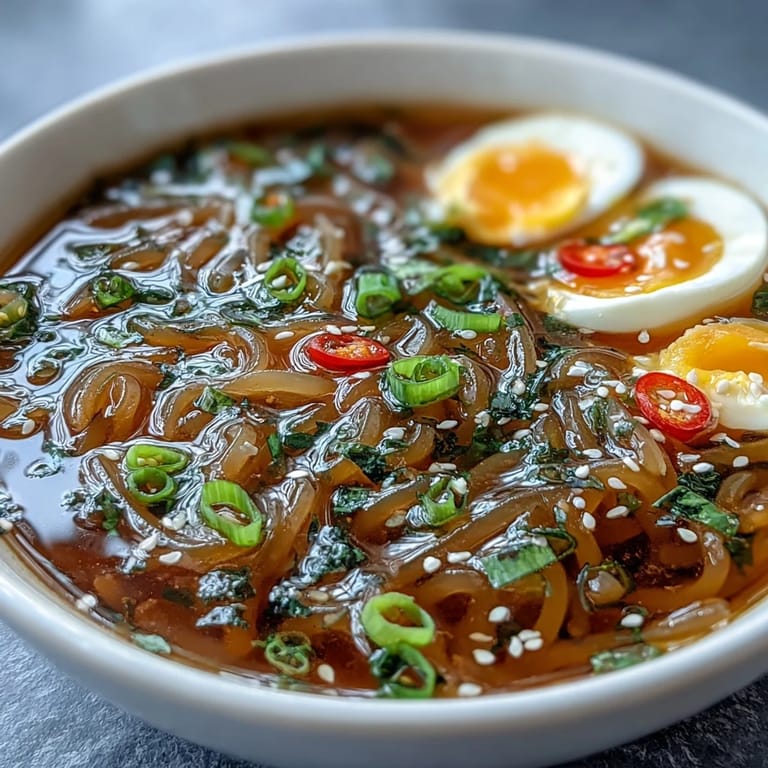
 When you are looking for a comforting, light, and deeply nourishing meal, Shirataki Noodles With Broth is the perfect choice. This Asian-inspired dish features zero-carb shirataki noodles simmered in a savory bone broth that is infused with the warming notes of fresh ginger and garlic, providing a satisfying experience without the heavy carbs.
Pin It The key to this dish is the aromatic infusion. By gently simmering the bone broth with fresh ginger and smashed garlic, you create a complex flavor profile that perfectly complements the neutral shirataki noodles. It is a simple technique that elevates a few ingredients into a restaurant-quality bowl of soup.
Ingredients
Tired of Takeout? 🥡
Get 10 meals you can make faster than delivery arrives. Seriously.
One email. No spam. Unsubscribe anytime.
- 4 cups (1 liter) high-quality bone broth (beef or chicken)
- 1 thumb-sized piece fresh ginger, sliced
- 2 cloves garlic, smashed
- 2 tablespoons soy sauce or tamari (for gluten-free)
- 1 tablespoon rice vinegar
- 1 teaspoon sesame oil
- 400 g (14 oz) shirataki noodles (drained and rinsed)
- 2 soft-boiled eggs, halved (optional)
- 1 small spring onion, thinly sliced (optional)
- 1 small red chili, thinly sliced (optional)
- Fresh coriander or parsley, chopped (optional)
- Toasted sesame seeds (optional)
Instructions
- Step 1: Prepare the Broth
- In a medium pot, combine the bone broth, ginger, garlic, soy sauce, rice vinegar, and sesame oil. Bring to a gentle boil over medium heat.
- Step 2: Infuse Flavors
- Reduce heat and simmer for 10 minutes to allow the ginger and garlic flavors to infuse into the liquid.
- Step 3: Prepare the Noodles
- Meanwhile, drain and thoroughly rinse the shirataki noodles under cold water. Place them in a sieve and pour boiling water over them to remove any natural odor.
- Step 4: Heat Through
- Add the prepared noodles to the simmering broth and heat through for 2–3 minutes.
- Step 5: Strain and Serve
- Remove the ginger and garlic slices from the broth. Divide the noodles and broth evenly between two bowls.
- Step 6: Garnish
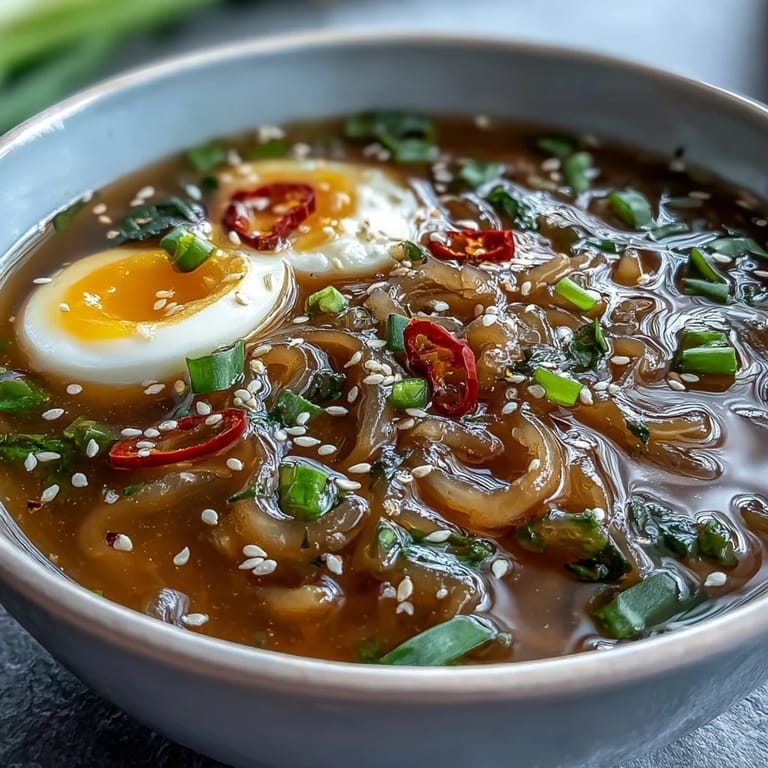
- Top each bowl with optional soft-boiled egg halves, spring onion, chili, fresh herbs, and toasted sesame seeds as desired.
Zusatztipps für die Zubereitung
To ensure the noodles have the best possible texture, the rinsing and scalding process is essential. This step removes the earthy scent typical of konjac noodles and ensures they are ready to soak up the savory, umami-rich broth. Using a medium pot allows the broth to stay at a consistent simmer while the aromatics work their magic.
Varianten und Anpassungen
This recipe is highly adaptable. For extra protein, you can add shredded cooked chicken or tofu. If you prefer a vegetarian version, use a rich vegetable broth and omit the eggs. For those with a soy allergy, coconut aminos are an excellent 1:1 replacement for soy sauce or tamari. You can also adjust the seasoning with extra salt or soy sauce to fit your palate.
Serviervorschläge
Serve this dish in deep bowls while steaming hot. The addition of a soft-boiled egg adds a wonderful creaminess to the broth, while the fresh chili and spring onions provide a bright, spicy contrast. It is a complete meal on its own but also pairs well with a side of steamed greens or a light salad.
 Pin It
 Shirataki Noodles With Broth is a testament to how simple ingredients can create a deeply satisfying and healthful meal. Whether you're navigating food sensitivities or simply looking for a warm bowl of goodness, this recipe provides a delicious and quick solution for any day of the week.
Recipe FAQs
- → What are shirataki noodles?
Shirataki noodles are translucent, gelatinous noodles made from konjac yam. They're naturally zero-calorie and zero-carb, making them popular for low-carb and gluten-free eating. They have a mild flavor that absorbs surrounding broths and sauces beautifully.
- → Do I need to cook shirataki noodles?
Shirataki noodles come pre-cooked and just need rinsing and heating. Thoroughly rinse under cold water to remove the natural packaging liquid, then pour boiling water over them to eliminate any lingering odor before adding to your broth.
- → Can I make this vegetarian?
Absolutely. Simply substitute the bone broth with a rich vegetable broth and omit the eggs or replace them with marinated tofu. The flavor profile works equally well with plant-based broths.
- → How do I store leftovers?
Store broth and noodles separately in airtight containers in the refrigerator for up to 3 days. The noodles will continue absorbing liquid, so keeping them apart helps maintain texture. Reheat broth gently and add noodles just before serving.
- → What can I use instead of soy sauce?
For gluten-free needs, tamari works perfectly as a 1:1 substitute. For soy-free diets, coconut aminos provide a slightly sweeter alternative. Fish sauce can also add depth if you eat seafood, though it will change the flavor profile slightly.
- → Can I add other vegetables?
Certainly. Bok choy, spinach, mushrooms, sliced carrots, or bean sprouts make excellent additions. Add heartier vegetables like carrots and mushrooms during the broth simmer, while delicate greens like spinach should be added in the last minute of cooking.