 Pin It
 The first time I watched my neighbor make basbousa, I was struck by how her hands moved through the semolina mixture with such ease, like she'd done it a thousand times before. She'd invited me into her kitchen on a Friday afternoon, the air already warm with the smell of butter and coconut, and I realized this wasn't just a dessert—it was a ritual. Years later, I finally understand why she never measured anything precisely: some recipes live in your hands, not your measuring cups.
I brought this to a potluck once, certain no one would touch it because it looked so unfamiliar, so not-American. By the end of the night, there were only crumbs left and three people asking for the recipe. That's when I knew it wasn't just nostalgia making me love basbousa—it was genuinely, universally delicious.
Ingredients
- Fine semolina (1 ½ cups): This is the backbone of your basbousa, giving it that distinctive grainy-yet-tender crumb. Don't use coarse semolina or you'll end up with something gritty.
- Desiccated coconut (1 cup, unsweetened): Unsweetened is crucial here—sweetened coconut will make the whole thing cloyingly sweet and throw off the moisture balance.
- Plain yogurt (1 cup): This keeps everything moist and tender while adding a subtle tang that plays against the sweetness beautifully.
- Melted butter or ghee (½ cup): Ghee will give you a more authentic flavor, but butter works perfectly and makes the cake richer.
- Granulated sugar (1 cup for cake): Mix it right into the dry ingredients so it dissolves evenly and you don't get pockets of sweetness.
- Baking powder (1 tsp): Just enough to give it a gentle lift without making it cake-like.
- Vanilla extract (1 tsp): A small amount that whispers rather than shouts, rounding out all the other flavors.
- Salt (¼ tsp): Never skip this—it makes the coconut and semolina sing.
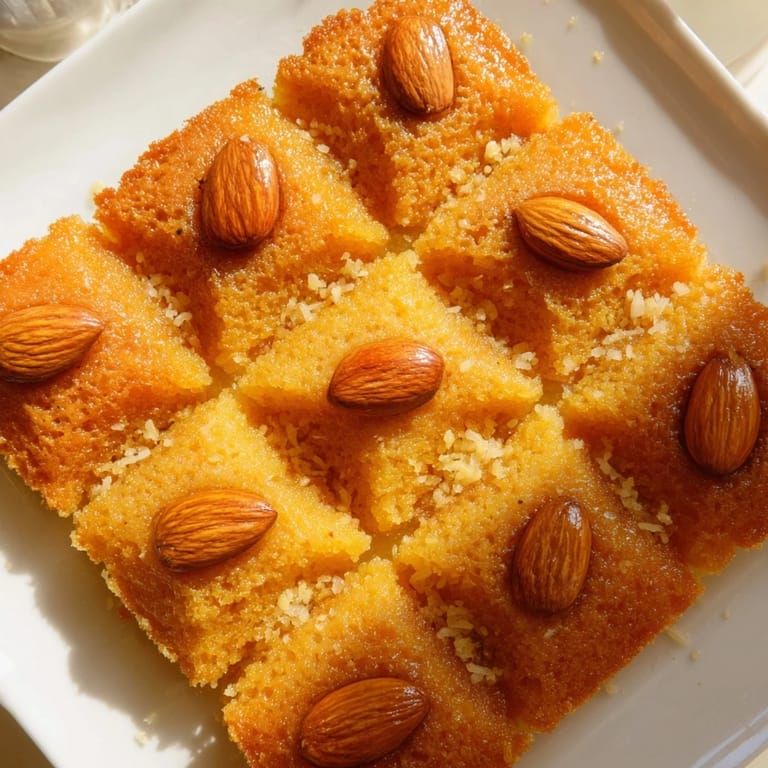
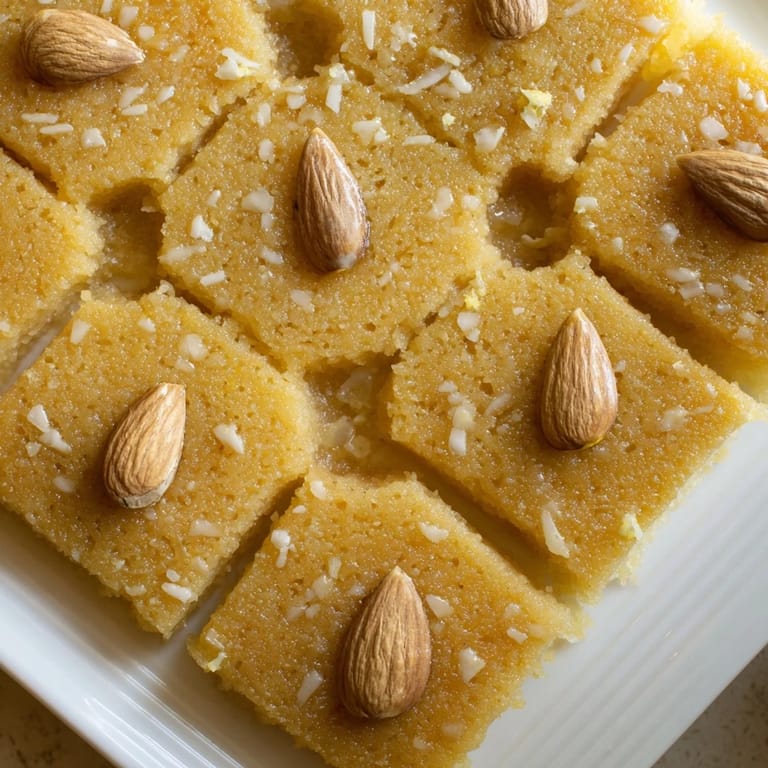
- Whole blanched almonds (about 12): Place one in the center of each piece, both for looks and for that delicate almond flavor that complements coconut perfectly.
- Sugar for syrup (1 cup): This dissolves into a fragrant, light syrup that soaks into the hot cake.
- Water (¾ cup): The base of your syrup; room temperature is fine.
- Lemon juice (1 tsp): A small amount cuts through the sweetness and prevents the syrup from tasting cloying.
- Rose water or orange blossom water (1 tsp, optional): If you have it, use it—it transforms the whole experience into something floral and exotic.
Tired of Takeout? 🥡
Get 10 meals you can make faster than delivery arrives. Seriously.
One email. No spam. Unsubscribe anytime.
Instructions
- Preheat and prepare:
- Get your oven to 350°F (180°C) and grease your 9x9 inch pan generously with butter or a light coating of tahini. This step matters—you want easy release.
- Mix the dry base:
- Combine your semolina, sugar, desiccated coconut, baking powder, and salt in a large bowl. Stir it all together really well so there are no hidden pockets of baking powder that will create weird bitter spots.
- Bring it together:
- Pour in your yogurt, melted butter, and vanilla, then stir everything until you have a thick, cohesive batter that holds together. It should feel slightly grainy but moist—like wet sand that sticks to itself.
- Spread and score:
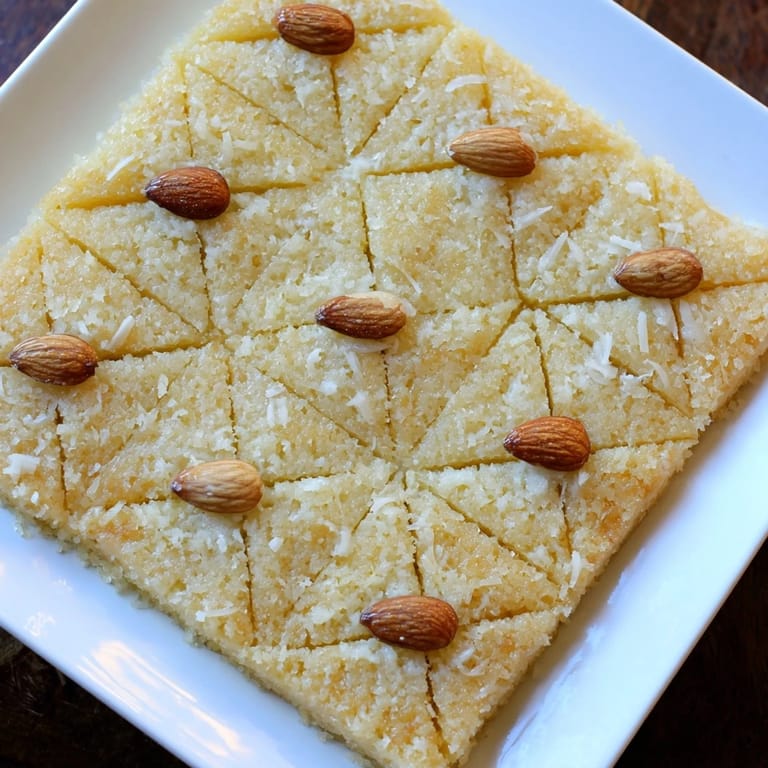
- Press the batter firmly and evenly into your prepared pan, smoothing the top with a spatula or damp hands. Using a sharp knife, score the surface into 12 squares or diamonds while it's still unbaked, then place one whole almond in the center of each piece.
- Bake until golden:
- Bake for 30–35 minutes until the top is deep golden brown and a toothpick inserted into the center comes out clean. The edges will be a bit darker, which is perfect.
- Make your syrup:
- While the cake bakes, combine your sugar, water, and lemon juice in a saucepan and bring to a boil. Let it simmer for 8–10 minutes until it thickens slightly—you want it to coat the back of a spoon lightly. Remove from heat and stir in rose water or orange blossom water if you're using it, then let it cool completely.
- The crucial moment:
- The second your basbousa comes out of the oven, pour the cooled syrup evenly over the hot cake. This is where the magic happens—the hot cake drinks it all in, becoming impossibly moist and slightly custard-like.
- Cool and serve:
- Let everything cool completely to room temperature, then re-cut along your scored lines with a sharp knife. The pieces should separate cleanly.
 Pin It
 My friend's grandmother taught me that basbousa isn't just something you eat—it's something you offer. The act of setting out a plate with tea, that small gesture of hospitality, is half the recipe. I've never forgotten that.
The Texture Story
There's this moment between the baking and the syrup-pouring where basbousa sits in a liminal space. Fresh out of the oven, it's got crispy edges and a barely-set interior, almost fragile. Then you pour that cool syrup over it and everything shifts: the cake soaks it up, becomes tender, almost custardy in the center. Some people prefer it immediately after that transformation, when there's still a little contrast between the firmer outside and the silky center. Others let it sit for hours or even overnight and eat it the next morning, when it's become uniformly moist and almost gelatinous in the best way.
Serving and Storage
Basbousa is best served at room temperature, never cold—the syrup flavor is more pronounced and the texture is more pleasant. I like to serve it with strong tea or Turkish coffee, the bitterness playing beautifully against all that sweetness. If you're storing it, keep it in an airtight container and it will last for several days, though honestly it rarely lasts that long in my house.
Variations and Swaps
This is where basbousa gets fun because it's actually quite flexible once you understand the core structure. I've seen versions with extra shredded coconut on top before baking, which gives it a wonderful texture. Some people use half the yogurt and replace it with sour cream for extra tang and richness. Pistachios are a traditional swap for almonds if that's what you have on hand, and they add a slightly different earthiness to the flavor profile.
- For more coconut presence, sprinkle extra desiccated coconut on top of the batter right before baking so it gets toasted and crispy.
- If you don't have rose water or orange blossom water, the basbousa is still absolutely delicious without it—the lemon juice does enough heavy lifting.
- Some versions use honey instead of all granulated sugar, which creates a slightly different syrup that's a bit thicker and more complex tasting.
 Pin It
 Every time I make basbousa, I think about that neighbor's kitchen and her unhurried hands moving through the semolina. It taught me that some recipes are worth getting right because they're more than food—they're connection.
Recipe FAQs
- → What makes Basbousa moist and flavorful?
The combination of yogurt and melted butter in the batter keeps the cake moist, while soaking it with fragrant syrup adds sweetness and aroma.
- → Can almonds be substituted with other nuts?
Yes, pistachios or other tree nuts can replace almonds to provide a different texture and flavor.
- → How is the syrup prepared for soaking the cake?
The syrup is made by boiling sugar, water, and lemon juice, then simmering until slightly thickened. Rose or orange blossom water can be added for fragrance.
- → What baking pan size works best?
A 9x9 inch (23x23 cm) pan allows even baking and is ideal for scoring the cake into serving pieces.
- → How should the cake be scored before baking?
Score the batter surface into 12 squares or diamond shapes and place an almond in each center before baking to form neat portions.
- → Can additional coconut flavor be added?
Yes, sprinkling extra desiccated coconut on top before baking enhances the coconut aroma and texture.