 Pin It
 The first time I tasted knafeh at my neighbor's kitchen, I didn't expect the contradictions that made it magical—crispy exterior meeting stretchy cheese, honey syrup pooling into warm pockets of phyllo. She laughed when she caught me closing my eyes after the first bite, and later that week, I found myself searching for kataifi at three different markets determined to recreate that moment. What struck me most wasn't just the flavor but how alive the dessert felt, how it demanded to be eaten immediately while it was still warm, still crackling.
I made this for my sister's engagement party on a humid August afternoon, and someone asked if I'd bought it from a Lebanese bakery—the way she said it, with genuine surprise, meant everything. The knafeh emerged from the oven at exactly the right golden moment, and when I inverted it onto the platter, the whole thing held together perfectly, gleaming with syrup like edible jewelry. That's when I understood this dessert isn't just about technique; it's about confidence and timing working together.
Ingredients
- Akawi cheese: The traditional choice, salty and slightly tangy—soaking it removes excess salt and gives you that distinctive stretchy texture that makes knafeh sing.
- Ricotta cheese: Adds creaminess and mild flavor that balances the Akawi's intensity; low-moisture mozzarella works if you can't find Akawi, though the result shifts slightly.
- Kataifi (shredded phyllo): These thin, crispy strands are the soul of the dish—they create the shattered, golden exterior that everyone remembers.
- Unsalted butter: Melted and mixed through every strand of kataifi, it's what turns the pastry golden and keeps it crispy all the way through.
- Granulated sugar, water, lemon juice: The syrup base that carries orange blossom and rose water flavors throughout.
- Orange blossom and rose water: These aren't decorative; they're the magic that distinguishes knafeh from every other cheese pastry you've ever tasted.
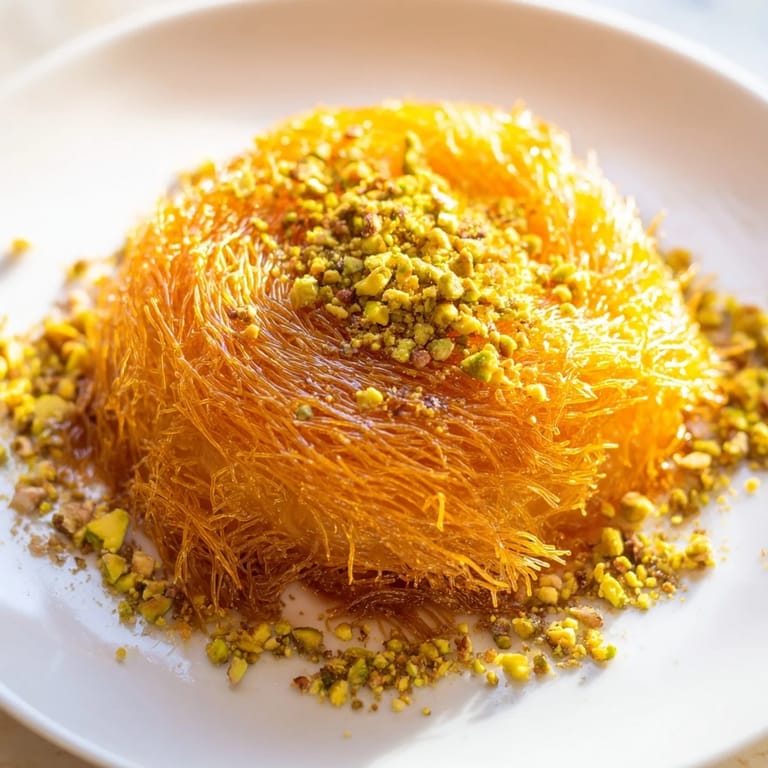
- Pistachios: Finely chopped for garnish, they add a beautiful green color and a slight bitter-green note that keeps the sweetness honest.
Tired of Takeout? 🥡
Get 10 meals you can make faster than delivery arrives. Seriously.
One email. No spam. Unsubscribe anytime.
Instructions
- Prepare the cheese ahead:
- If using Akawi, start soaking it several hours before or overnight, changing the water each time you remember—this step feels tedious but it's what prevents your finished knafeh from tasting like the Dead Sea. Shred or slice the drained cheese thinly and combine it gently with ricotta, just until mixed.
- Butter every strand of kataifi:
- Pour melted butter over the separated phyllo strands slowly and toss gently until each one glistens; under-buttered kataifi will taste dry no matter what else you do right. This is easier than it sounds if you use your hands and work patiently.
- Build the base layer:
- Spread half your buttered kataifi across the greased baking dish, pressing gently so it stays compact enough to form a true base but not so hard that you crush the delicate strands. You want structure that won't collapse when the cheese layer lands on top.
- Layer the cheese:
- Spread your cheese mixture evenly across the phyllo base, leaving about a half-inch border if you can—this keeps the cheese from running out the sides as it melts. This moment is where you can already smell what's coming.
- Top with remaining phyllo:
- Cover the cheese with the rest of your buttered kataifi, pressing down gently and evenly so everything melds during baking but the top stays light and crispy. Some people press too hard here; resist that urge.
- Bake until golden and shattering:
- At 180°C (350°F) for 30-35 minutes, you're watching for deep golden brown on top and listening for the knafeh to smell nutty and caramelized. It should smell like celebration.
- Make the syrup while it bakes:
- Combine sugar, water, and lemon juice in a saucepan, bring to a boil, then simmer gently for 8-10 minutes until it coats the back of a spoon slightly. Remove from heat, let it cool slightly, then stir in orange blossom and rose water—add these to hot syrup and the fragrance will fill your entire home.
- The inversion moment:
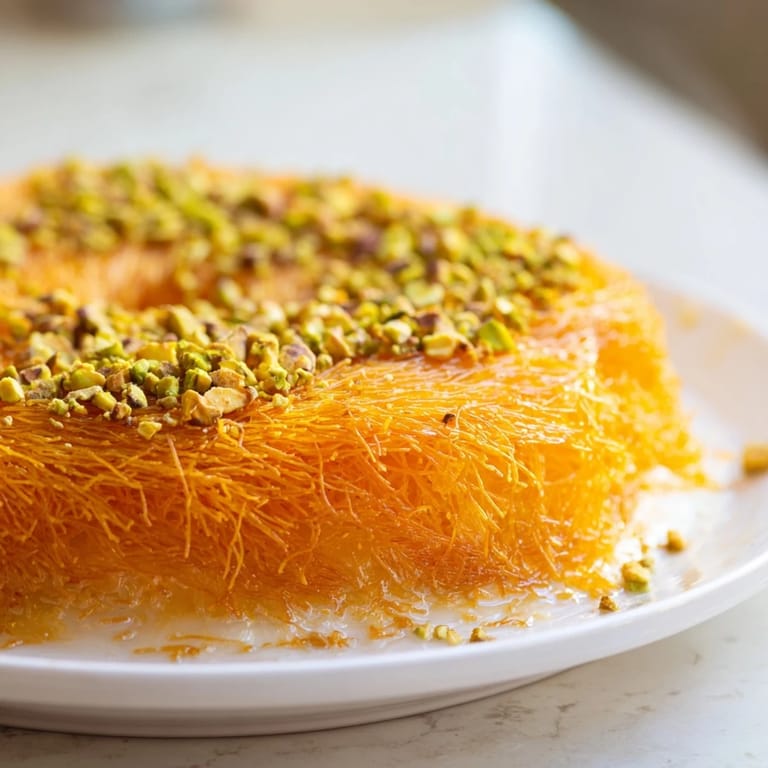
- Once the knafeh comes out of the oven, place your serving platter over the baking dish and flip it confidently—hesitation leads to broken pieces. Pour half the syrup over the hot knafeh immediately so it soaks into the layers while everything is warm.
- Garnish and serve:
- Scatter pistachios across the top and drizzle with honey if you like, then serve within minutes while the outside is still crackling and the cheese still stretches. Waiting longer than 10 minutes is a tragedy you can avoid.
 Pin It
 The year my family started a tradition of making knafeh together on holidays, everyone claimed to hate cooking but gathered in the kitchen anyway—my cousin separated phyllo strands while my uncle made the syrup, and I pressed layers into the dish, and somehow in that collaboration, knafeh became something beyond food. It was the sound of laughter mixed with the smell of orange blossom, the small corrections we offered each other, the moment we pulled it from the oven and everyone fell silent, knowing we'd done something right.
Why This Dessert Deserves Your Attention
Knafeh sits in that rare category of desserts that feels both indulgent and respectful—it's sweet but not cloying, it's rich but not heavy, and it teaches you something about flavor balance with each bite. The combination of crispy and melted, bitter pistachios and floral syrup, warm cheese and cool memory—it works on every level. If you've ever thought Middle Eastern desserts were intimidating, this recipe removes that barrier while keeping all the authentic flavor and showstopping presentation.
Timing and Temperature Matter More Than You Think
Getting the oven temperature exactly right changes everything about how knafeh bakes—too hot and the outside burns before the cheese melts, too cool and you end up with soft soggy phyllo instead of that crackling texture that defines the dish. I learned this by overshooting the temperature once and watching it go from beautiful to burnt in what felt like 30 seconds, so I've become religious about using an oven thermometer. The baking time of 30-35 minutes is a range, not gospel, so watch for color and listen for crackling sounds rather than timing it rigidly.
Building a Proper Cheese Layer
The cheese filling sounds simple but it's where patience actually pays off—soaking Akawi properly and draining it completely means the difference between knafeh that stays together and one that becomes an oily mess. Ricotta adds structural help too; it stops the cheese layer from being purely liquid when it melts, giving you something cohesive and wonderful instead of separated curds swimming in butter. Some people skip the soaking step entirely and end up with something that tastes like salt, which is its own harsh lesson.
- Mix your cheeses gently by folding rather than stirring aggressively; rough handling makes the texture dense and grainy.
- Taste a tiny piece of soaked Akawi before committing it to the recipe; if it's still too salty, soak it longer.
- The cheese layer should be about half an inch thick, enough to be substantial but not so thick that it doesn't cook through properly.
 Pin It
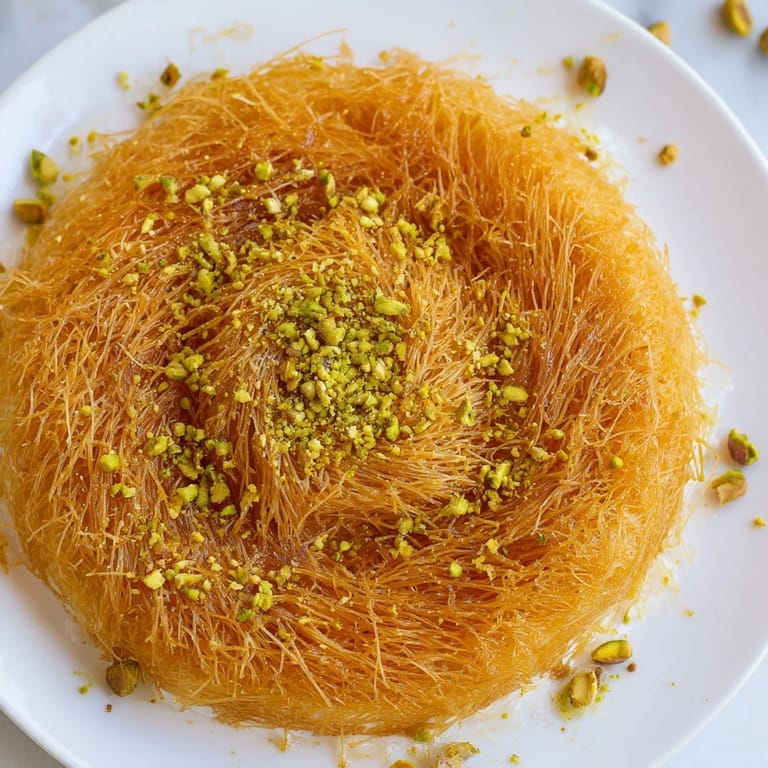
 Making knafeh changes something in you—once you've tasted it warm and crispy, dripping with orange blossom syrup and studded with green pistachios, you understand why it's been celebrated for centuries across the Levant. Make this for people you care about, and watch their faces light up with that same surprise and joy I felt that first time.
Recipe FAQs
- → What cheeses are used in this dish?
Traditionally, Akawi cheese is used, soaked and drained to reduce saltiness, combined with ricotta for creamy texture. Mozzarella can be a substitute.
- → How is the kataifi pastry prepared for baking?
The shredded phyllo, or kataifi, is gently separated and coated thoroughly with melted butter before layering to achieve a crisp, golden crust.
- → What flavors are present in the syrup?
The syrup features granulated sugar, lemon juice, and is scented with orange blossom and rose waters for a fragrant, floral taste.
- → Can the syrup be adjusted for sweetness?
Yes, adjust sugar quantity in the syrup to preference, and optionally drizzle honey on top for added sweetness and depth.
- → What is the best way to serve this dessert?
Serve warm, immediately after baking and soaking in syrup, garnished with chopped pistachios. Pair well with Turkish coffee or mint tea.