 Pin It
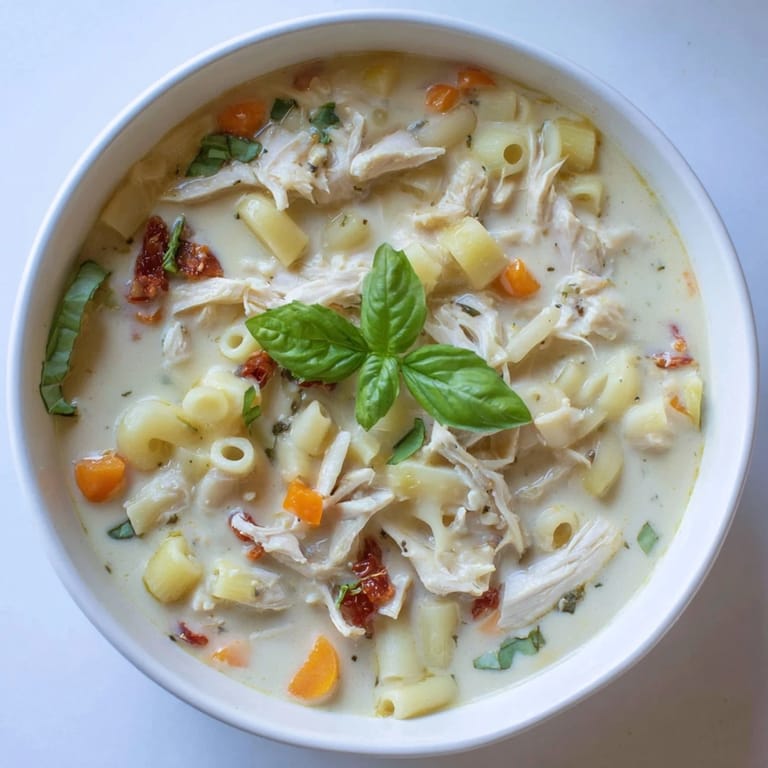
 There's something about a soup that tastes like someone's been stirring it with hope. I discovered this version of Marry Me Chicken one rainy Tuesday when I was hunting for something warm that didn't feel like an obligation to make—something that could go from empty pot to full bowls in less than an hour. The magic turned out to be in letting sun-dried tomatoes and cream do the heavy lifting while tender chicken and silky pasta did the real talking. It became the recipe I reach for when I want to feel like I'm taking care of people without spending all evening in the kitchen.
I remember making this for friends during that first cold snap in November, when everyone suddenly gets nostalgic for things that simmer on the stove. One guest asked for the recipe before finishing her bowl, and that's when I knew the balance of flavors was right—not too heavy, not too light, just enough cream to feel indulgent without overshadowing the brightness of the sun-dried tomatoes.
Ingredients
- Boneless, skinless chicken breasts: Two breasts give you tender, shredable meat that distributes evenly through the broth; searing them first builds flavor before they finish cooking in the soup.
- Olive oil: Just enough to get that golden sear on the chicken, which matters more than you'd expect for the final taste.
- Yellow onion, carrots, and celery: The holy trinity that's been supporting soups since forever; dicing them evenly means they soften at the same pace.
- Garlic: Three cloves minced fine, added after the vegetables soften so it doesn't turn bitter while you're still building layers of flavor.
- Sun-dried tomatoes in oil: This is the secret ingredient that makes people ask questions; they bring concentrated sweetness and a subtle tang that regular tomatoes can't match.
- Low-sodium chicken broth and water: The water dilutes the broth just enough so the flavors feel bright rather than overwhelmed, and you control the salt as you go.
- Heavy cream and Parmesan: Added at the very end to create a silky, luxurious finish that makes each spoonful feel intentional.
- Ditalini pasta: Small tubes that catch broth in every bite; they cook right in the pot, which means less to wash.
- Dried oregano and thyme: Dried herbs work beautifully here because they have time to unfurl and release their essence into the simmering broth.
- Fresh basil: Scattered at the very end so it stays bright and doesn't fade into the background.
Tired of Takeout? 🥡
Get 10 meals you can make faster than delivery arrives. Seriously.
One email. No spam. Unsubscribe anytime.
Instructions
- Sear the chicken until it turns golden:
- Season your chicken breasts and let them hit hot oil. You'll hear that satisfying sizzle, and after three to four minutes per side, they should be caramel-colored on the outside—they don't need to cook through yet, just get enough color to matter.
- Soften the vegetables slowly:
- Once the chicken is out, add onion, carrots, and celery to the same pot where the oil still holds warmth and flavor. Stir every minute or so for about five minutes, until the vegetables start to smell sweet and soften at the edges.
- Wake up the aromatics:
- Minced garlic goes in after the vegetables have lost their raw edge, followed by the sun-dried tomatoes and herbs. You're building layers here, and this is where the soup stops being generic and starts being something people will remember.
- Build the broth:
- Pour in your broth and water, add the bay leaf, and nestle the chicken breasts back in. The liquid should mostly cover them; this is where the alchemy happens over the next fifteen to twenty minutes.
- Simmer until chicken is tender:
- Once it reaches a gentle boil, turn the heat down so the soup barely bubbles. You're looking for the chicken to be cooked through and the vegetables to be soft enough to break with your spoon.
- Shred the chicken:
- Pull the chicken out onto a plate and use two forks to pull it apart into tender strands. This only takes a minute but distributes the chicken evenly, so every spoonful feels substantial.
- Add pasta and cook until al dente:
- Stir the shredded chicken back in along with the ditalini. The pasta typically takes eight to ten minutes; taste it at the eight-minute mark because pasta continues to soften even after you stop stirring.
- Finish with cream and cheese:
- Lower the heat to barely a simmer, fish out the bay leaf, then stir in the heavy cream and Parmesan cheese. The heat will melt the cheese into the broth, creating that silky texture without any graininess.
- Taste and adjust before serving:
- This is non-negotiable; a pinch more salt, a crack of pepper, or even that squeeze of lemon mentioned in the notes can transform the whole thing from good to unforgettable.
 Pin It
 I made this soup for myself on a quiet Sunday afternoon, no occasion, no guests—just because I wanted something that felt like being held in a bowl. That's when I understood this recipe isn't really about impressing anyone; it's about knowing how to turn simple ingredients into something that makes you feel less alone.
Why This Tastes Like Comfort
Cream-based soups have a reputation for being heavy, but this one avoids that trap by using broth as the base and cream as the accent. The sun-dried tomatoes add brightness that keeps everything from feeling too rich, and the herbs remind you that there's actual cooking happening here, not just reheating. The pasta absorbs flavor as it cooks, turning into little vessels of broth with every bite.
Customizing Without Losing the Plot
If you want to add spinach, stir it in during the last two minutes of cooking; it wilts instantly and adds an earthiness that plays well with the cream. Using rotisserie chicken is legitimate if you're short on time—just shred it and add it after the pasta cooks so it doesn't get overdone. Some people swap water for white wine to add acidity, which is brilliant if you have an open bottle, but the lemon juice in the notes does the same job.
What to Serve Alongside
Crusty bread is obvious because there's broth to soak up, but honestly, a simple green salad cuts through the richness and makes the meal feel balanced. If you're pairing wine, dry white like Pinot Grigio lifts the cream while complementing the herbs. This soup is also the kind of dish that tastes better the next day after flavors have settled and married together.
- Make it the day before and reheat gently to let the flavors deepen and mellow.
- Fresh basil always goes on just before eating, never cooked into the soup where it loses its brightness.
- A little extra Parmesan on top never hurt anyone, and people appreciate the invitation to customize their bowl.
 Pin It
 This soup proves that sometimes the most meaningful meals are the ones that don't require fancy technique or hard-to-find ingredients, just attention and kindness. Make it for yourself or someone you want to feel warm.
Recipe FAQs
- → How do I prevent the chicken from drying out?
Sear the chicken breasts until golden but not fully cooked, then simmer gently in broth to keep them tender and moist.
- → Can I substitute the ditalini pasta?
Yes, small pasta shapes like orzo or elbow macaroni work well and maintain the dish's texture.
- → What is the best way to shred the chicken?
Use two forks to pull the cooked chicken apart evenly, which helps it blend smoothly with the broth and pasta.
- → Can I make this dish ahead of time?
It can be prepared a day in advance; flavors often deepen after resting refrigerated overnight. Reheat gently before serving.
- → How can I add more depth to the broth?
Incorporate herbs like oregano and thyme, and consider a splash of lemon juice or extra Parmesan for brighter, richer notes.
- → Is there a vegetarian alternative?
Omit the chicken and use vegetable broth with additional sun-dried tomatoes and vegetables for a tasty variation.