 Pin It
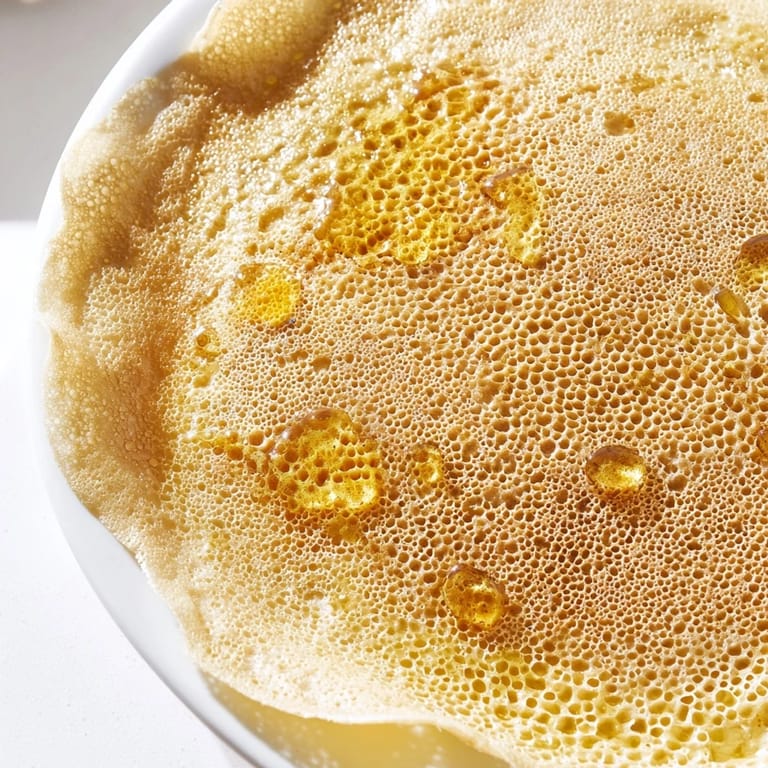
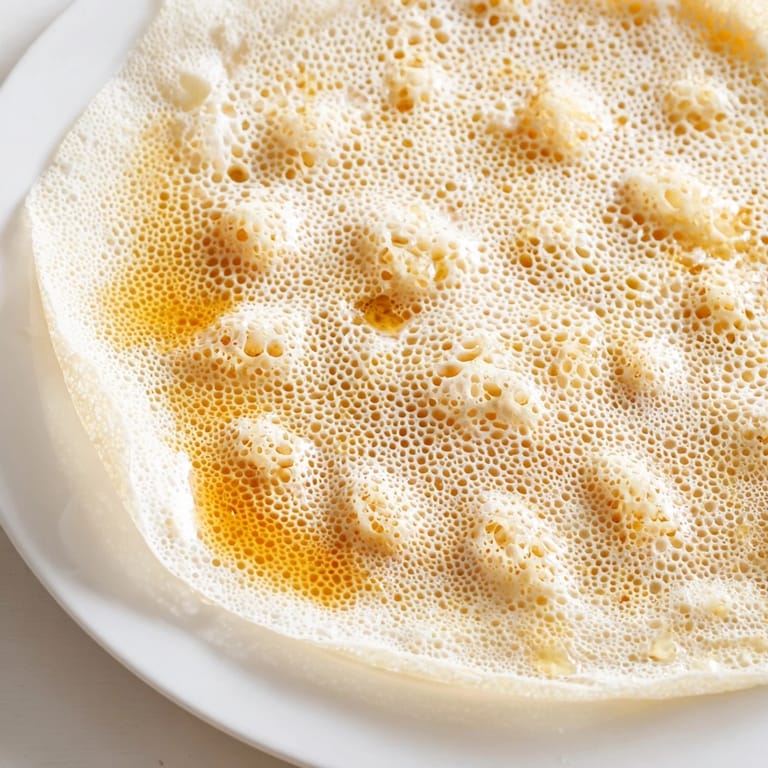
 There's something magical about watching a baghrir cook. The first time I made these Moroccan crepes, I stood at the stove mesmerized as the surface transformed into a delicate honeycomb of tiny holes—it felt like the batter was breathing. My grandmother had described them as tasting like clouds drizzled with liquid gold, and I finally understood what she meant when steam rose from my first finished crepe, still warm enough to make the honey shimmer and pool into every pocket.
I remember making these for my roommate who'd just had the worst week at work, and her entire face changed the moment she bit into one. She sat at our tiny kitchen table in silence for a moment, then asked for seconds before even finishing the first. That's when I realized baghrir wasn't just breakfast—it was comfort wrapped in a crepe.
Ingredients
- Fine semolina: This is what creates the signature honeycomb texture, so don't skip it or substitute with regular semolina.
- All-purpose flour: Balances the semolina and prevents the crepes from becoming too dense or grainy.
- Warm water: Temperature matters here—if it's too hot, you'll kill the yeast and lose the bubbles that make these so special.
- Active dry yeast: Just a teaspoon is enough to create those tiny holes that give baghrir its characteristic appearance.
- Baking powder: Works alongside the yeast to ensure your crepes are light and airy throughout.
- Sugar: Feeds the yeast and adds a subtle sweetness to the batter itself.
- Salt: Balances the sweetness and deepens the flavor of the semolina.
- Unsalted butter: Use good quality butter—it's melted with honey, so its flavor will shine.
- Honey: Raw or regular honey both work, but raw honey has a more floral complexity that pairs beautifully with the neutral crepes.
Tired of Takeout? 🥡
Get 10 meals you can make faster than delivery arrives. Seriously.
One email. No spam. Unsubscribe anytime.
Instructions
- Mix Your Dry Ingredients:
- In a large bowl, whisk together the semolina, flour, sugar, yeast, baking powder, and salt until everything is evenly distributed. You want no lumps and no pockets where the yeast sits alone.
- Add Water Slowly:
- Pour the warm water in gradually while whisking constantly to prevent lumps from forming. The batter should be smooth and pourable, like a thick pancake batter—not too thick, not too thin.
- Let It Rest and Bubble:
- Cover the bowl loosely and let it sit at room temperature for 30 minutes. You'll see it begin to bubble slightly as the yeast wakes up and starts creating those tiny air pockets that will become your honeycomb texture.
- Heat Your Pan (No Oil Needed):
- Set a nonstick skillet or crepe pan over medium heat and let it warm for a minute. Don't grease it—the batter needs nothing to stick to the pan, which is part of what makes these crepes so special.
- Pour and Swirl Gently:
- Pour about ¼ cup of batter into the center of the hot pan, then use a gentle circular motion to spread it evenly. Don't flip—this is a one-sided crepe.
- Watch for the Honeycomb:
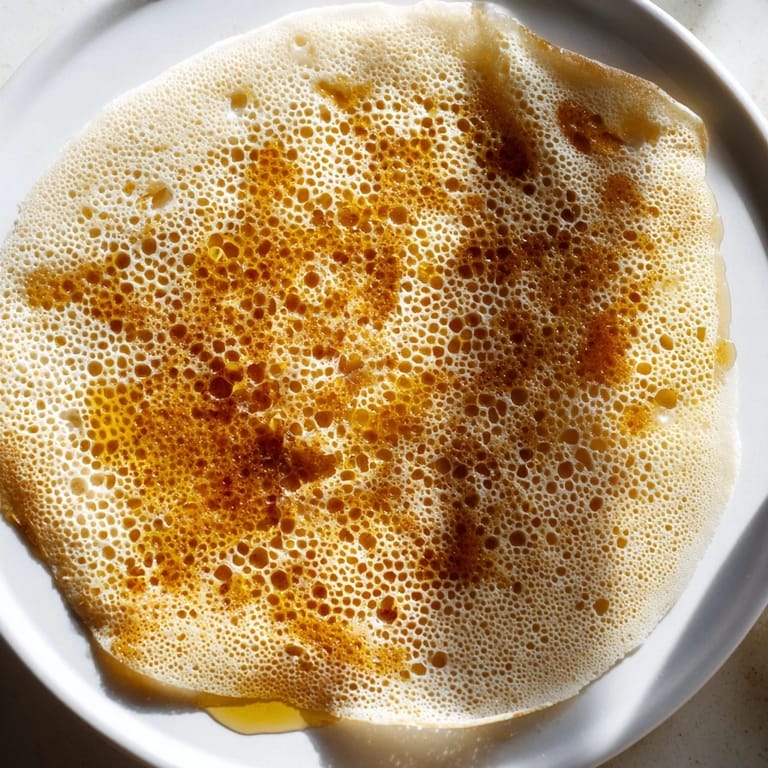
- Cook for about 2 to 3 minutes, watching as the surface dries and tiny holes bubble up across it. When the top is mostly dry and dotted with those signature holes, it's done.
- Transfer and Keep Going:
- Use a spatula to gently lift the baghrir onto a plate and repeat with the remaining batter. Stir the batter occasionally as you work since the semolina has a tendency to settle slightly at the bottom.
- Melt Butter and Honey Together:
- While you finish cooking, warm a small saucepan over low heat and combine the butter and honey, stirring gently until they're merged into a smooth mixture.
- Serve Warm and Generous:
- Stack your warm baghrir on a plate and drizzle generously with the honey-butter mixture. Let it soak into those honeycomb pockets while you pour a cup of strong coffee or sweet tea.
 Pin It
 There's a moment when you make baghrir for someone and watch them experience it for the first time that feels almost sacred. It's not a complicated dish, but it carries such generosity—every spoonful of honey-soaked, hole-filled softness feels like someone saying, I made this for you.
The Semolina Secret
Semolina is the soul of baghrir, and I learned this the hard way by trying to make a version with just flour. The texture fell completely flat—no honeycomb, no lightness, just disappointment. Fine semolina has a particular protein structure and grain size that creates those characteristic holes when combined with yeast. It's not something you can fully replicate with flour alone, so sourcing good semolina is worth the small effort.
The Resting Period Matters
I used to rush this step, convinced that 15 minutes would be enough, and my crepes came out flat and lifeless. Then I actually timed it properly and gave the batter the full 30 minutes to rest, and it was like the difference between a whisper and a song. The yeast needs time to work, creating the tiny bubbles that will give structure to your honeycomb. Patience transforms a watery batter into something alive and airy.
Serving and Storing
Baghrir is truly best served fresh and warm, straight from the pan into your hands or onto a plate. The texture is most delicate and tender at that moment, before it cools and becomes slightly chewy. If you do need to store leftovers, wrap them gently in a cloth and reheat them very gently in a low oven or over a dry skillet for just a minute.
- Fresh baghrir stays soft for about 2 hours at room temperature if well-wrapped.
- You can freeze cooked baghrir for up to a week and gently reheat it before serving.
- Always drizzle with honey-butter just before eating for the best experience.
 Pin It
 This is the kind of recipe that feels simple on paper but teaches you something profound about patience and texture. Once you've mastered baghrir, you'll find yourself making it not just for breakfast, but for anyone who needs a little bit of comfort.
Recipe FAQs
- → What gives Baghrir its honeycomb texture?
The unique honeycomb appearance comes from the batter resting to develop bubbles and cooking only on one side until the surface forms characteristic holes.
- → Can I substitute semolina with another flour?
Semolina provides the distinctive texture, but finely ground durum wheat or a mix of flours can be used, although texture and flavor may vary.
- → Why is the batter left to rest before cooking?
Resting allows the yeast to produce bubbles that create the spongy, airy texture and the honeycomb surface during cooking.
- → How should Baghrir be served traditionally?
Baghrir is typically served warm, generously drizzled with melted butter and honey to complement its light texture.
- → Can Baghrir be reheated after cooling?
Yes, reheating gently helps retain its soft texture and flavors without drying it out.