 Pin It
 The first time I tasted msemen, I was sitting in a small café in Marrakech, watching the pastry chef work with practiced ease—stretching dough so thin I could see through it, folding it with butter and semolina in what looked like pure choreography. The smell was intoxicating: toasted grain, melting butter, and something warm underneath. When a warm square arrived at my table with a small dish of honey on the side, I understood immediately why this simple pastry had survived centuries. It wasn't fancy, but it was unforgettable.
I made msemen for my grandmother's book club on a quiet Saturday morning, nervous because I'd only practiced twice. The kitchen filled with that buttery semolina smell, and one by one, the women came in from the living room asking what that scent was. When I served them warm from the skillet with honey pooled on the side, the room went quiet in that special way that means people are genuinely happy. One of them asked for the recipe before she'd finished her first one.
Ingredients
- All-purpose flour: The base that gives structure; this is where you want consistency, so weigh if you can rather than cup-measuring.
- Fine semolina: This is the secret to that characteristic nutty flavor and sandy texture—don't skip it or substitute with coarse cornmeal, which changes everything.
- Instant yeast (optional): It creates lift and makes the dough slightly lighter; skip it if you want a denser, more traditional result.
- Warm water: Not hot—test it on your wrist like you're checking a baby's bath, because too-hot water kills the yeast and too-cold won't activate it.
- Vegetable oil for greasing: Keeps your hands and work surface slick so the dough doesn't stick; olive oil works but adds its own flavor, so stick with neutral if you're new to this.
- Melted butter: The soul of the pastry; unsalted lets you taste the quality of the butter, and it's what creates those flaky layers when brushed and folded.
- Fine semolina for sprinkling: Separate from the dough semolina—this keeps the layers distinct and adds crunch.
- Honey for serving: Warm it gently so it doesn't cool down your fresh pastry; a good honey makes all the difference here.
Tired of Takeout? 🥡
Get 10 meals you can make faster than delivery arrives. Seriously.
One email. No spam. Unsubscribe anytime.
Instructions
- Mix and rest the dough:
- Combine your dry ingredients in a large bowl, then add warm water slowly while mixing—it should come together into a soft, slightly sticky dough that's smoother after 10 minutes of kneading. Cover it and let it rest for 15 minutes; this gives the gluten time to relax, which makes stretching so much easier later.
- Divide into portions:
- Once rested, divide the dough into 8 equal balls using oiled hands so nothing sticks. The size matters less than keeping them consistent so they cook evenly.
- Stretch and fold:
- This is the meditative part—take one ball, oil your hands and work surface generously, and stretch it with your fingertips until it's thin enough to see light through. Brush with melted butter, sprinkle semolina across the whole surface, then fold the edges in toward the center like you're making an envelope, brushing and sprinkling after each fold.
- Rest the folded squares:
- Let them sit for 5 minutes so they don't shrink back when you flatten them; this resting time is when the butter starts setting the layers.
- Heat and flatten:
- Warm your non-stick skillet over medium heat with a light brush of oil, then gently press each folded square into a rough rectangle about 1/4-inch thick. Don't rush this—a gentle hand means the layers stay intact.
- Fry until golden:
- Cook 2 to 3 minutes per side, watching for that deep golden-brown color and listening for the faint sizzle that tells you the layers are crisping. You might need a touch more oil between batches to prevent sticking.
- Serve with honey:
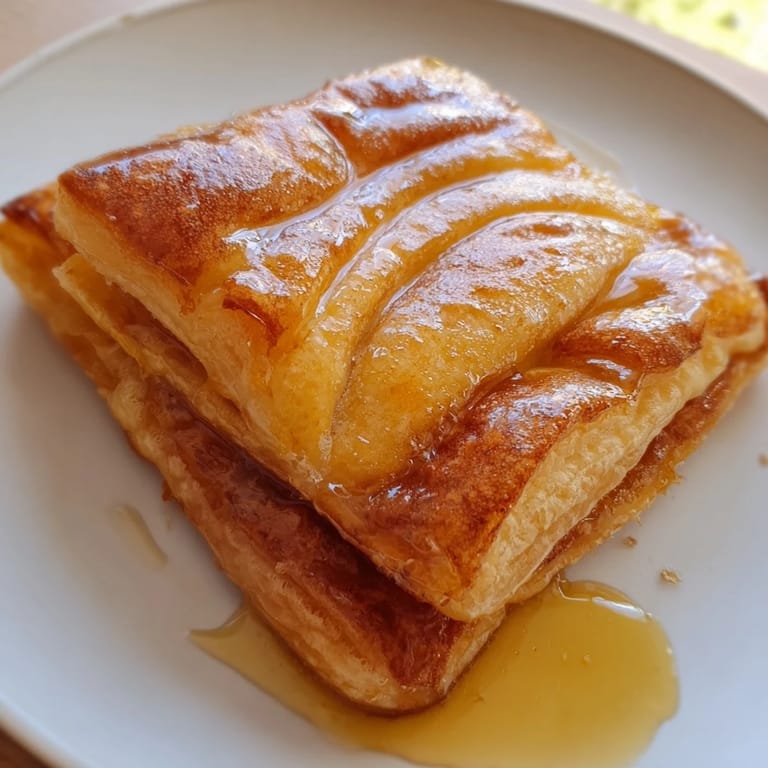
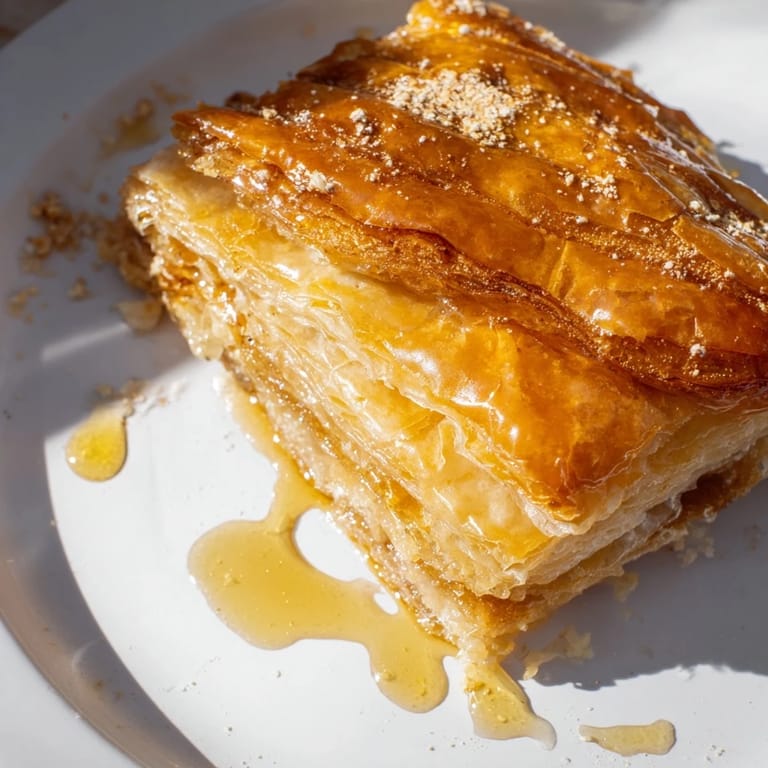
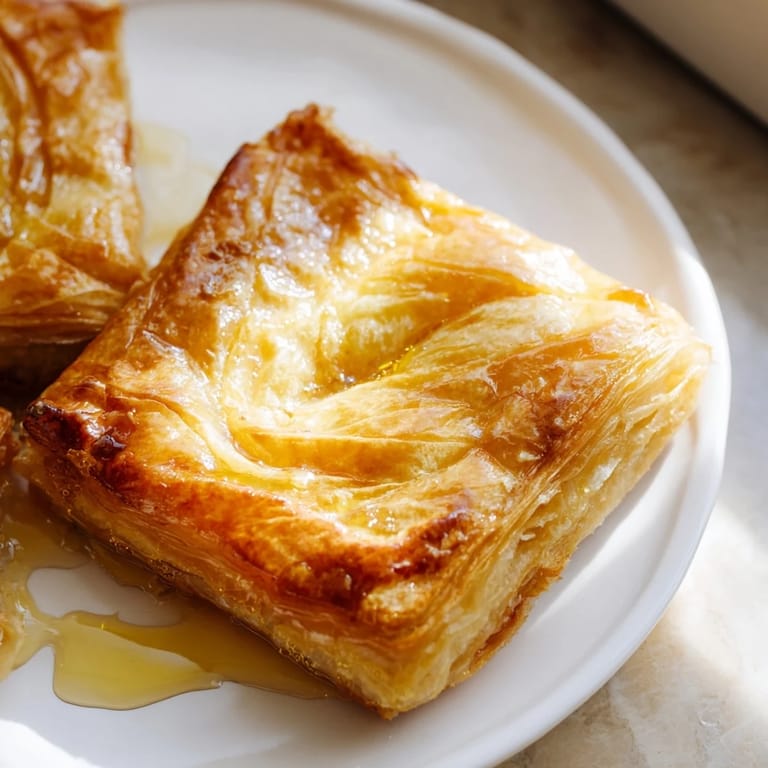
- Transfer to a plate while still warm and drizzle generously with warmed honey, letting it pool into the corners and crevices where it'll soak into the warm pastry.
 Pin It
 There's a moment, right after the msemen hits the hot oil, when the dough puffs up just slightly and the smell shifts from buttery to toasted—that's when you know it's working. My friend once watched me make these and said it was like watching someone speak a language, the way my hands just knew what to do. That's the thing about msemen: once your hands learn it, they remember forever.
Why the Fold Matters
The genius of msemen lives in how those folds create layers without laminating dough the way you would for croissants. Each fold traps butter and semolina between sheets of dough, and when it hits the hot oil, steam releases between those layers and everything puffs into something that's crispy on the outside but still tender inside. I ruined my first batch by trying to stretch it too thin before folding, which broke the layers apart; now I stretch gently, fold boldly, and let the frying do the real work.
The Oil Question
There's a difference between shallow-frying msemen and deep-frying, and I've done both. Shallow frying in a skillet gives you more control and creates a crispier exterior because you're managing the heat more directly, while deep frying in an inch or two of oil creates a more uniform golden color but requires more attention. For home cooking, the skillet method feels easier and wastes less oil; you're looking for a glide when the msemen hits the pan, not a full submersion.
Variations and Flavor Twists
Once you've made the basic version a few times, you'll start experimenting—maybe adding a pinch of cinnamon or a drop of orange blossom water to the dough, or switching the honey to amlou (that almond-honey paste that tastes like eating clouds). I've served these with spiced honey infused with ginger, and I've made a savory version by skipping the honey and serving with cheese. The structure is flexible enough to play with, which is part of why msemen feels like a recipe you'll keep making for years.
- Orange blossom water should be added sparingly—start with 1/4 teaspoon—because a little goes a long way.
- Amlou is best drizzled warm so it has that flowing, luxurious consistency that honey has.
- For a savory version, brush with herb-infused butter or add a pinch of nigella seeds before folding.
 Pin It
 Msemen tastes best eaten within minutes of frying, while it's still warm enough that the honey flows and the butter is still singing in the layers. There's something about feeding people something you made with your own hands that changes the whole meal into something tender.
Recipe FAQs
- → What is msemen made of?
Msemen dough blends all-purpose flour, fine semolina, sugar, salt, and warm water to create a soft, pliable base with a delicate texture enhanced by butter and semolina layers.
- → How do you achieve the flaky layers?
The layers form by brushing butter and sprinkling semolina between thin dough folds before pan-frying, resulting in a crisp, flaky exterior and tender inner sheets.
- → What is the best way to cook msemen?
Msemen is pan-fried on medium heat until both sides turn golden brown and flaky, usually taking 2–3 minutes per side with a light coating of oil.
- → Can msemen be served with other accompaniments?
Yes, besides honey, msemen pairs wonderfully with amlou (almond and honey spread), fresh jams, or a sprinkle of cinnamon for added flavor.
- → How should leftover msemen be stored and reheated?
Store leftovers in an airtight container and reheat gently in a skillet or toaster to restore crispiness without drying out.