 Pin It
 My grandmother kept a handwritten journal of her baklava-making sessions, complete with smudged honey stains and margin notes about which batches turned out particularly crisp. The first time she let me help, I was too impatient with the phyllo sheets and tore three of them, convinced I'd ruined everything. She laughed, patted my flour-dusted hand, and said the imperfect layers would just catch more syrup. That moment taught me that baklava isn't about flawless technique, it's about patience, precision in the places that matter, and the magical marriage of butter, nuts, and warmth that transforms paper-thin dough into something unforgettable.
I made this for a neighborhood dinner party on a humid August evening when everyone was too hot for cake but absolutely craved something special. Someone's comment, "This is what luxury tastes like," made all the butter-brushing worthwhile. Watching people close their eyes after that first bite, hearing the quiet crunch of phyllo, feeling the sticky-sweet honey on their fingers, reminded me why these ancient recipes have survived centuries.
Ingredients
- Walnuts, pistachios, and almonds: The trio gives you earthiness, a subtle bitterness, and buttery sweetness in one filling. Chop them finely so they bind together without turning into paste, creating those pockets of texture throughout.
- Phyllo dough: Handle it like you're working with something precious because you are. Keep it under a damp towel or plastic wrap so it doesn't crack and crumble before you layer it.
- Unsalted butter: The phyllo's best friend. Melted butter brushed generously between each sheet is what turns delicate pastry into those shattered, golden layers.
- Honey, sugar, water, and lemon: This syrup is where magic happens. The lemon juice cuts through the sweetness just enough to keep things balanced, while the cinnamon stick adds warmth without overpowering the nuts.
- Ground cinnamon: A light touch in the filling prevents it from tasting like spiced dessert rather than a sophisticated, nutty treat.
Tired of Takeout? 🥡
Get 10 meals you can make faster than delivery arrives. Seriously.
One email. No spam. Unsubscribe anytime.
Instructions
- Prepare your station:
- Preheat the oven to 350°F and butter your 9x13 baking dish thoroughly. Have everything within arm's reach because once you start with the phyllo, there's no stopping to hunt for supplies.
- Mix the nut filling:
- Combine your chopped nuts with sugar and cinnamon in a bowl, stirring just enough to distribute the spices evenly. The mixture should smell warm and inviting, like autumn in a bowl.
- Unroll and protect:
- Gently unroll your phyllo and immediately drape a damp kitchen towel over it. Even a few minutes of air exposure turns those delicate sheets brittle and prone to shattering.
- Build the base:
- Place one phyllo sheet in the dish, brush it lightly but thoroughly with melted butter, and repeat until you have eight buttered layers. You'll see them start to peek above the dish edges, creating a golden rim.
- Layer with nuts:
- Sprinkle one-third of your nut mixture over the phyllo, spreading it evenly from corner to corner. Layer five more buttered phyllo sheets on top, repeating the nut layer twice more until everything's stacked.
- Top it off:
- Finish with the remaining 8 to 10 phyllo sheets, buttering each one as you go. This top layer will be your window into golden, crispy perfection.
- Score carefully:
- Using a sharp knife, cut diagonal lines to create diamonds or straight lines for squares. Cut all the way through to the bottom of the dish so the syrup can seep into every crevice during baking.
- Bake to golden:
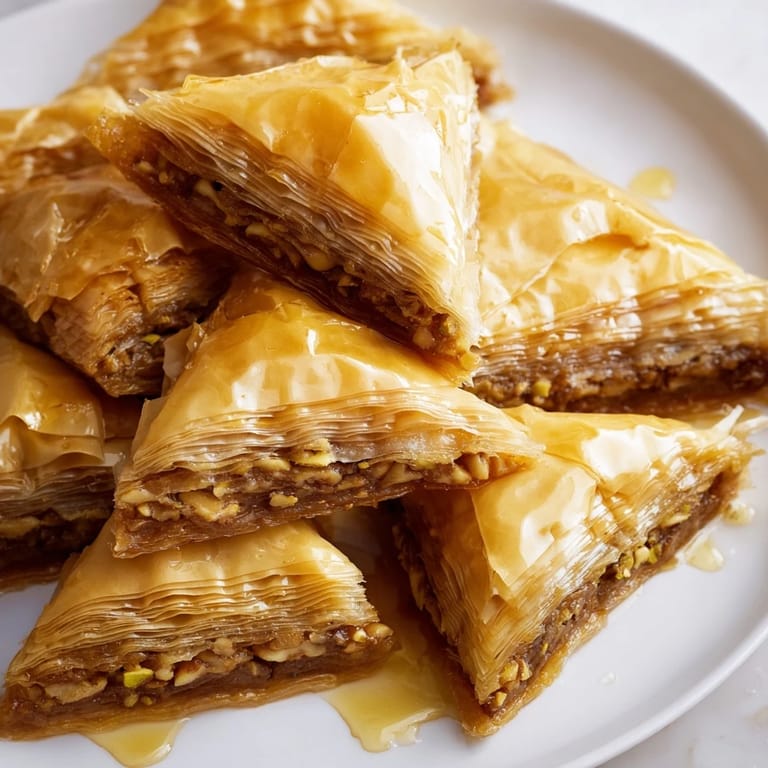
- Slide the baklava into the oven for 45 minutes until the top is deep golden and the edges are bubbling slightly with melted butter. You'll know it's ready when your kitchen smells like toasted nuts and caramelized honey.
- Make the syrup while it bakes:
- Combine honey, water, sugar, lemon juice, zest, and a cinnamon stick in a saucepan. Bring to a gentle boil, then reduce heat and simmer for 10 minutes until the mixture is fragrant and slightly thickened, then let it cool just a touch.
- The crucial pour:
- The moment baklava emerges from the oven, golden and steaming, slowly drizzle the warm syrup over every inch of the hot pastry. The contrast of heat and syrup is what makes the magic happen, allowing the liquid to soak deep into all those layers.
- Let patience do the work:
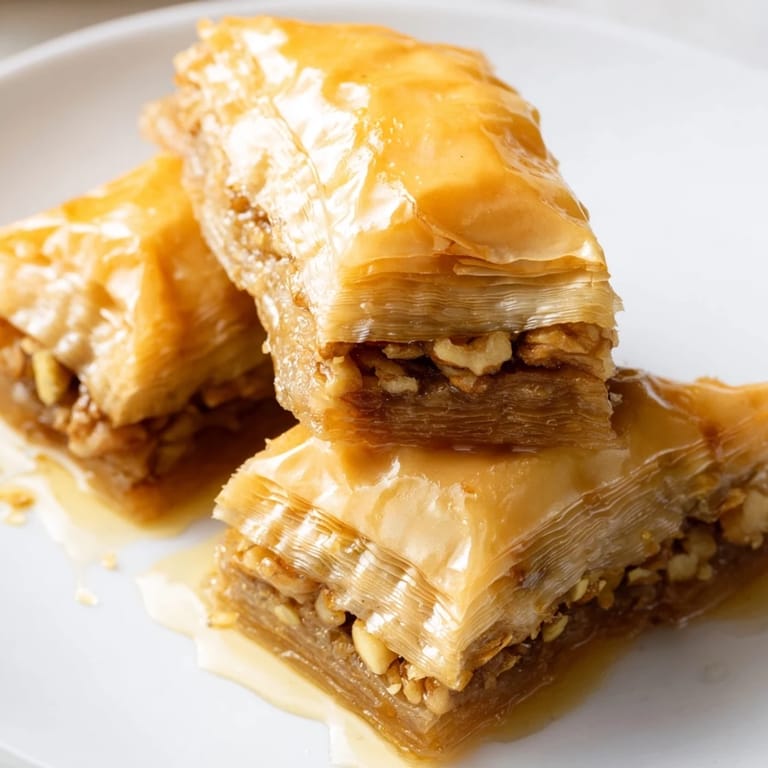
- Resist every urge to dive in. Cover loosely and let the baklava cool completely, at least 4 hours or overnight if you can manage it. This resting period transforms it from good to absolutely transcendent.
 Pin It
 There's something meditative about the ritual of baklava-making, from the repetitive brush-butter-brush rhythm to the careful precision of cutting. It's one of those dishes that reminds you why food traditions exist, why recipes get passed down across generations, and why some things are worth the time and focus.
Choosing Your Nuts
The beauty of baklava is that the nut ratio is flexible. Walnuts give you earthiness and body, pistachios bring a subtle sweetness and color, and almonds add smoothness. You can adjust the blend based on what you love or what's in your pantry. Some families swear by pure walnuts, others prefer half walnuts and half pistachios for a more delicate flavor profile. The filling should smell fragrant and feel slightly moist from the natural oils in the nuts, never dry or dusty.
Storage and Serving
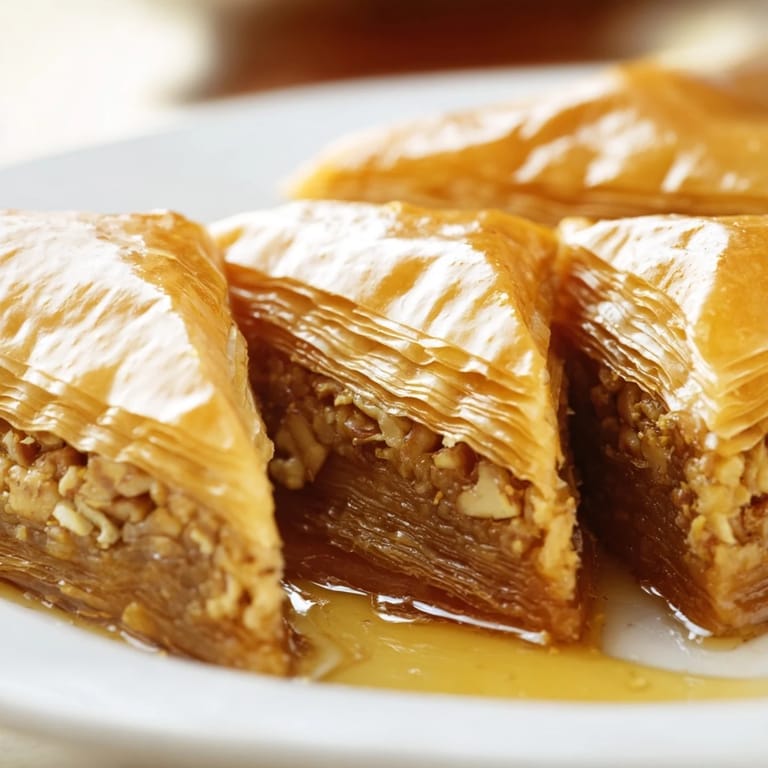
Once baklava is completely cooled and the syrup has set, it stores beautifully at room temperature for up to a week covered with parchment and foil. The longer it sits, the more the syrup permeates the layers, so three days in is often when it hits peak deliciousness. Serve it with strong Turkish coffee or black tea to cut through the richness, and watch the pleasure on people's faces when they bite through that first crispy-sticky layer.
Variations and Personal Touches
Orange blossom water is a subtle swap that adds floral notes without overshadowing the nuts. Some cooks drizzle a tiny bit over the syrup just before pouring. Others add clove or cardamom to the nut filling for complexity. You could even finish a batch with crushed pistachios sprinkled on top while the syrup is still wet, creating a jeweled surface.
- A squeeze of fresh lemon juice over finished baklava brightens everything just before serving.
- Rose water is another traditional option that works beautifully if you want to experiment beyond honey syrup.
- Keep any leftover syrup refrigerated and warm it to brush over baklava after a few days if pieces start to feel dry.
 Pin It
 Baklava is the kind of dessert that turns an ordinary day into something worth remembering. Make it, share it, and let the syrup-soaked crunch speak for itself.
Recipe FAQs
- → What nuts are traditionally used in this dessert?
A mix of finely chopped walnuts, pistachios, and almonds forms the rich nut filling in this dessert.
- → How is the honey syrup flavored?
The syrup is infused with lemon juice, lemon zest, and a cinnamon stick for aromatic notes.
- → How long should the dessert rest after baking?
Letting it rest for at least four hours allows the syrup to fully soak into the pastry, enhancing flavor and texture.
- → Can I substitute any ingredients for a lighter flavor?
Some honey may be replaced with orange blossom water to create a lighter, floral note.
- → What is the best way to store this dessert?
Keep it covered at room temperature for up to one week to maintain crispness and freshness.