 Pin It
 I discovered dirty rice on a sweltering summer evening at a friend's kitchen table in New Orleans, where the screen door hung open and cicadas buzzed so loud you could barely hear yourself think. She stirred this pot with such confidence, meat and rice dancing together in waves of caramel-brown spice, and when I asked what made it so good, she just smiled and said the secret was patience and never skipping the sauté. That first bite—savory, smoky, with just enough heat creeping up the back of my throat—made me understand why this dish shows up on every table down South, at church potlucks and family dinners where people come back for thirds.
I made this for my partner on a random Tuesday when the pantry was nearly empty and I needed something that felt substantial and warm. He came home to the smell of onions and bell pepper hitting hot oil, and by the time the spices bloomed, he was hovering over the stove asking a hundred questions. When we sat down to eat, he was quiet for a moment—the kind of quiet that means something landed right—and then he asked if I could make it every week. I haven't, but we both know I could and it would never get old.
Ingredients
- Ground pork and beef (or chicken livers): The pork brings richness while the beef (or traditional chicken livers) adds depth; this combination is what separates dirty rice from just rice with meat.
- Onion, bell pepper, and celery: This holy trinity is the backbone of Cajun cooking—the vegetables soften and meld into the rice, creating a flavor base no single ingredient can achieve.
- Garlic: Four cloves seems like a lot until they're minced and hit that hot oil, then they become subtle and essential rather than loud.
- Long-grain white rice: Rinsing it removes starch and keeps grains separate instead of turning mushy; this step changes everything about texture.
- Cajun seasoning, thyme, and smoked paprika: Layer these carefully—each one brings its own character, and together they create that signature warm, slightly smoky heat.
- Chicken broth: It carries flavor into every grain, so choose one you'd actually taste in a cup of soup.
- Vegetable oil: You need enough to brown the meat properly and sauté the vegetables without them sticking; don't be shy.
Tired of Takeout? 🥡
Get 10 meals you can make faster than delivery arrives. Seriously.
One email. No spam. Unsubscribe anytime.
Instructions
- Brown the meat:
- Heat oil in a large skillet over medium-high heat until it shimmers, then add the ground pork and beef, breaking it apart with a wooden spoon as it cooks. You're looking for deep golden-brown pieces, not gray—this takes about 6 to 7 minutes and sets the flavor tone for everything that follows.
- Sauté the vegetables:
- Add the onion, bell pepper, celery, and garlic to the browned meat and let them soften for about 5 minutes, stirring occasionally. The kitchen will smell alive at this point, like something important is happening.
- Bloom the spices:
- Sprinkle in the Cajun seasoning, thyme, smoked paprika, salt, black pepper, and cayenne, stirring constantly for about 30 seconds to coat everything evenly. This moment—when heat hits spice—is when the dish wakes up and finds its voice.
- Toast the rice:
- Add the rinsed rice and stir for 1 to 2 minutes until it's lightly coated in oil and smells nutty. This toasting step builds flavor that plain boiled rice will never have.
- Simmer to tender:
- Pour in the chicken broth and bring to a boil, then immediately reduce heat to low, cover, and leave it alone for 20 to 22 minutes. Resist the urge to peek; steam needs to stay trapped inside the pot for the rice to cook properly.
- Rest and fluff:
- Once the liquid is absorbed, turn off the heat and let the pot sit covered for 5 minutes, then use a fork to gently fluff the rice and separate the grains. This resting period prevents the rice from being gummy and gives you a moment to breathe.
- Finish with spring onions:
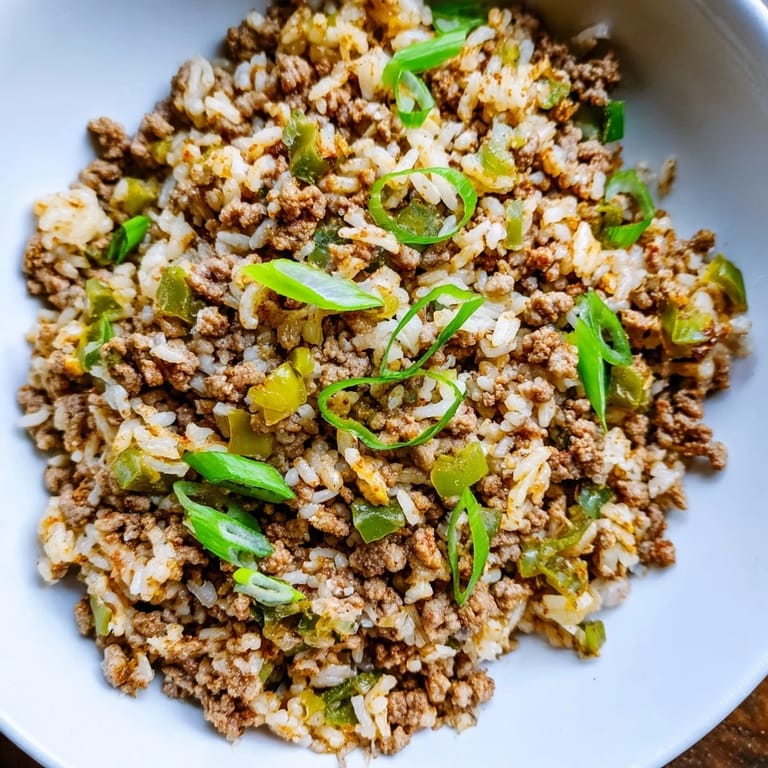
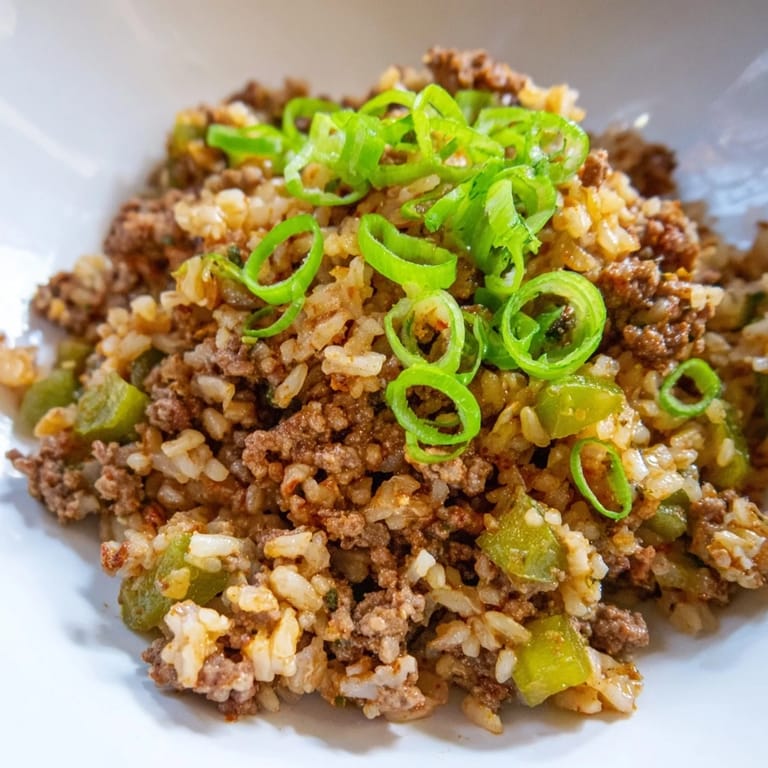
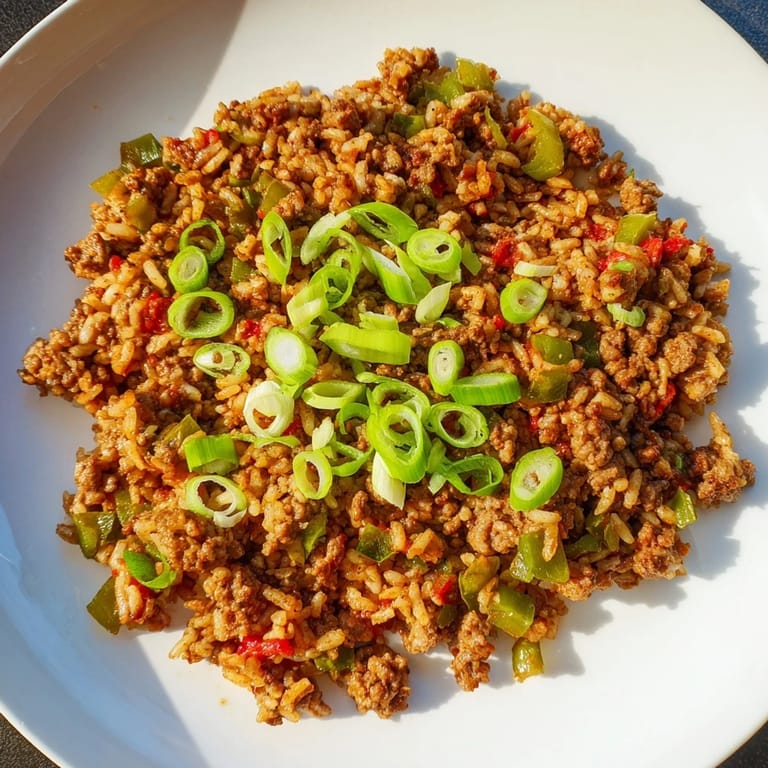
- Scatter sliced spring onions over the top just before serving for a fresh, sharp contrast to the deep spice and richness beneath.
 Pin It
 I remember my grandmother plating this dish with such care, ladling it into wide bowls like it was a treasure, and I finally understood that dirty rice isn't casual or humble—it's a celebration of simple ingredients treated with respect and cooked with intention. Every time I make it now, I feel her in the kitchen with me.
The Heart of Southern Cooking
Dirty rice sits at the crossroads of economy and abundance; it was born from the practice of using every part of the animal and every scrap from the pantry. What began as a practical dish has become iconic, and that's because it never compromises on flavor even when built from humble ingredients. The word dirty comes from the meat and spices coloring the rice, but it also hints at something earned and honest—there's no pretense here, just good food that has fed families for generations.
Making It Your Own
Traditional versions use chicken livers, and if you can find fresh ones and have the courage to try, they add a complex depth that ground beef alone won't reach. Fresh parsley stirred in at the end brings a brightness that cuts through the richness, or you can finish the whole pot with a splash of hot sauce for those who like their food with a sharp edge. The beauty of this dish is that it accepts additions and variations without losing its identity—some cooks add diced tomatoes, others include sausage, and all of them are right in their own kitchens.
Serving and Keeping Well
Dirty rice is generous—it feeds a crowd and keeps beautifully in the refrigerator for up to three days, tasting even better as the spices deepen and meld overnight. Reheat it gently in a skillet with a splash of water to restore moisture, and it comes back to life like it was just made.
- A crisp lager or chilled white wine pairs perfectly and cuts through the richness with grace.
- Serve with hot sauce on the side so everyone can adjust the heat to their preference.
- Leftovers make excellent lunch the next day, either reheated or eaten cold straight from the container.
 Pin It
 This dish has a way of appearing exactly when you need it most—when the kitchen budget is tight but hunger is real, when you want to feed people something that tastes like home. Make it once and you'll have it in your hands forever.
Recipe FAQs
- → What type of meat is best for Cajun Dirty Rice?
Ground pork and beef are traditional, but chicken livers can be used for a more authentic Southern touch.
- → Can I adjust the spice level in this dish?
Yes, the cayenne pepper is optional and can be increased or decreased to suit your heat preference.
- → How should I cook the rice for best results?
Toast the rinsed long-grain rice briefly in the skillet before adding broth to enhance flavor and texture.
- → What vegetables are included in this dish?
Onion, green bell pepper, celery, and garlic form the aromatic base that complements the spices and meat.
- → What is a good garnish for this dish?
Sliced spring onions add a fresh, crisp contrast and vibrant color when sprinkled on top just before serving.