 Pin It
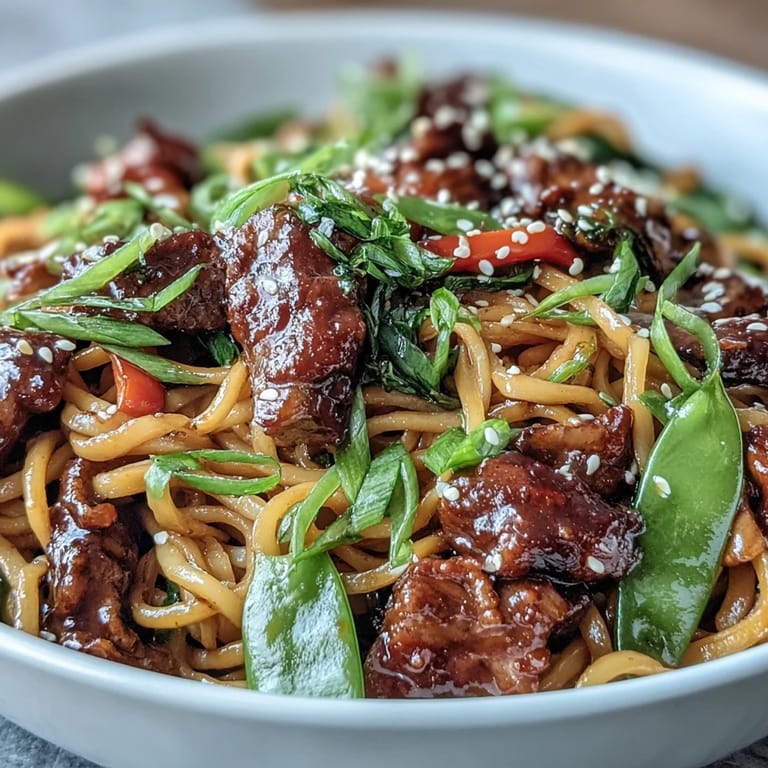
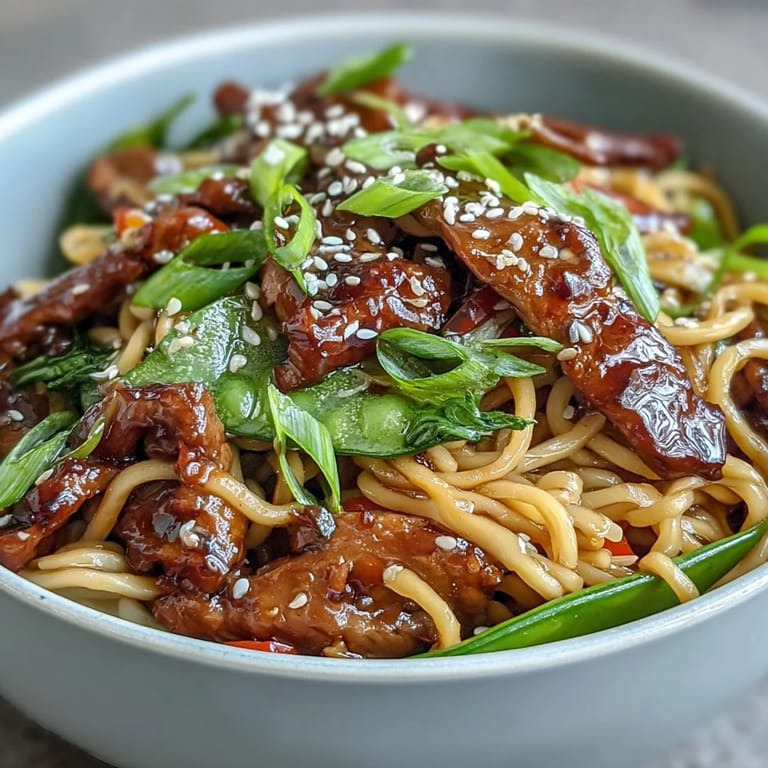
 My wok was still warming up when I realized I had exactly twenty minutes before everyone got home. The pork was already sliced thin, the noodles waiting in their package, and suddenly it hit me: this was going to work. I tossed everything together with more confidence than I felt, and when the sauce hit the hot pan, that sweet-salty steam filled the kitchen. By the time they walked in, I was plating up something that looked like I'd planned it all along.
I started making this on nights when I was too tired to think but too hungry to wait. The rhythm became automatic: slice, toss, sear, stir. My son would lean against the counter, stealing sugar snap peas before they even hit the pan. It became our Tuesday routine without us ever deciding it should be.
Ingredients
- Pork loin or tenderloin: Slicing it thin against the grain keeps it tender, and freezing it for 15 minutes beforehand makes cutting way easier.
- Soy sauce (marinade): This seasons the meat from the inside out and helps the cornstarch cling better.
- Cornstarch: It creates a light coating that locks in moisture and gives the pork a slight crispness when it hits the hot oil.
- Egg noodles or rice noodles: Egg noodles have more chew, rice noodles are lighter, both soak up the sauce beautifully.
- Red bell pepper: Adds sweetness and color, and it stays crisp even after stir frying.
- Carrot: Julienne it thin so it cooks at the same rate as the other vegetables.
- Sugar snap peas: They bring a fresh crunch that balances the richness of the sauce.
- Spring onions: I add them at the end so they stay bright and sharp, not soggy.
- Garlic cloves: Mince them fine so they melt into the oil and perfume everything.
- Fresh ginger: Grating releases more juice and flavor than chopping, and it spreads evenly through the dish.
- Soy sauce (sauce): The backbone of the stir fry, salty and savory.
- Oyster sauce: It adds depth and a hint of sweetness that rounds out the soy.
- Hoisin sauce: A touch of this brings molasses-like richness without being heavy.
- Sesame oil: Just a teaspoon is enough to add that nutty, toasted aroma.
- Brown sugar: Balances the saltiness and helps the sauce caramelize slightly.
- Water: Thins the sauce just enough to coat the noodles without clumping.
- Vegetable oil: High smoke point oil is essential for stir frying at high heat.
- Sesame seeds: Optional, but they add a little crunch and visual appeal.
- Fresh coriander or sliced chili: A final flourish that wakes up the whole plate.
Tired of Takeout? 🥡
Get 10 meals you can make faster than delivery arrives. Seriously.
One email. No spam. Unsubscribe anytime.
Instructions
- Marinate the pork:
- Toss the sliced pork with soy sauce and cornstarch in a bowl, making sure every piece is coated. Let it sit for 10 minutes while you prep everything else.
- Cook the noodles:
- Follow the package directions, then drain and rinse them briefly under cool water to stop the cooking. Set them aside so they don't stick together.
- Mix the sauce:
- Whisk together soy sauce, oyster sauce, hoisin, sesame oil, brown sugar, and water in a small bowl. Having it ready means you won't scramble later.
- Sear the pork:
- Heat one tablespoon of oil in your wok over high heat until it shimmers, then add the pork in a single layer. Let it sear without moving it for a minute, then stir fry until browned, about 2 to 3 minutes total, then remove and set aside.
- Stir fry the vegetables:
- Add the remaining oil, then toss in garlic and ginger first to bloom their flavor. Add bell pepper, carrot, and sugar snap peas, stirring constantly for 3 to 4 minutes until they're tender but still have bite.
- Bring it all together:
- Return the pork to the wok along with the cooked noodles and pour in the sauce. Toss everything vigorously for 2 to 3 minutes, making sure the noodles are well coated and heated through.
- Finish and serve:
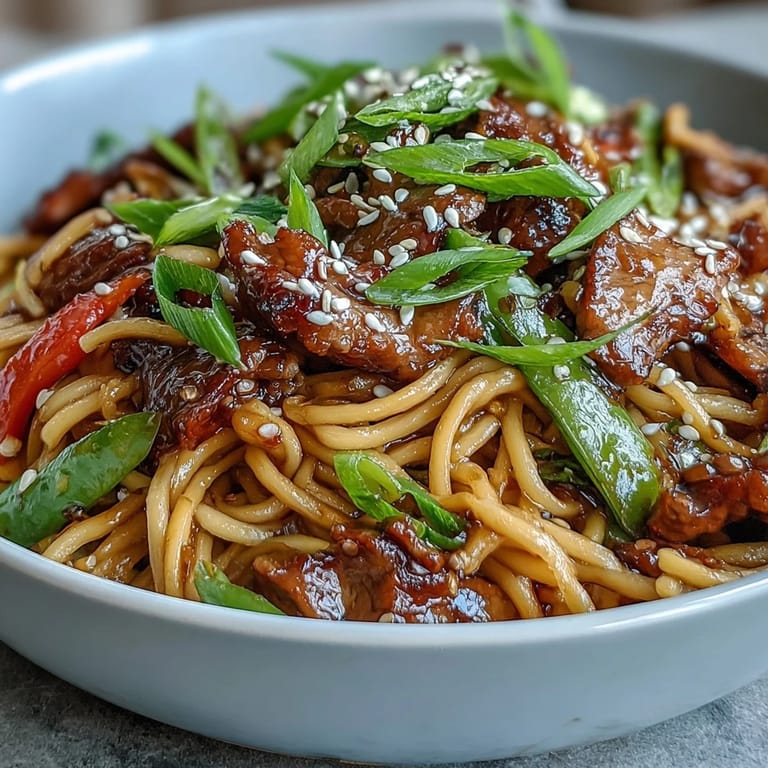
- Toss in the spring onions, give it one last stir, then turn off the heat. Plate it up hot, scattered with sesame seeds and herbs if you like.
 Pin It
 One evening my neighbor smelled it through the open window and knocked on the door with a hopeful look. I made her a bowl on the spot, and she came back the next week with her own bag of noodles, asking me to teach her. We ended up cooking it together, talking and laughing while the wok hissed and crackled between us.
Swapping Proteins and Vegetables
I have made this with chicken thighs, firm tofu, and even shrimp, and each version works beautifully. The key is adjusting your cooking time: chicken takes a bit longer, shrimp cooks faster, and tofu benefits from a quick pan fry to crisp the edges before adding it back in. For vegetables, mushrooms add earthiness, baby corn brings sweetness, and bok choy wilts into silky tender bites that soak up the sauce.
Making It Gluten Free
Switching to tamari instead of soy sauce is the easiest fix, and rice noodles are naturally gluten free. For oyster sauce, look for a mushroom-based version or just use extra hoisin and a splash of fish sauce if you eat it. I have done this for friends with celiac, and they could not tell the difference.
Storing and Reheating
Leftovers keep well in the fridge for up to three days in an airtight container. Reheat them in a hot skillet with a splash of water or broth to loosen the noodles, stirring gently until everything is warmed through. The microwave works too, but the texture is never quite as good.
- Add a drizzle of sesame oil or soy sauce when reheating to refresh the flavors.
- If the noodles have absorbed all the sauce, a tablespoon of water will bring them back to life.
- Do not reheat more than once or the vegetables will turn mushy.
 Pin It
 This dish taught me that weeknight cooking does not have to be boring or stressful. Once you get the rhythm down, it becomes second nature, and you will find yourself craving that sizzle and steam on a cold Tuesday night.
Recipe FAQs
- → Can I use a different protein instead of pork?
Yes, you can easily substitute chicken breast, beef strips, shrimp, or tofu for the pork. Adjust cooking times accordingly—chicken takes about the same time, while shrimp cooks faster in 1-2 minutes.
- → What type of noodles work best for this stir-fry?
Egg noodles or rice noodles both work wonderfully. You can also use udon, soba, or even spaghetti in a pinch. Cook them according to package directions and drain well before adding to the wok.
- → How do I prevent the noodles from sticking together?
After draining cooked noodles, toss them with a small amount of sesame or vegetable oil. This prevents clumping while you prepare the other ingredients. Make sure your wok is hot enough when adding them back in.
- → Can I make this dish gluten-free?
Absolutely. Use tamari instead of soy sauce, gluten-free rice noodles, and check that your oyster sauce and hoisin sauce are gluten-free certified. Many Asian sauces contain wheat, so always verify labels.
- → What vegetables can I add or substitute?
Feel free to add bok choy, baby corn, mushrooms, broccoli, or snow peas. You can substitute zucchini or cabbage for the bell pepper. Just maintain similar cooking times for even doneness.
- → How can I make the dish spicier?
Add sliced fresh chili peppers, red pepper flakes, or a tablespoon of sriracha or chili garlic sauce to the stir-fry sauce. Start with small amounts and adjust to your preferred heat level.