 Pin It
 A weeknight dinner transformed the moment I stopped overthinking salmon. I'd been baking it plain for years, wondering why it always felt uninspired, until a friend casually mentioned her trick: a simple herb paste that clings to the fish and bakes into something golden and alive. The first time I tried it, the kitchen filled with this bright, garden-like smell that made everyone stop and look up from their phones. Now it's the dish I reach for when I want something that feels effortless but tastes like I actually tried.
I made this for my neighbor last summer when she mentioned being tired of takeout salads. She showed up with wine, and we ate it on her porch as the light turned golden. She kept asking if I'd added something special to the fish, and honestly, the secret was just fresh herbs and patience—letting the oven do the work while we talked. That's when I knew this recipe was keeper material.
Ingredients
- Salmon fillets: Look for fillets that are roughly the same thickness so they cook evenly; thinner edges won't dry out while thicker centers finish.
- Fresh parsley, dill, and chives: Don't skip the fresh herbs or substitute with dried—the bright flavor is what makes this shine.
- Dijon mustard: It acts like glue for the herb paste and adds a subtle tang that keeps the dish from feeling heavy.
- Mixed salad greens: A combination of mild and peppery leaves (arugula, spinach, romaine) creates better texture than any single green.
- Cherry tomatoes and cucumber: These add crunch and freshness that complements the warm salmon perfectly.
- Extra-virgin olive oil: Use this for the vinaigrette where you can actually taste it; save regular olive oil for cooking.
- Walnuts and feta: Both are optional but worth including if you have them—they add richness and salty complexity.
Tired of Takeout? 🥡
Get 10 meals you can make faster than delivery arrives. Seriously.
One email. No spam. Unsubscribe anytime.
Instructions
- Heat your oven and prepare:
- Set the oven to 200°C (400°F) and line a baking sheet with parchment paper so nothing sticks. This takes two minutes and prevents the most annoying part of cooking salmon.
- Make the herb paste:
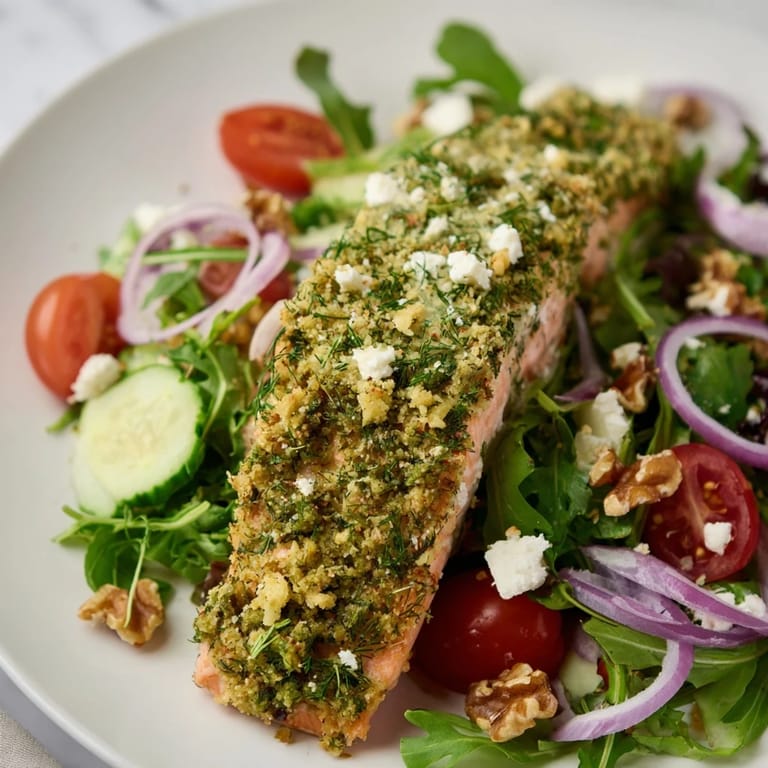
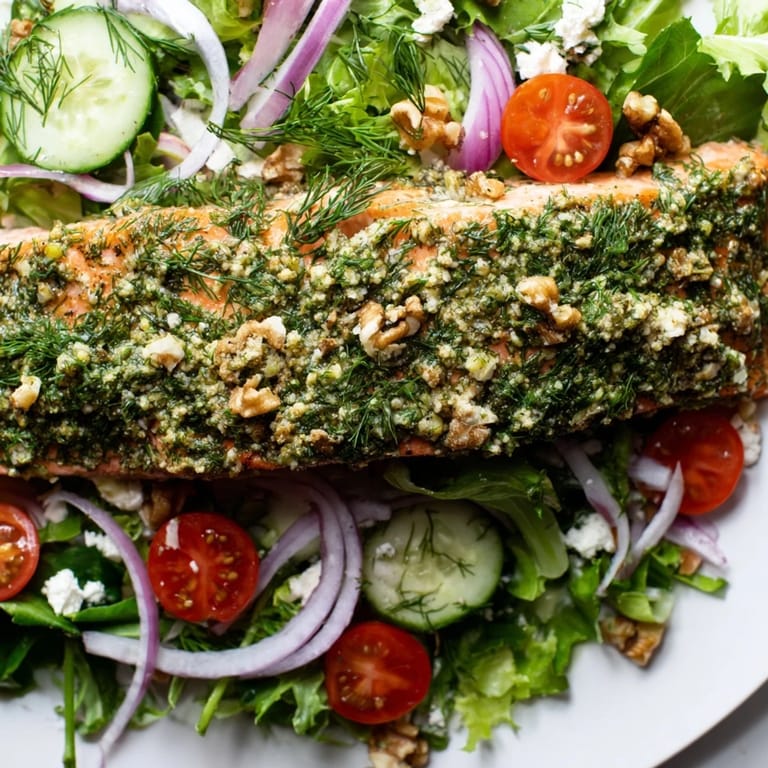
- Whisk together olive oil, Dijon mustard, lemon juice, and your chopped fresh herbs with garlic powder, salt, and pepper. You're aiming for a thick, chunky paste that will coat the salmon—think pesto texture, not soup.
- Coat the salmon:
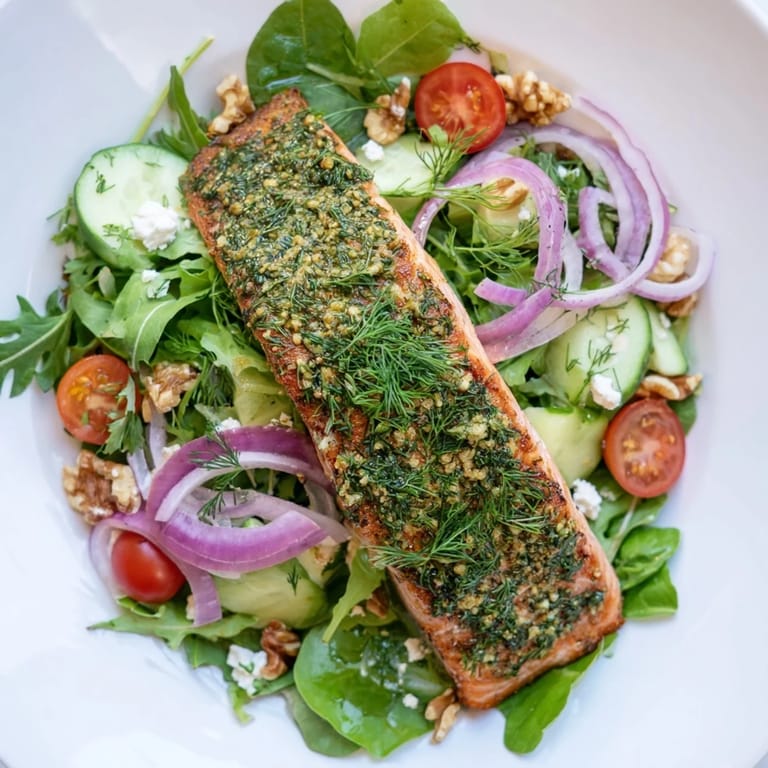
- Lay your fillets on the prepared sheet and spread the herb mixture generously over the top of each one. Don't worry about being neat; the herbs will look beautiful as they bake.
- Bake until just cooked:
- Slide into the oven for 12–15 minutes. The salmon is done when you can flake it easily with a fork and the thickest part is opaque but still moist. Overcooked salmon becomes dry, so start checking at 12 minutes.
- Prepare the salad while salmon cooks:
- Toss your greens, tomatoes, cucumber, red onion, and nuts together in a large bowl. Wait to dress it until the last moment so the leaves stay crisp.
- Whisk the vinaigrette:
- Combine extra-virgin olive oil, white wine vinegar (or lemon juice), honey, and Dijon mustard in a small bowl. Taste and adjust seasoning with salt and pepper—it should be bright and slightly sweet.
- Assemble and serve:
- Drizzle vinaigrette over the salad and toss gently, then divide among four plates. Top each plate with a warm herb-crusted fillet and serve immediately while the salmon is still warm.
 Pin It
 This dish became something different the night my picky-eater nephew tried it without complaining. He ate the whole salmon fillet and asked if I could make it again, which, if you know kids, is basically a declaration of love. I realized then that good cooking isn't about fancy techniques—it's about respecting simple ingredients and letting them shine.
Why Fresh Herbs Matter More Than You Think
Dried herbs and fresh herbs are fundamentally different creatures. Dried herbs are concentrated and dusty, while fresh ones taste alive and bright. The moment you crush fresh dill between your fingers, you smell why it matters—that's the actual flavor hitting your nose. I learned this the hard way when I substituted dried herbs once out of convenience and made something that tasted flat and forgettable.
Temperature and Timing Are Everything
Salmon is forgiving until it isn't, and then it's rubber. The key is respecting that 200°C (400°F) oven temperature and checking early. I use the fork test religiously—if the flakes separate easily and the flesh looks just barely opaque, you're done. It's faster than you think, so set a timer and don't wander off.
Ways to Make This Your Own
This recipe is a canvas, not a rulebook. Some nights I add thinly sliced avocado to the salad, other times I swap the walnuts for sunflower seeds when I'm out of nuts. You can build on this without overthinking it.
- Swap the white wine vinegar for balsamic if you like deeper, sweeter notes in your dressing.
- Add cooked quinoa or farro to turn this into something more substantial if you're really hungry.
- Substitute the feta with goat cheese or skip the cheese entirely if you want to keep things lighter.
 Pin It
 This is the kind of meal that feels both comforting and elegant without asking much of you. It's become my go-to answer when someone asks what to cook for dinner.
Recipe FAQs
- → What herbs are used for the crust on the salmon?
The crust is made from fresh parsley, dill, chives, combined with garlic powder and Dijon mustard for a flavorful coating.
- → Can I substitute another fish for the salmon?
Yes, firm fish like trout can be used as a substitute for salmon with similar baking times and results.
- → How is the salad dressed?
The salad is dressed with a vinaigrette made from extra-virgin olive oil, white wine vinegar or lemon juice, honey or maple syrup, Dijon mustard, salt, and pepper.
- → Are nuts essential in the salad?
Nuts like toasted walnuts or almonds are optional and add extra crunch and flavor but can be omitted to suit dietary preferences.
- → What side dishes pair well with this salmon salad?
A crisp Sauvignon Blanc or sparkling water with lemon pairs nicely, and you can add avocado or cooked quinoa for extra nutrition.