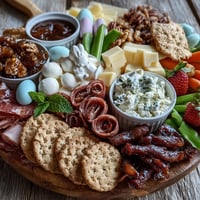
 Pin It
 My neighbor texted me three days before her housewarming, panic creeping into her words: "What do I even serve?" I'd been standing in my kitchen when the message came through, staring at an empty fridge, and something clicked. A charcuterie board felt like the answer—no cooking required, endlessly forgiving, and somehow it makes you look like you've got everything figured out. I threw together what I had, she loved it, and now it's become my go-to for any gathering where I want to impress without the stress.
I made this for the first time when my friends were helping me move into my apartment, and we all just stood around it picking at things while unpacking boxes. There's something about a charcuterie board that turns an ordinary afternoon into a celebration—suddenly you're not just eating, you're grazing, talking, discovering unexpected flavor combinations. That's when I realized this wasn't just appetizer strategy; it was permission to slow down.
Ingredients
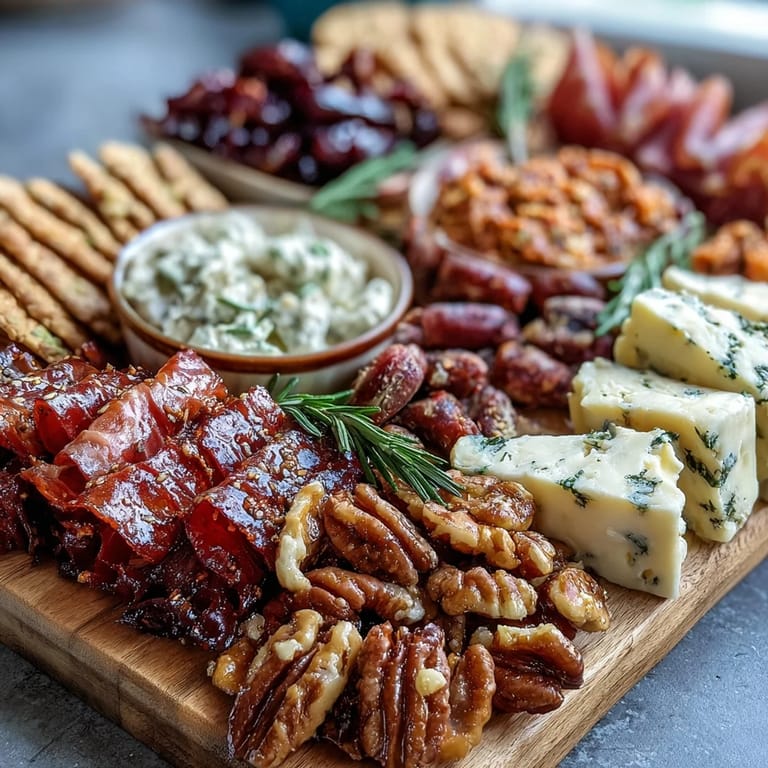
- Prosciutto, salami, and smoked ham: Choose varieties with deep flavor and good texture—these are your stars, so don't skimp on quality. The way they drape and fold on the board matters as much as how they taste.
- Chorizo slices: This brings a spicy, smoky note that rounds out the meat selection beautifully.
- Brie: Always include at least one soft, creamy cheese that spreads easily onto crackers.
- Aged cheddar and gouda: These give you texture variety and deeper, more complex flavors that keep people coming back.
- Blue cheese: A bold choice that adds sophistication and appeals to adventurous eaters.
- Hummus, tzatziki, and roasted red pepper dip: Dips anchor your board and offer something different from the meat-and-cheese focus.
- Mixed crackers and baguette slices: Variety in texture and grain keeps things interesting—multigrain, water crackers, and crusty bread all have their moment to shine.
- Fresh grapes, tomatoes, and vegetables: These provide brightness, crunch, and color that make the whole board pop visually and palate-wise.
- Nuts, olives, and dried fruit: These small clusters fill gaps, add surprise flavor combinations, and keep the board looking abundant.
- Fresh herbs for garnish: Rosemary and thyme aren't just decoration—they hint at the flavors to come and add an elegant final touch.
Tired of Takeout? 🥡
Get 10 meals you can make faster than delivery arrives. Seriously.
One email. No spam. Unsubscribe anytime.
Instructions
- Start with the meats:
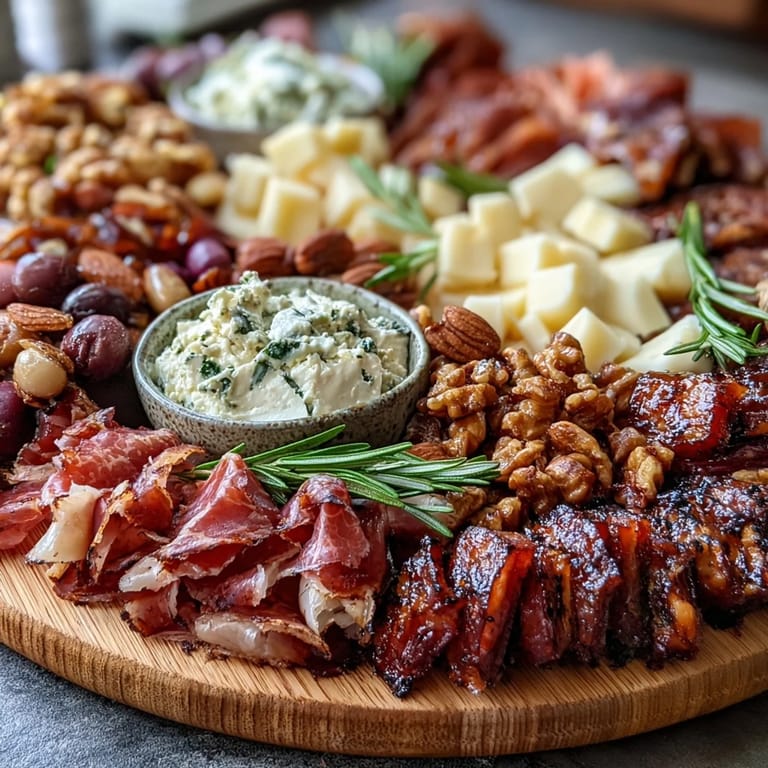
- Arrange prosciutto, salami, and smoked ham in loose, inviting folds across your board. Let them drape naturally rather than laying flat—this creates visual interest and makes it easier for guests to grab without making a mess.
- Position the cheeses:
- Space them out so people aren't crowded around one spot, and leave room between each variety so flavors don't blur together. A soft cheese, a hard cheese, and a bold cheese gives everyone options.
- Nestle the dips:
- Pour hummus, tzatziki, and roasted red pepper dip into small bowls and tuck them into gaps on the board. Small bowls prevent people from double-dipping and keep the whole thing looking organized.
- Fan and arrange the crackers:
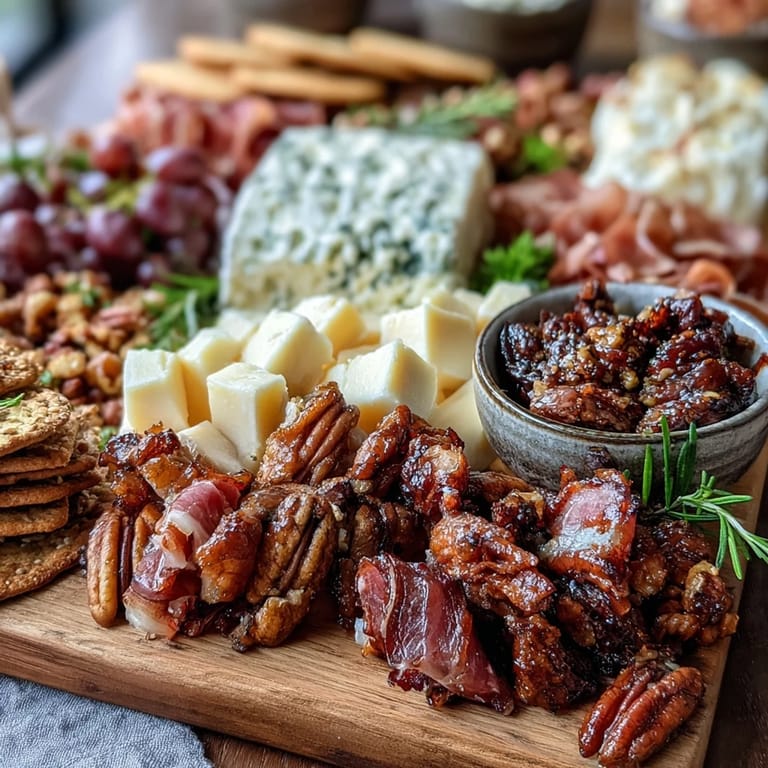
- Group crackers by type in different sections so guests can see all their options. Lean them slightly against other items or in little standing piles to add height and dimension.
- Fill the empty spaces:
- Scatter grapes, cherry tomatoes, cucumber slices, bell pepper strips, and carrots into the gaps. These bring color and freshness that balances the richness of the meats and cheeses.
- Add the finishing clusters:
- Scatter mixed nuts, olives, dried apricots, and figs in small piles around the board. These unexpected flavor combinations are often what people remember most.
- Garnish and serve:
- Sprinkle fresh rosemary and thyme over everything right before guests arrive. Serve immediately and refresh items as they disappear—a well-loved board is the best compliment.
 Pin It
 My sister once said a charcuterie board is less about the food and more about permission—permission to eat with your hands, to try weird combinations, to take your time. I think that's exactly right. It transformed how I think about entertaining.
The Art of Balance
A great board isn't about quantity; it's about creating little flavor journeys. The salty prosciutto next to sweet grapes, the tangy blue cheese beside creamy brie, the crunch of nuts breaking through soft cheese—these contrasts are what make people keep coming back. When you're arranging, think less like you're filling empty space and more like you're composing a painting where every element serves a purpose.
Timing and Temperature Tricks
The magic window for serving a charcuterie board is right before your guests arrive, not an hour early. If you prep it too soon, the cheese will sweat under plastic wrap, the crackers might soften, and the whole thing loses its fresh, inviting energy. I learned this the hard way when I covered a board with plastic to "protect it" and ended up with soggy crackers and sweating brie that looked nothing like what I'd so carefully arranged. Now I do the heavy lifting—setting out the board itself, arranging everything—thirty minutes before people arrive, and then just add the delicate items and herbs right at showtime.
Making It Your Own
The beauty of a charcuterie board is that it works with whatever you have on hand. Your favorite local cheese instead of the ones I listed? Perfect. Leftover roasted vegetables instead of raw ones? Even better—they add unexpected warmth and depth. I once made one with honey-drizzled figs, hot pepper jelly, and homemade olive tapenade because that's what was in my pantry, and honestly, people talked about it for weeks. There's something about the personalization that makes a board feel less like a recipe and more like an invitation into your world.
- Substitute any cheeses you love or that reflect your region—local, small-batch varieties make everything feel more special.
- Add unexpected items like jam, honey, marinated artichokes, or pickled vegetables that reflect your taste and tell a story.
- Remember that gaps and imperfections are part of the charm—a board that looks too perfect feels intimidating rather than inviting.
 Pin It
 A charcuterie board is really just an excuse to gather people around something beautiful and say, "I'm so glad you're here." Everything else is just delicious details.
Recipe FAQs
- → What meats are included on the board?
The board features prosciutto, salami, smoked ham, and chorizo slices for diverse flavors and textures.
- → Which cheeses work best for this spread?
Brie, aged cheddar, gouda, and blue cheese provide a balanced mix of creamy, sharp, and tangy profiles.
- → What dips complement the meats and cheeses?
Hummus, tzatziki, and roasted red pepper dip offer fresh, tangy, and smoky notes that enhance the overall experience.
- → How can the board accommodate dietary restrictions?
Swap meats or cheeses as needed, include gluten-free crackers, and add vegetarian-friendly options to suit guests.
- → What garnishes add visual appeal and flavor?
Fresh herbs like rosemary and thyme, along with dried apricots and figs, add color and subtle aromatic accents.