 Pin It
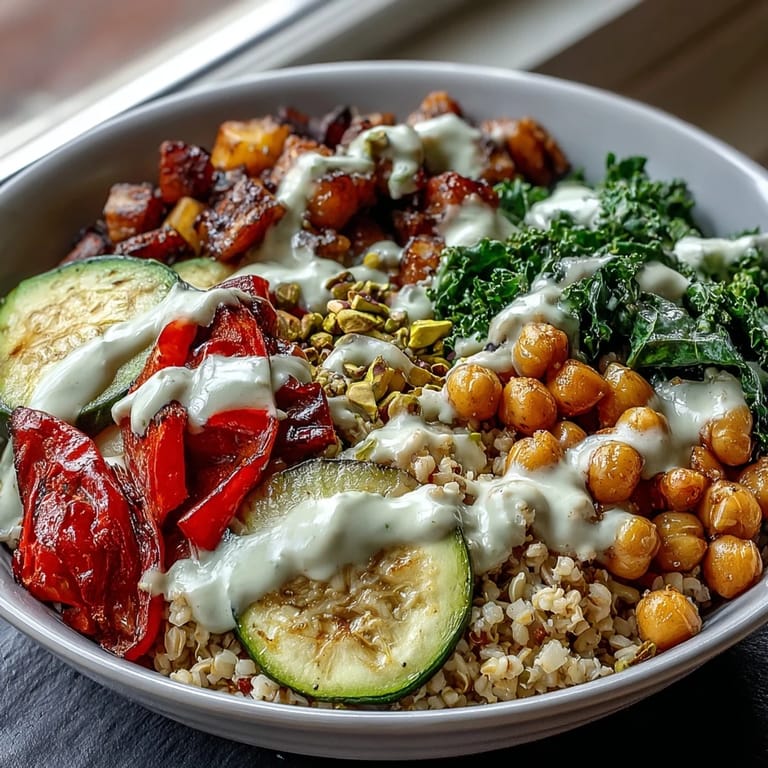
 There's something magical about assembling a Buddha bowl on a Sunday afternoon when the kitchen smells like roasted vegetables and tahini. I discovered this Mediterranean version while trying to meal prep for a chaotic week ahead, and it became my answer to the question: "What do I actually want to eat five days in a row?" The answer turned out to be layers of bulgur with pistachios, vegetables that taste even better cold, and a dressing so creamy it makes you forget you're eating health food. This bowl doesn't demand perfection or fancy technique, just honest ingredients and a little time.
My friend texted me mid-week asking what I was eating for lunch, and when I showed her a photo of this bowl, she asked if I was "really eating that or just posting it." By Friday, she was making her own version in her tiny apartment kitchen, sending me progress updates. That's when I realized this recipe had transcended meal prep and become something people actually wanted to cook, not because it was trendy, but because it genuinely fed them well.
Ingredients
- Bulgur wheat (1 cup): This grain absorbs flavor beautifully and stays tender without turning mushy, making it the perfect base that holds everything together.
- Vegetable broth (2 cups): Use a good quality broth if you have it—it quietly transforms the bulgur from plain to craveable.
- Shelled pistachios (1/2 cup, roughly chopped): They add a buttery crunch and a subtle earthiness that makes people pause and ask what that flavor is.
- Olive oil (2 tbsp for pilaf, plus 2 tbsp for vegetables, plus 1 tbsp for kale): Quality matters here since oil is one of the few ingredients doing the heavy lifting in flavor.
- Shallot (1 small, finely chopped): It's sweeter and more delicate than onion, which keeps the pilaf from feeling heavy.
- Ground cumin (1/2 tsp): Just enough to whisper "Mediterranean" without shouting.
- Medium eggplant (1, cut into 1-inch cubes): The cubes roast into creamy nuggets that soak up the tahini dressing like little flavor sponges.
- Medium zucchini (1, sliced into half-moons): They become tender and slightly caramelized, adding sweetness and texture contrast.
- Red bell pepper (1, cut into strips): It stays crisp even when cold, which is why it's perfect for meal prep.
- Smoked paprika (1/2 tsp): This is the secret that makes roasted vegetables taste like they came from someone who knows what they're doing.
- Kale (4 cups, stems removed): Kale actually improves when it sits with dressing, so don't worry about it getting soggy.
- Cooked chickpeas (1 cup): Canned works beautifully if you rinse them well, or use dried if you have time and a bit more patience.
- Tahini (1/3 cup): The foundation of a dressing that tastes like it came from a restaurant kitchen.
- Lemon juice (1 juice from 1 lemon): Fresh lemon is non-negotiable—bottled changes the entire personality of the dressing.
- Garlic clove (1, minced): Raw garlic gives the dressing personality without overwhelming it.
- Water (2 tbsp, more as needed): You'll use this to thin the dressing to pourable perfection.
- Maple syrup or honey (1 tbsp): A teaspoon of sweetness balances the lemon and tahini in a way that feels sophisticated.
Tired of Takeout? 🥡
Get 10 meals you can make faster than delivery arrives. Seriously.
One email. No spam. Unsubscribe anytime.
Instructions
- Heat the oven and prep the vegetables:
- Get your oven to 425°F and while it's warming, cut your eggplant, zucchini, and bell pepper into pieces that are big enough to stay distinct during roasting. Toss them with olive oil, smoked paprika, salt, and pepper until every piece gleams with oil.
- Roast until golden:
- Spread everything on a baking sheet in a single layer and let the oven work its magic for 25 to 30 minutes, turning the pan and stirring halfway through so nothing catches or burns. You'll know it's ready when the eggplant is creamy inside and the peppers have started to char at the edges.
- Make the pilaf while vegetables roast:
- Heat olive oil in a saucepan over medium heat and let your chopped shallot sizzle gently until it turns translucent and fragrant. Add the bulgur and cumin, stirring constantly for about a minute so the grains toast slightly and smell nutty.
- Simmer the grain:
- Pour in your vegetable broth, bring it to a boil, then cover the pan and drop the heat to low. Let it bubble quietly for 12 to 15 minutes until the liquid disappears and the bulgur is tender with just a slight chew to it.
- Finish the pilaf:
- Fluff everything with a fork, stir in your chopped pistachios, and taste it. Add salt and pepper until it tastes like something you'd actually want to eat by itself.
- Prepare the kale:
- Either steam it for 2 to 3 minutes until it just softens, or sauté it in a skillet with a drizzle of olive oil and a pinch of salt for a few minutes until it wilts but still has some life in it. Either way, don't overcook it or you'll lose the whole point.
- Warm the chickpeas:
- Pour them into a small skillet with a drizzle of olive oil and a pinch of salt, letting them warm through for a couple of minutes so they taste intentional, not like an afterthought.
- Make the tahini dressing:
- Whisk together tahini, fresh lemon juice, minced garlic, maple syrup or honey, and salt in a bowl. Add water one tablespoon at a time, whisking constantly, until the dressing flows smoothly from a spoon without being too thin.
- Assemble your bowls:
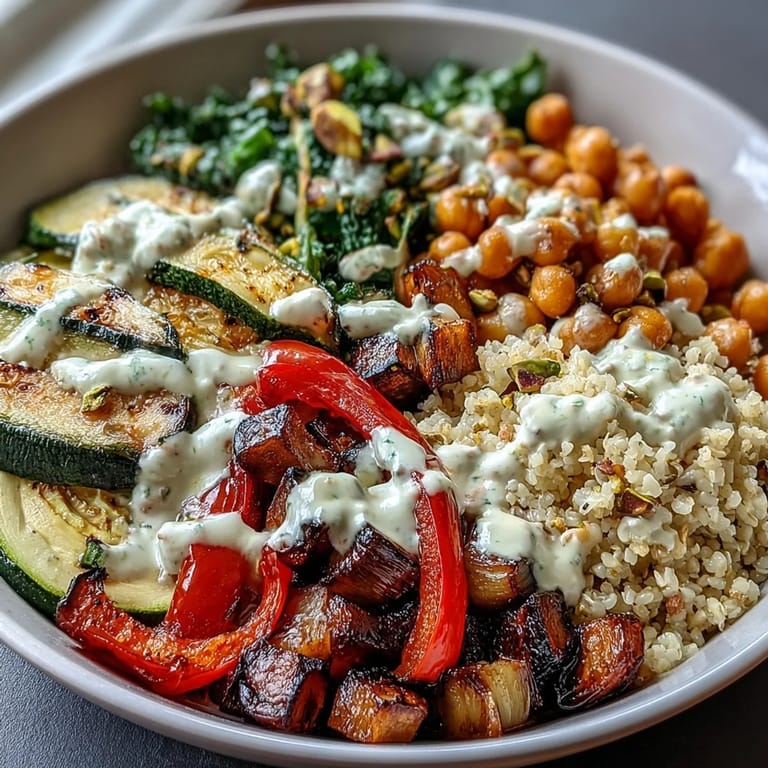
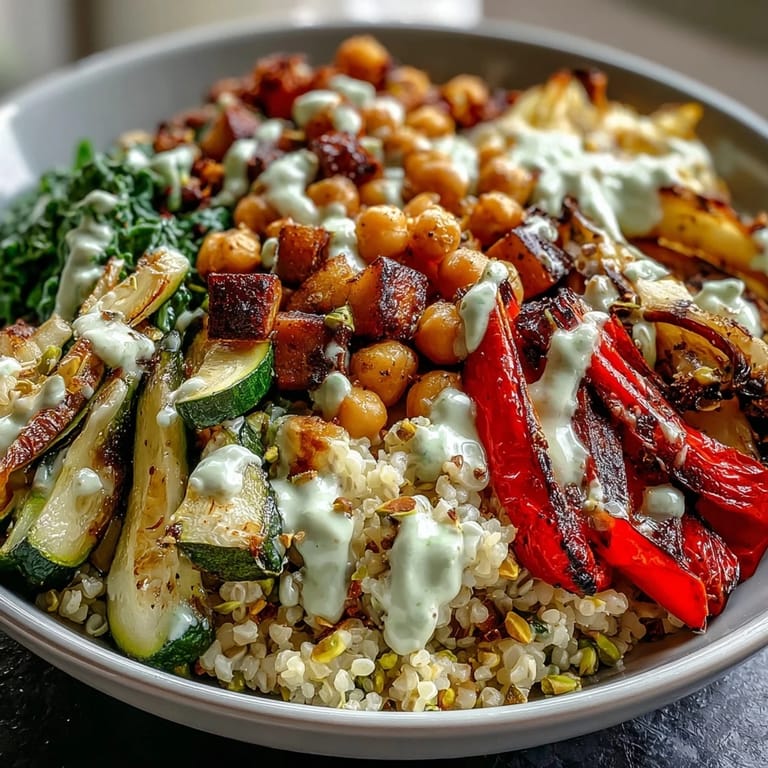
- Divide the bulgur pilaf among your containers or bowls first, then arrange the roasted vegetables, steamed kale, and warm chickpeas on top in whatever pattern feels right. Drizzle generously with tahini dressing just before eating, or store the dressing separately and dress the bowls right before you eat them.
 Pin It
 I'll never forget when my partner tried this bowl after being skeptical about "another salad situation," and then ate three in a row without saying much of anything. Sometimes the best proof that food is working is silence followed by a request for the recipe.
Why Cold Grains Are Your Secret Weapon
Warm grain bowls are lovely, but there's something about letting bulgur sit overnight with tahini and lemon that makes it taste completely different the next day. The grains relax into the dressing, and flavors marry together in a way they never quite do when everything is hot. I used to assume cold bowls would feel sad or stale, but this one actually improves through the week, asking only to be drizzled with a little extra lemon juice if it feels dry.
The Art of Roasting Vegetables for Meal Prep
Roasting vegetables at a high temperature—425°F in this case—ensures they develop color and flavor rather than just steaming themselves into submission. The smoked paprika is doing heavy lifting here, adding a whisper of smokiness that makes cold vegetables taste like they were cooked with intention rather than just thrown in a container. Watch them as they roast and stir them halfway through so everything gets equal time against the hot pan, turning golden and caramelized on at least one side.
Making Tahini Dressing Feel Restaurant-Quality
A good tahini dressing should taste bright, creamy, and balanced—never bitter, never too sharp, never one-note. The magic is using fresh lemon juice instead of bottled, adding just enough maple syrup to round out the edges, and mincing your garlic fine so it dissolves into the dressing instead of hitting you with raw bites. The water is crucial too; add it slowly while whisking so you build an emulsion rather than just thinning soup.
- Taste the dressing before serving and adjust lemon juice, salt, or sweetness to your preference—every palate is different.
- If you make the dressing ahead, it will thicken as it sits, so stir in a tablespoon or two of water when you're ready to use it.
- This dressing works on roasted vegetables, grain bowls, steamed broccoli, or anything else that needs a friend.
 Pin It
 This bowl taught me that healthy eating doesn't mean suffering through joyless food, but rather giving yourself permission to build something that actually tastes good and happens to be nourishing. Make it once, eat it five times, and watch how your week gets a little easier.
Recipe FAQs
- → How long do these bowls keep in the refrigerator?
These Mediterranean bowls stay fresh for 4–5 days when stored in airtight containers. Keep the dressing separate and drizzle just before eating to maintain the best texture and flavor.
- → Can I freeze the components for longer storage?
The roasted vegetables, chickpeas, and bulgur pilaf freeze well for up to 3 months. Store kale separately and add fresh after reheating. Tahini dressing should be refrigerated and not frozen.
- → What grains can I substitute for bulgur?
Quinoa, brown rice, farro, or couscous work beautifully as alternatives. Adjust cooking liquid and time according to package instructions for your chosen grain.
- → How can I add more protein to these bowls?
Grilled chicken, shrimp, or baked salmon pair wonderfully. For plant-based options, try adding grilled tofu, tempeh, or a dollop of Greek cheese.
- → What vegetables work well in these bowls?
Sweet potatoes, carrots, cauliflower, and Brussels sprouts roast beautifully. Fresh cucumber, cherry tomatoes, and red onion add crunch and bright flavor when served raw.