 Pin It
 There's something magical about the moment when a simple salad becomes a meal you actually crave. I stumbled onto this combination one Tuesday afternoon when I was trying to use up a can of chickpeas and wanted something lighter than my usual lunch. The idea of roasting them until they shattered between my teeth felt like a small revelation, and pairing them with fresh greens suddenly transformed the whole dish into something I found myself making again and again.
I made this for my sister during a lazy weekend when she mentioned being tired of sad desk salads, and watching her surprise at how satisfying it actually was felt like a small victory. She kept asking what made it taste so good, and it wasn't anything fancy—just the contrast of textures and flavors doing their job, the way food is supposed to work.
Ingredients
- Chickpeas (1 can, drained and rinsed): These are your secret weapon for making this salad feel substantial; draining them well prevents steam and ensures they crisp up instead of softening.
- Olive oil (1 tbsp for chickpeas, 3 tbsp for dressing): The good stuff matters here—use extra-virgin for the dressing and regular olive oil for roasting since high heat breaks down delicate flavors.
- Smoked paprika, cumin, garlic powder (1/2 tsp, 1/2 tsp, 1/4 tsp): These spices build layers of flavor that make plain chickpeas taste intentional and warm.
- Salt and black pepper (1/4 tsp each for chickpeas, 1/2 tsp and 1/4 tsp for dressing): Season in layers—once on the chickpeas, again in the dressing—so every bite tastes balanced.
- Mixed salad greens (6 cups): Choose a mix of tender and slightly bitter leaves for complexity; arugula and frisée add peppery notes that play beautifully with the warm spices.
- Cherry tomatoes (1 cup, halved): Fresh tomatoes bring acidity that echoes the lemon in the dressing, tying everything together.
- Cucumber, red onion, carrots, radishes (1/2 cucumber, 1/4 onion, 1/4 cup carrots, 1/4 cup radishes): The rainbow of vegetables matters for texture and nutrition; slice thin so they dress evenly.
- Lemon juice, Dijon mustard, maple syrup (1 tbsp, 1 tsp, 1 tsp): These three create a dressing that's tart without being harsh, with a hint of sweetness and emulsifying power from the mustard.
Tired of Takeout? 🥡
Get 10 meals you can make faster than delivery arrives. Seriously.
One email. No spam. Unsubscribe anytime.
Instructions
- Get your oven ready and prep the chickpeas:
- Preheat your oven to 400°F (200°C). Pat the chickpeas completely dry with a clean kitchen towel—any moisture clinging to them will steam instead of roast. This step feels tedious but makes all the difference between crispy and mealy.
- Season and spread them out:
- Toss the dried chickpeas with 1 tablespoon olive oil and all the spices: smoked paprika, cumin, garlic powder, salt, and pepper. Spread them in a single layer on a baking sheet where they're not crowded; they need space to breathe and crisp up.
- Roast until golden and shattering:
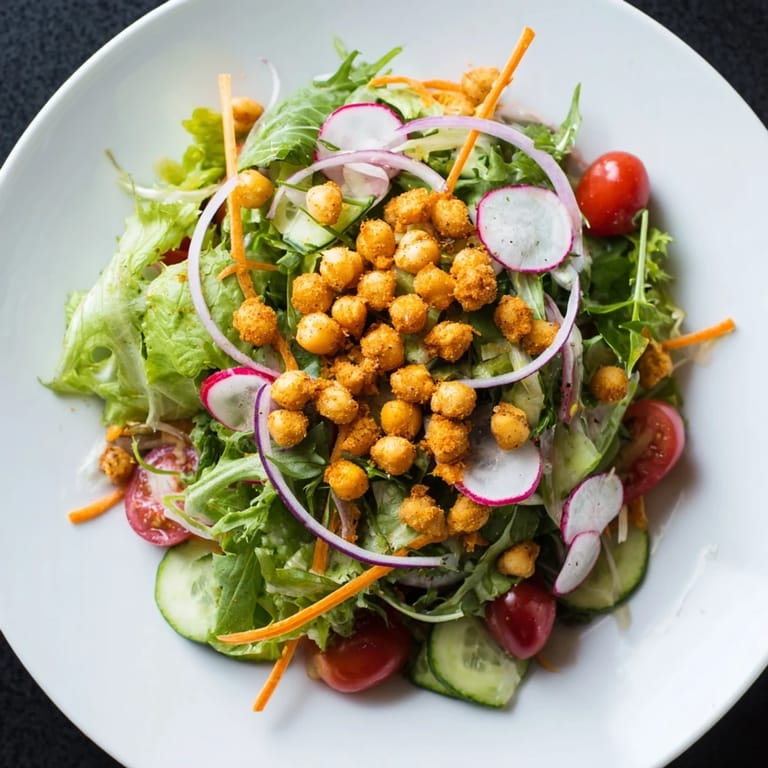
- Roast for 20–25 minutes, shaking the sheet about halfway through so they brown evenly. They'll go from soft to golden to loud when they're ready—listen for the gentle rattling sound when you shake the pan. Let them cool on the sheet for a few minutes so they finish crisping up.
- Assemble your salad base:
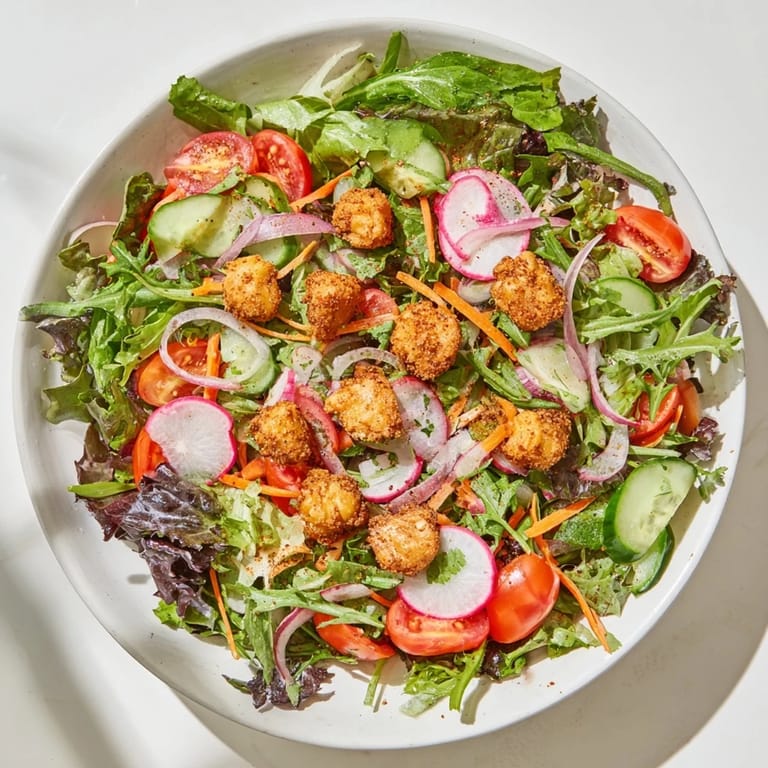
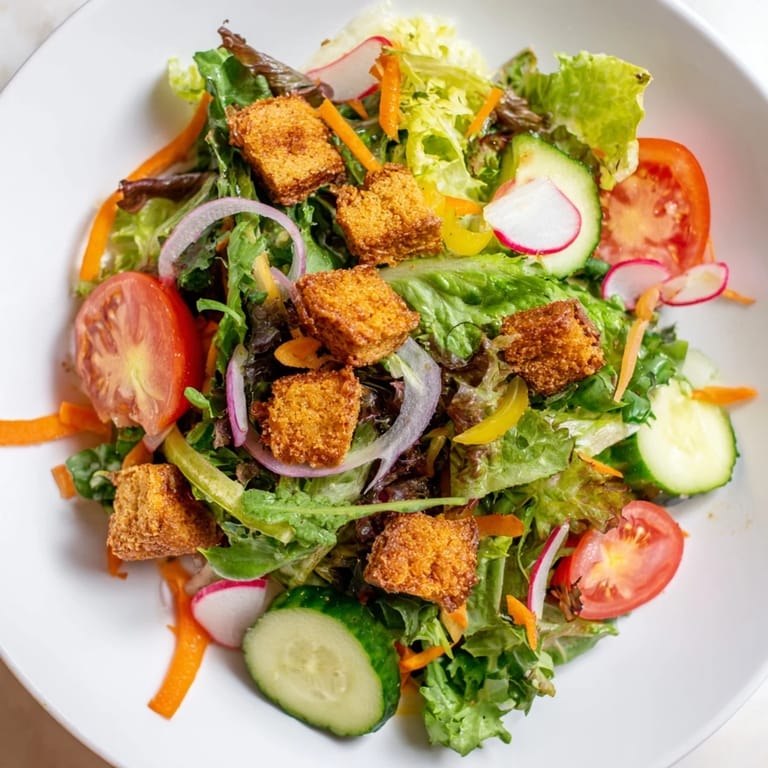
- While the chickpeas roast, combine your mixed greens, halved cherry tomatoes, sliced cucumber, thin red onion slices, shredded carrots, and sliced radishes in a large bowl. If your greens are wet, spin them dry first so the dressing clings instead of sliding off.
- Make the dressing:
- Whisk together 3 tablespoons extra-virgin olive oil, 1 tablespoon lemon juice, 1 teaspoon Dijon mustard, 1 teaspoon maple syrup (or honey), 1/2 teaspoon salt, and 1/4 teaspoon black pepper. The mustard acts as an emulsifier, helping the oil and lemon come together into something silky rather than separated.
- Dress and finish:
- Drizzle the dressing over the salad and toss gently but thoroughly so every leaf gets coated. Top with the warm crispy chickpeas right before serving so they don't soften from the moisture of the greens.
 Pin It
 There was this one moment when a friend took a bite and said, 'Wait, this is actually filling,' and I realized this salad had somehow crossed from side dish into real food territory. It's become my go-to when I want to eat something nourishing without feeling like I'm punishing myself.
Why the Chickpea Croutons Change Everything
Before I started roasting chickpeas, I was always adding nuts or seeds to salads because I needed that textural anchor. Then it hit me that chickpeas, already sitting in my pantry, could do the same job while adding plant-based protein that actually makes the meal satisfying on its own. They roast down into little flavor bombs instead of staying soft and beige, and suddenly you're not eating around the croutons—you're seeking them out. The spices nestle into the crevices as they roast, so every piece tastes intentional rather than like an afterthought.
The Dressing as the Backbone
A good salad lives or dies by its dressing, and this one does the heavy lifting with just a handful of ingredients. The Dijon mustard isn't there to taste like mustard—it's an emulsifier that keeps the oil and lemon from separating, and it adds a subtle, sophisticated depth. The maple syrup or honey rounds out the acidity in a way that feels less sweet-and-sour (like bottled dressing) and more naturally balanced, like you're tasting the individual components in conversation rather than fighting each other. I learned this the hard way by making thirty-seven batches of vinaigrettes that separated or tasted too sharp, and this formula finally clicked.
Building Your Perfect Salad Bowl
The vegetables themselves are flexible—what matters is choosing ones with different textures so that each bite stays interesting. I love the slight pepper and bitterness of arugula against the sweetness of cherry tomatoes, the cool crunch of cucumber against the thin snap of radishes. If you're not a radish person, double the carrots or add thin strips of bell pepper. The point is to get a mix of soft, crunchy, sweet, and slightly peppery so your palate stays awake. One thing I've learned is to slice everything fairly thin so the dressing coats everything evenly and nothing feels like you're chewing through chunks—it changes the whole eating experience from 'salad' to 'this is actually good.'
- Slice vegetables thin so they dress evenly and don't make the salad feel chunky.
- Mix both tender and peppery greens for complexity instead of using just spinach or just romaine.
- Taste the dressed salad before adding the croutons and adjust seasoning if needed.
 Pin It
 This salad has become my answer to when I want to eat something that feels both nourishing and craveable, the kind of meal that proves vegetables don't need to be boring. Keep it in your rotation and you'll find yourself reaching for it more often than you'd expect.
Recipe FAQs
- → How do I make chickpeas crispy?
Drain and dry chickpeas thoroughly, then toss them with olive oil and spices. Roast in a preheated oven at 400°F (200°C) for 20-25 minutes, shaking halfway to ensure even crispiness.
- → Can I use canned chickpeas?
Yes, canned chickpeas work well as long as they are drained, rinsed, and dried before roasting.
- → What greens work best in this dish?
A mix of tender greens like arugula, spinach, romaine, and frisée adds varied textures and flavors.
- → Is there a way to intensify the dressing flavor?
Adjust the ratio of lemon juice and Dijon mustard or add a pinch of smoked paprika for a smoky note in the dressing.
- → Can I add extra toppings?
Yes, toasted seeds like pumpkin or sunflower, or creamy additions such as avocado or crumbled feta, enhance texture and flavor.