 Pin It
 I discovered these folded beef bites at a dinner party where a friend challenged themselves to make something nobody had ever seen before. Watching her carefully crease each slice of beef like it was origami paper fascinated me, and when I tasted one—the marinade cutting through the richness, the sesame seeds adding that unexpected crunch—I was completely won over. That night, I went home determined to master the technique, and now these have become my secret weapon whenever I need to impress without spending hours in the kitchen.
I made these for my partner's colleagues during a casual work dinner, and the kitchen became this quiet moment of focus—my hands folding each piece while they chatted in the living room. One slice tore, and instead of panicking, I folded the fragment into a smaller triangle and nobody even noticed. It taught me that imperfection at this scale reads as intentional, and sometimes the mistakes are what make it feel real and homemade rather than fussy.
Ingredients
- Beef (300g carpaccio or very thinly sliced roast beef): You want slices thin enough to be pliable but sturdy enough not to tear when you crease them; ask your butcher to slice it on the meat slicer if you're not doing it at home.
- Extra virgin olive oil (2 tbsp): This is the base of your marinade and carries all the flavor, so choose one you actually enjoy tasting on its own.
- Soy sauce (1 tbsp, gluten-free if needed): The umami anchor that makes people keep reaching for another bite even though they can't quite name what they're tasting.
- Lemon juice (2 tsp): Brightens everything and keeps the beef from feeling heavy on the palate.
- Dijon mustard (1 tsp): A whisper of sharpness that rounds out the sweetness of the soy.
- Freshly ground black pepper (1/2 tsp): Grind it right before you use it; pre-ground loses so much of its character.
- Sea salt (1/4 tsp): Just enough to wake up all the other flavors without making it salty.
- Baby arugula (40g): Creates a peppery bed that echoes the mustard and gives visual lift to your platter.
- Toasted sesame seeds (2 tbsp): Toast them yourself if you have time; the difference in flavor is immediately noticeable and worth the two minutes.
- Finely chopped chives (1 tbsp): Fresh onion notes that cut through the richness and add a moment of brightness with every bite.
- Shaved Parmesan cheese (50g): Use a vegetable peeler to get thin, delicate shavings that melt slightly against the warm beef.
Tired of Takeout? 🥡
Get 10 meals you can make faster than delivery arrives. Seriously.
One email. No spam. Unsubscribe anytime.
Instructions
- Whisk Your Marinade Together:
- Combine your olive oil, soy sauce, lemon juice, mustard, pepper, and salt in a small bowl and stir until everything is dissolved and emulsified. This is your base; taste it and adjust if it feels too sharp or too mild, because everything else depends on this balance.
- Brush the Beef with Purpose:
- Lay your beef slices flat on a clean cutting board or large plate, and use a pastry brush to coat each one lightly with the marinade—don't soak them, just a thin, even layer. Save about a tablespoon of marinade to drizzle over everything at the very end for freshness.
- Fold Your Geometric Art:
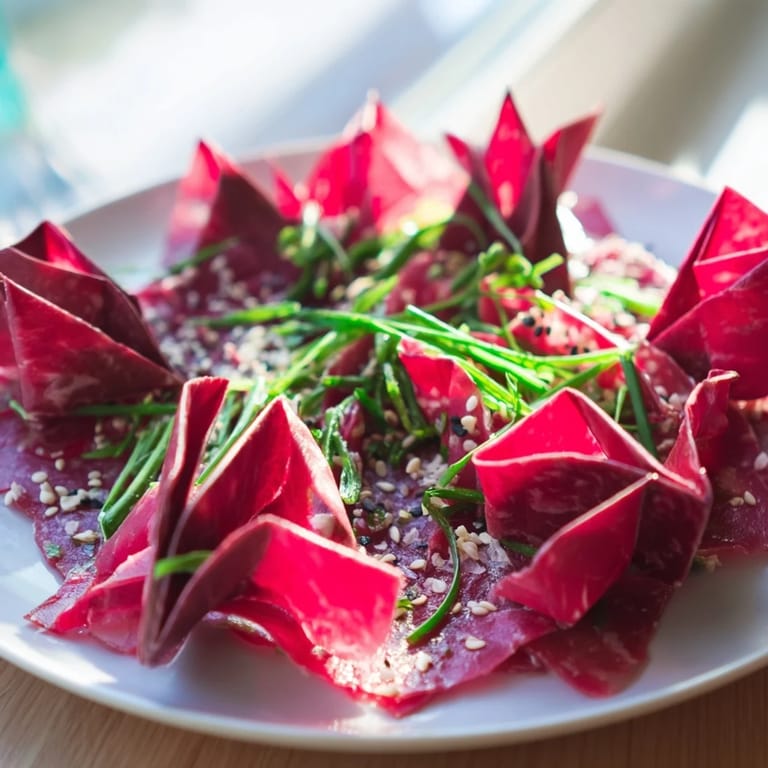
- Here's where the meditation begins: take each slice and fold it into triangles, squares, or fan shapes, using gentle pressure to hold the creases in place. If a fold doesn't hold on its own, use a chive stem or cocktail pick as a subtle anchor, but try folding first without them.
- Build Your Platter:
- Arrange your baby arugula as a base on your serving platter, then place each folded beef piece on top like you're positioning them for a photograph. The arugula acts as both cushion and color contrast.
- Layer On The Finish:
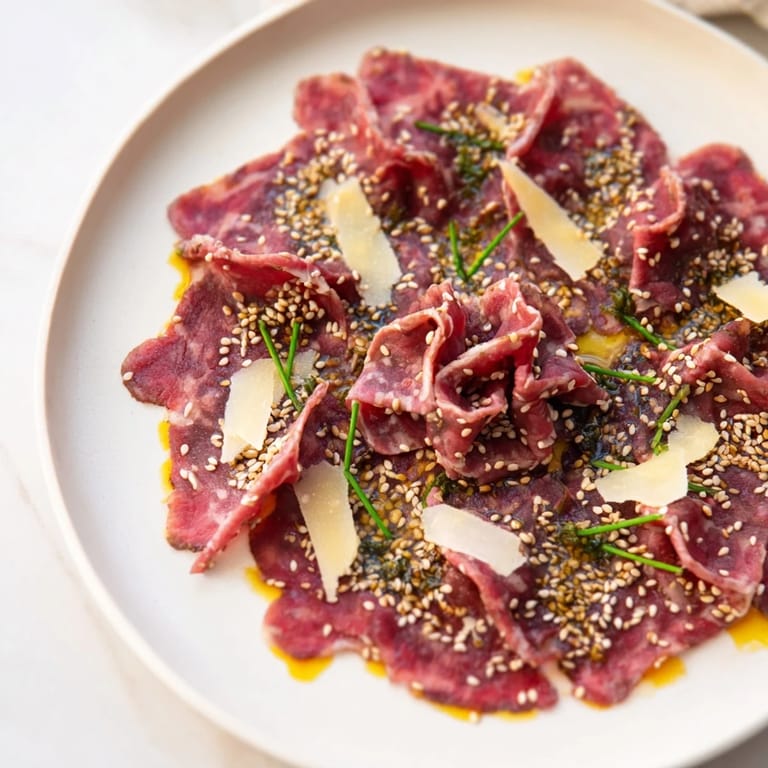
- Sprinkle sesame seeds, chopped chives, and Parmesan shavings over and around the beef, distributing them so every bite has a chance of hitting all the textures and flavors. Don't be shy—these garnishes are essential, not decoration.
- Final Drizzle and Serve:
- Just before bringing it to the table, drizzle that reserved marinade over the whole platter in thin, deliberate lines. Serve immediately while the beef is still cold and the flavors are sharp.
 Pin It
 One evening, a guest asked me how long I'd been training in some kind of culinary art, and I laughed until I cried because these are literally just expensive cold cuts arranged like a puzzle. That moment reminded me that cooking isn't about credentials or complexity—it's about taking something simple and treating it with enough intention that people feel cared for.
The Magic of Cold Preparation
I used to shy away from dishes that required no cooking, thinking there was something lesser about them—no heat, no transformation, no real skill involved. But working with these beef folds taught me that sometimes the most sophisticated approach is the simplest: let quality ingredients speak for themselves, use technique only as a frame, and trust that people will taste the difference between rushed and thoughtful.
Presentation as Part of the Recipe
The fold itself is an invitation—it tells people this is special, unusual, worth paying attention to. I've noticed that when I take time with plating, guests automatically slow down and engage differently with the food. There's something about geometry and care that makes people pause before eating, and that pause is where gratitude happens.
Variations and Substitutions That Work
Once you understand the base technique, these folds become a canvas for whatever your kitchen holds. I've played with different marinating combinations, swapped proteins, and layered unexpected garnishes, and the structure always holds. The real discovery is that constraints breed creativity—the simplicity of the format forced me to think harder about flavor balance than I ever did when I had five ingredients to hide behind.
- Try truffle oil mixed into the marinade for a luxe version that costs almost nothing but feels impossibly fancy.
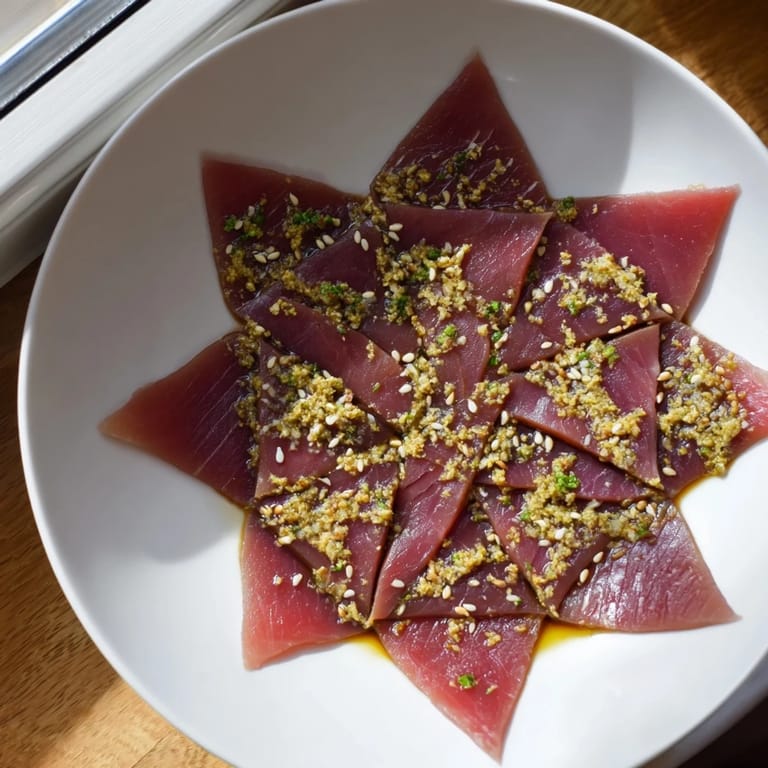
- Swap the beef for paper-thin tuna, salmon, or even thinly sliced mushrooms for vegetarian crowds.
- Serve alongside crisp baguette slices or rice crackers if you want to give people something to anchor the bites to.
 Pin It
 These beef folds remind me that sometimes the most elegant dishes are the ones where we get out of the way and let the ingredients do the work. Serve them cold, with good wine, and watch how a simple fold becomes a conversation.
Recipe FAQs
- → How should the beef be prepared for folding?
Use very thinly sliced beef carpaccio or roast beef to ensure it folds easily without tearing.
- → What ingredients make up the marinade?
The marinade combines extra virgin olive oil, soy sauce, lemon juice, Dijon mustard, black pepper, and sea salt for balanced flavor.
- → Can the folded beef be secured to hold its shape?
Yes, gentle folding pressure is typically enough, but small chive stems or cocktail picks can help keep shapes intact.
- → What garnishes complement the folded beef?
Baby arugula, toasted sesame seeds, chopped chives, and shaved Parmesan add texture and flavor contrast.
- → Are there alternatives to beef for this dish?
Thinly sliced tuna or salmon can be used for a pescatarian variation, maintaining the folding technique and flavors.
- → How long does the preparation take?
The entire process takes about 25 minutes, with no cooking required, perfect for quick elegant entertaining.