 Pin It
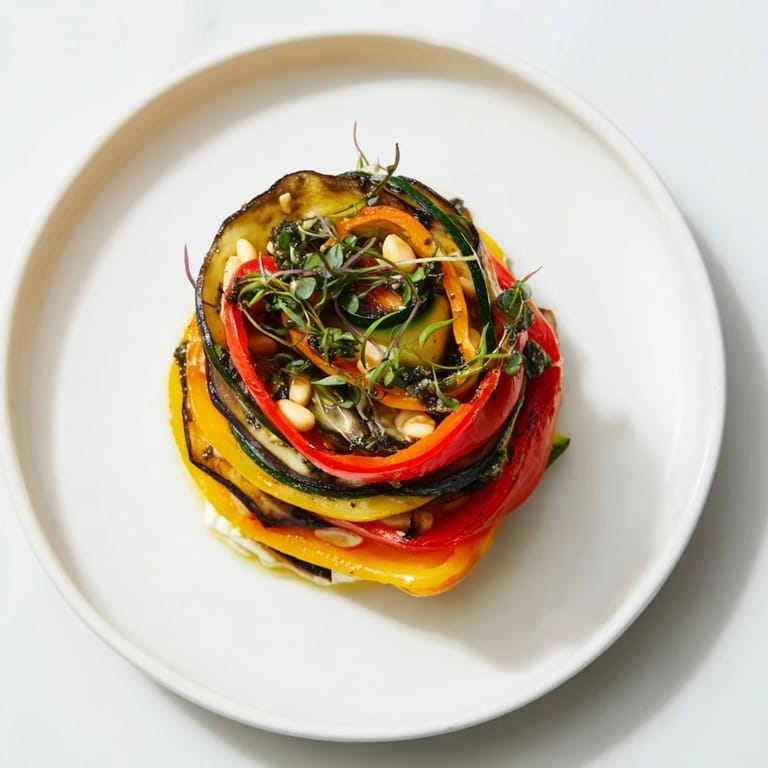
 I still remember the first time I arranged vegetables in a spiral on my kitchen counter, thinking it looked too beautiful to eat. It was a rainy Sunday afternoon when a dear friend mentioned wanting something both visually stunning and elegantly simple. That's when the idea struck me—what if we created something that looked like edible art? The Snail Shell Spiral was born from that moment, and it's since become my go-to when I want to impress without spending hours in the kitchen.
I made this for my partner's family dinner last spring, and I'll never forget how everyone went quiet when it arrived at the table. For a moment, it felt too pretty to touch. Then someone cut into the spiral and suddenly we were all laughing, passing plates around, amazed that something so visually dramatic could taste so genuinely delicious and comforting.
Ingredients
- 1 small eggplant, thinly sliced lengthwise: The eggplant becomes wonderfully tender and acts as the anchor for your spiral, absorbing the flavors around it. I learned to slice it lengthwise because it creates those long, elegant ribbons that naturally follow the spiral shape.
- 1 medium zucchini, thinly sliced lengthwise: This adds a gentle sweetness and keeps the structure light. The key is slicing it consistently so each layer cooks evenly.
- 1 red bell pepper, seeded and thinly sliced: The red brings warmth and a subtle sweetness that brightens the whole dish. I always seed it carefully to avoid any tough bits.
- 1 yellow squash, thinly sliced lengthwise: Yellow squash gives you that sunny color that makes the spiral truly pop. It's more delicate than zucchini, so handle it gently.
- 1 small carrot, peeled and thinly sliced lengthwise: Carrots add earthiness and a hint of natural sweetness. Slicing them lengthwise takes a bit of patience, but it's worth it for the presentation.
- 100 g goat cheese, softened: This is your foundation—it needs to be soft enough to spread smoothly but still hold its place. I always leave it out for 15 minutes before starting.
- 2 tbsp crème fraîche: This is the secret to making the goat cheese spreadable without losing its tang. It adds richness without heaviness.
- 2 tbsp fresh basil leaves, finely chopped: Fresh basil is essential here—it bridges the earthiness of the vegetables with the creaminess of the cheese. I chop it just before using to preserve the flavor.
- 1 tbsp fresh thyme leaves: Thyme adds an herbal sophistication that elevates this from simple to special. Fresh is crucial; dried would be too intense.
- 2 tbsp olive oil: Good quality olive oil matters because you're using it to coat and flavor delicate vegetables. I use a fruity extra virgin.
- ½ tsp sea salt and ¼ tsp freshly ground black pepper: These seem modest, but they unlock the natural sweetness of the vegetables. Grind your pepper fresh—the difference is remarkable.
- 1 tbsp pine nuts, lightly toasted: Toasting brings out their buttery richness. They add texture and a subtle richness that catches you by surprise in each bite.
- Microgreens, for garnish (optional): These are the final flourish—they add a peppery freshness and make the dish look like it came from a fine dining kitchen.
Tired of Takeout? 🥡
Get 10 meals you can make faster than delivery arrives. Seriously.
One email. No spam. Unsubscribe anytime.
Instructions
- Prepare Your Canvas:
- Preheat your oven to 200°C (400°F) and line a baking tray with parchment paper. This is your stage, so set it up properly. You want the vegetables to roast evenly without sticking.
- Slice and Season:
- Slice each vegetable lengthwise—I use a sharp chef's knife, though a mandoline makes this faster if you're comfortable with one. Brush each slice gently with olive oil and sprinkle with salt and pepper. Don't be shy with the seasoning; these vegetables need flavor to shine.
- Roast to Tenderness:
- Lay the slices on your tray in a single layer and roast for 10-12 minutes. You're looking for them to become pliable and tender, still holding their color but no longer rigid. Watch them carefully—they go from perfect to slightly browned quickly. When you pull them from the oven, they'll smell absolutely incredible.
- Make Your Cheese Base:
- While vegetables roast, combine the softened goat cheese, crème fraîche, basil, and thyme in a bowl. Mix until completely smooth—this is what binds everything together. Taste it and adjust seasoning if needed; it should taste like concentrated deliciousness.
- Build Your Spiral:
- On your serving plate, start at the center and spread the cheese mixture in a thin, continuous spiral, working outward. Think of it like drawing with a spoon. Leave enough room to layer the vegetables on top.
- Layer With Purpose:
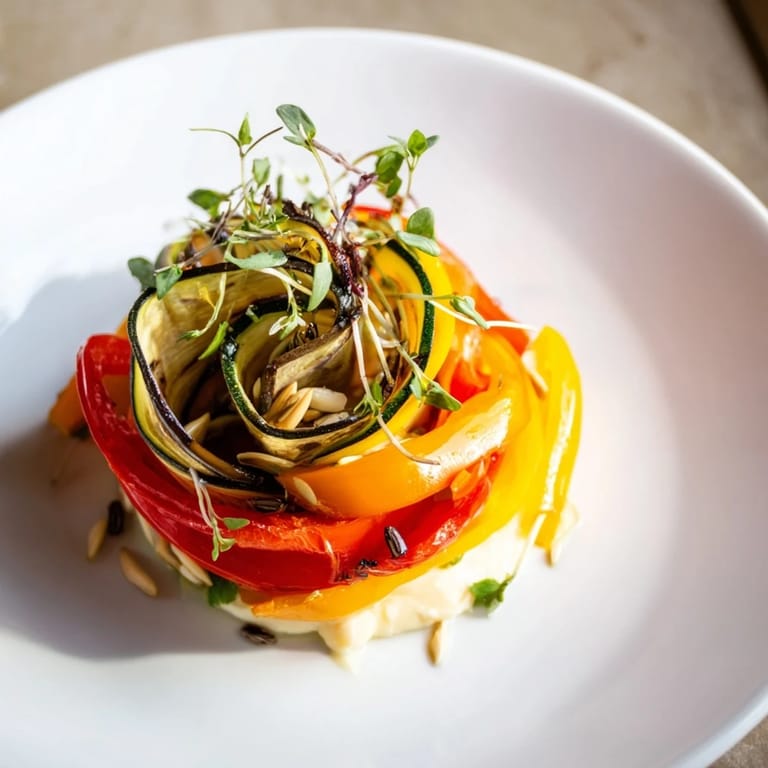
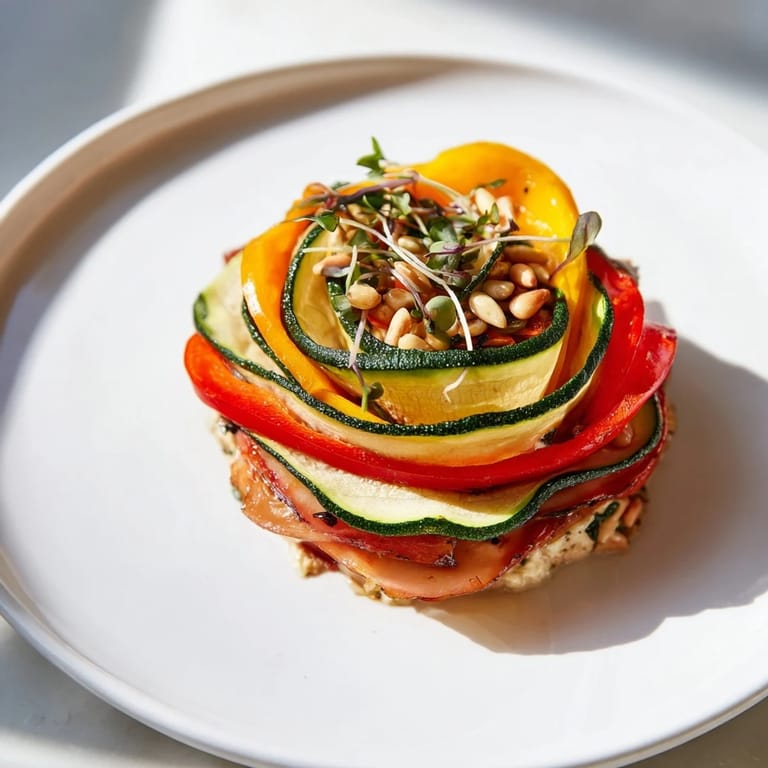
- Starting at the center again, begin arranging your cooled vegetable slices over the cheese spiral. Overlap them slightly and alternate colors—red, yellow, green, purple, orange—as you wind outward. This is where the magic happens. Work slowly and enjoy the process. Each layer should follow the spiral naturally.
- Final Touches:
- Sprinkle your toasted pine nuts across the spiral and add microgreens if using. These aren't just garnish; they're flavor and texture that make each bite complete.
- Rest and Serve:
- Let the spiral rest for a few minutes at room temperature before serving. This allows all the flavors to settle into themselves. Serve it as is, or with crusty bread on the side for those who want it.
 Pin It
 The moment I watched someone cut into their first slice and see that perfect spiral revealed in cross-section—layers of color and texture in a perfect pattern—I knew this dish was more than just food. It became a symbol of how something simple, made with intention and care, can transform into something truly special.
The Art of Vegetable Selection
Choosing your vegetables matters more than you might think. I've learned to pick vegetables that are relatively uniform in size so they roast evenly and slice beautifully. The eggplant should be small and firm, not the massive ones that contain too many seeds. Look for zucchini and squash that feel solid and aren't waterlogged—these are sweeter and have better texture. The bell pepper should be glossy and firm. When your vegetables are at their peak, the dish sings in a way that makes you understand why seasonal eating matters so much.
Variations and Personal Touches
While the classic spiral is stunning, I've discovered that this dish welcomes creativity. Some seasons I add thinly sliced roasted beets for deeper color and earthy sweetness. Other times, I've incorporated roasted sweet potato for richness. Even adding thin slices of creamy mozzarella between vegetable layers changes the entire character. The beauty is that once you understand the technique, you can make it your own, reflecting what's in your garden or what your mood calls for.
Serving and Pairing Wisdom
I've learned that this spiral shines best at room temperature—chilled, the cheese becomes firm and the vegetables seem to lose their personality. Serve it with crusty bread for texture contrast, or alongside a crisp white wine like Sauvignon Blanc or a light rosé. For a full meal, follow it with a simple grilled fish or roasted chicken. What surprised me most was how beautifully it works as part of a vegetarian spread, paired with other light dishes. It's elegant enough for formal entertaining but casual enough for a relaxed lunch with friends.
- Always let the spiral come to room temperature before serving for maximum flavor impact
- Prepare the vegetables and cheese base ahead of time, then assemble just before guests arrive for freshness
- If making vegan, use a quality plant-based cheese spread that spreads smoothly without separating
 Pin It
 Making the Snail Shell Spiral taught me that the most memorable dishes aren't always the most complicated—they're the ones made with attention and love. This is one of those recipes that reminds me why I cook.
Recipe FAQs
- → How do I prepare the vegetables to arrange them in a spiral?
Thinly slice the vegetables lengthwise using a mandoline or sharp knife. Roast them until pliable but not browned, allowing easy layering in a continuous spiral.
- → What cheese combination enhances the flavor?
A smooth blend of softened goat cheese and crème fraîche mixed with fresh basil and thyme creates a creamy base that complements the vegetables perfectly.
- → Can this dish be served warm or cold?
It’s best served at room temperature, allowing the flavors to meld while maintaining the texture of the roasted vegetables and creamy spread.
- → What alternatives are recommended for a vegan version?
Replace goat cheese and crème fraîche with a plant-based cheese spread to keep the creamy texture without dairy.
- → How can I add more color or flavor variations?
Try adding thinly sliced roasted beets or sweet potatoes to the spiral for additional color and a sweeter flavor profile.
- → What tools are essential for making this dish?
A sharp chef’s knife or mandoline for slicing, a baking tray lined with parchment paper, and a mixing bowl for the cheese blend are key tools to prepare this dish efficiently.