 Pin It
 The first time I made paella, I was standing in a cramped Madrid kitchen with my friend Rosa, watching her grandmother work a massive pan over an open flame like it was the most natural thing in the world. I was terrified—so many moving parts, so much seafood, the pressure of getting the saffron right—but there was something magnetic about the way the rice gradually soaked up all those golden, fragrant layers. By the end of the afternoon, when we pulled back that foil and revealed the crispy, caramelized bottom (the socarrat, Rosa called it), I understood why this dish is less a recipe and more a celebration.
I made this for my partner's birthday dinner last spring, and I remember the kitchen filling with that incredible saffron-and-seafood aroma about halfway through cooking. When I lifted the foil and the steam rose up, their face lit up in a way that made every careful step feel completely worth it. That night, paella stopped being just a recipe and became our thing—the dish we return to whenever we want to mark something special.
Ingredients
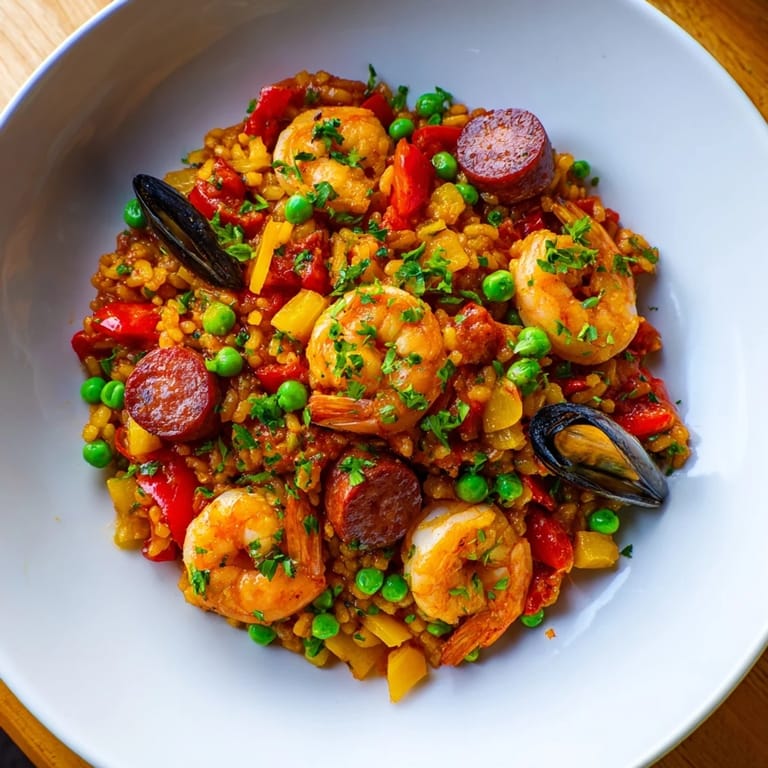
- Chorizo sausage, sliced: The smoky backbone of paella—use authentic Spanish chorizo if you can find it, as it brings a depth that regular sausage can't touch.
- Boneless, skinless chicken thighs: They stay tender and juicy through the cooking, unlike breast meat which can dry out; cut them into bite-sized pieces so they cook evenly with the rice.
- Large shrimp and mussels: Add these near the end so they don't overcook and turn rubbery; they'll cook perfectly in the steam created under the foil.
- Calamari rings: Optional, but they add a wonderful texture contrast and a subtle briny sweetness.
- Short-grain paella or Arborio rice: The starches in these varieties help create that signature creamy interior while the grains stay intact; don't substitute with long-grain rice or you'll lose the whole character of the dish.
- Saffron threads: Steep them in hot stock first to unlock their color and flavor—this makes a difference you'll actually taste.
- Smoked paprika: This is what gives paella its signature smoky warmth; regular paprika just won't deliver the same magic.
- Fresh vegetables: The onion, peppers, tomatoes, and peas add brightness and sweetness that balance all the richness from the proteins.
- Olive oil: Use good quality; it's not just a cooking medium here, it carries flavor throughout the entire dish.
Tired of Takeout? 🥡
Get 10 meals you can make faster than delivery arrives. Seriously.
One email. No spam. Unsubscribe anytime.
Instructions
- Awaken the saffron:
- Steep the saffron threads in hot stock for a few minutes—you'll see the liquid turn that beautiful golden color and the threads will soften. This step is non-negotiable if you want real saffron flavor.
- Build your flavor base:
- Brown the chorizo and chicken in olive oil until they develop a golden crust, about 5–7 minutes. This is where the smoky, savory foundation of your paella begins.
- Soften the vegetables:
- Add onion and peppers, cooking gently until they're soft and fragrant, then add garlic and tomatoes. You want them cooked down but not mushy—this takes about 6–7 minutes total.
- Toast the rice:
- Stir the rice into the vegetable mixture with the smoked paprika, coating each grain in the oil and spices. Toast it for about a minute—this helps it maintain its structure and adds a subtle nuttiness.
- Combine and simmer:
- Return the meat, add the saffron-infused stock and remaining liquid, then bring to a boil. Reduce heat to low and simmer uncovered for 15 minutes without stirring—this is where the magic happens as the rice gradually absorbs all those flavors.
- Finish with seafood:
- Nestle in the shrimp and mussels, scatter peas on top, cover loosely with foil, and cook for 10–12 minutes. The foil traps steam while still allowing some of the liquid to evaporate.
- Rest and serve:
- Let it sit covered for 5 minutes after cooking—this allows the rice to fully settle and the flavors to meld. Discard any mussels that didn't open.
 Pin It
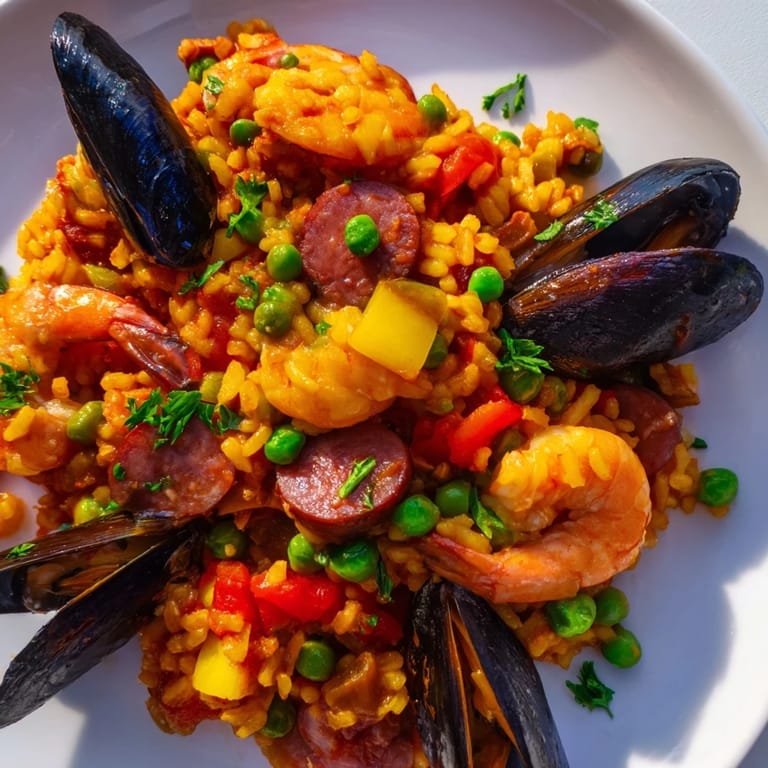
 There's a moment about halfway through cooking paella when you lift the lid and the kitchen transforms—suddenly you're transported somewhere warm and Mediterranean, somewhere with sunlit courtyards and long tables. That's when you know you've done it right. The dish becomes less about feeding people and more about creating a moment.
The Heart of Paella: Understanding Socarrat
The socarrat—that crispy, caramelized layer on the bottom of the pan—is what separates an okay paella from one people will remember. The first time I made it intentionally, I was nervous about burning things, but Rosa's grandmother gently pushed the heat up slightly at the very end and said "listen for the crackling." Sure enough, those delicate snapping sounds meant the rice was toasting, not burning. It's the difference between a dish and a revelation.
Timing and Flexibility
Paella is more forgiving than its reputation suggests, especially once you understand the rhythm of it. The rice needs about 25 minutes total of liquid absorption, whether that happens with shrimp or mussels or both; the exact timing matters less than watching the pan and adding the seafood when you can see the rice is nearly tender. I've made it with clams instead of mussels, with scallops instead of shrimp, and it works beautifully as long as you're paying attention.
Wine, Sides, and Lingering Conversations
Paella deserves to be eaten slowly with people you enjoy, paired with a crisp Spanish white wine like Albariño that cuts through the richness without competing with the saffron. A simple green salad and crusty bread are all you need alongside it. I've learned that the best version of this dish happens when everyone at the table feels like they're part of something generous and unhurried.
- A squeeze of lemon right before eating brightens all the flavors and cuts through the richness perfectly.
- If you're making this for vegetarians, swap out all the proteins for artichokes, green beans, chickpeas, and extra mushrooms—the technique stays exactly the same.
- Leftovers are surprisingly good the next day served cold or warmed gently in a pan with a splash of stock.
 Pin It
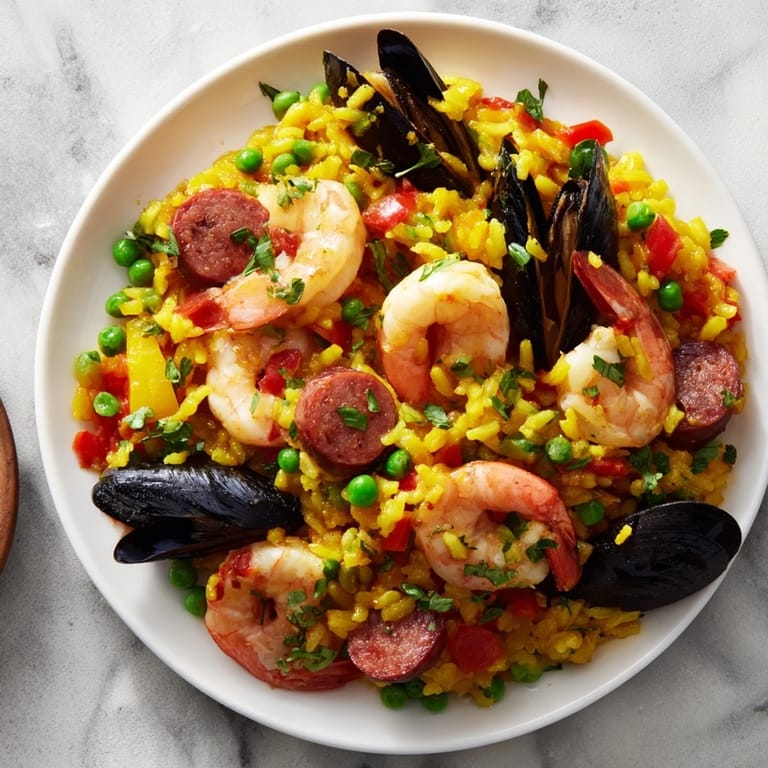
 Every time I make paella now, I think of that afternoon in Rosa's kitchen, and I understand why this dish has endured for centuries. It's not complicated, but it asks you to pay attention—to listen for the sizzle, to watch the colors deepen, to smell when something is done. That kind of cooking, the kind that requires presence, is always worth the time.
Recipe FAQs
- → What type of rice is best for this paella?
Short-grain paella rice or Arborio rice work best, as they absorb flavors well and maintain a firm texture during cooking.
- → Can I substitute the seafood with other proteins?
Yes, chicken and chorizo are already featured for balanced flavor, and seafood can be varied with clams or scallops according to preference.
- → How does saffron influence the dish?
Saffron imparts a distinct earthy aroma and vibrant golden color to the rice, enhancing the overall flavor profile.
- → What is the purpose of not stirring the rice during simmering?
Allowing the rice to cook undisturbed helps develop a prized crispy layer at the bottom called 'socarrat', adding texture and depth.
- → How can I make this dish vegetarian-friendly?
Omit all meats and seafood, and include vegetables like artichokes, green beans, or chickpeas for added protein and texture.
- → What sides pair well with this dish?
A crisp Spanish white wine such as Albariño or Verdejo complements the rich, smoky flavors beautifully.