 Pin It
 I discovered this platter by accident one evening when I was arranging cheese and nuts for a dinner party and somehow ended up with a piece of aged Gouda standing upright in the center. The balsamic glaze I'd drizzled caught the candlelight, and suddenly the whole arrangement looked like something you'd see at a gallery opening—except it was delicious. My guests spent as much time admiring it as they did eating it, asking how long it took to plan something so intentional-looking. The truth was it took fifteen minutes and a happy accident.
I remember making this for a gallery opening after-party, and a photographer asked if I'd arranged it on a lazy Susan specifically to photograph it from different angles. I hadn't, but I did that next time. There's something about food that doubles as decor that makes people linger longer, talk more, and somehow enjoy the flavors even more because they're taking time to look first.
Ingredients
- Aged hard cheese (150 g): Use something with real character—Parmigiano-Reggiano shatters beautifully, aged Gouda has buttery undertones, and Manchego brings an almost nutty minerality that echoes the nuts around it.
- High-quality balsamic glaze (3 tbsp): This is where the visual drama happens; cheap balsamic tastes thin and acidic, but the good stuff coats the back of a spoon and tastes almost sweet.
- Roasted almonds, walnuts, pecans, and hazelnuts (1/3 cup each): Buy them already roasted and lightly salted—it saves time and they have better flavor than raw nuts that you'd have to toast yourself.
- Dried cranberries (2 tbsp, optional): These catch light and add visual interest, breaking up the monotony of browns and golds.
- Fresh grapes, figs, edible flowers, or microgreens (optional): Go with whatever is in season and looks vibrant—these are your final flourish.
Tired of Takeout? 🥡
Get 10 meals you can make faster than delivery arrives. Seriously.
One email. No spam. Unsubscribe anytime.
Instructions
- Set your centerpiece:
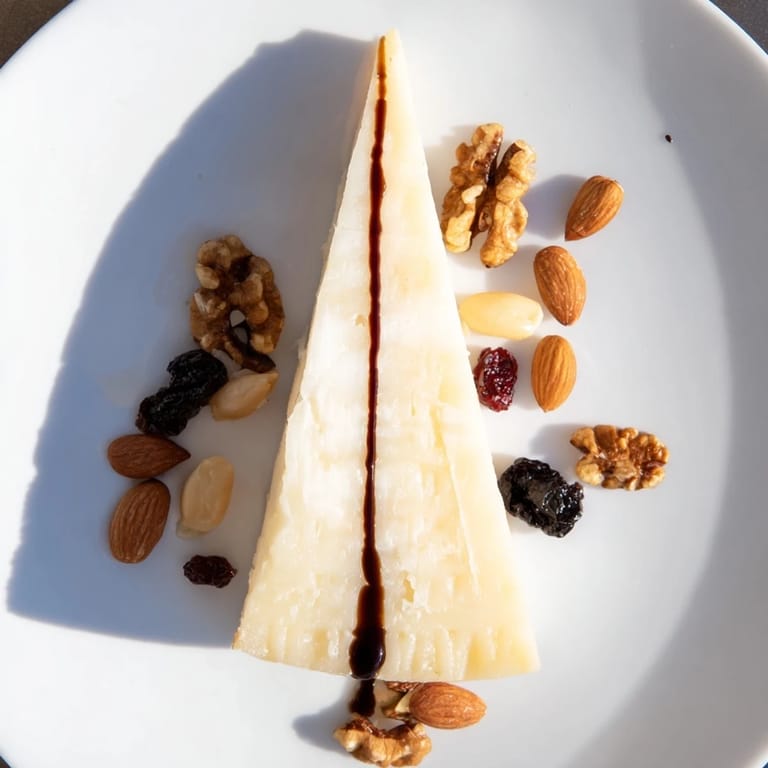
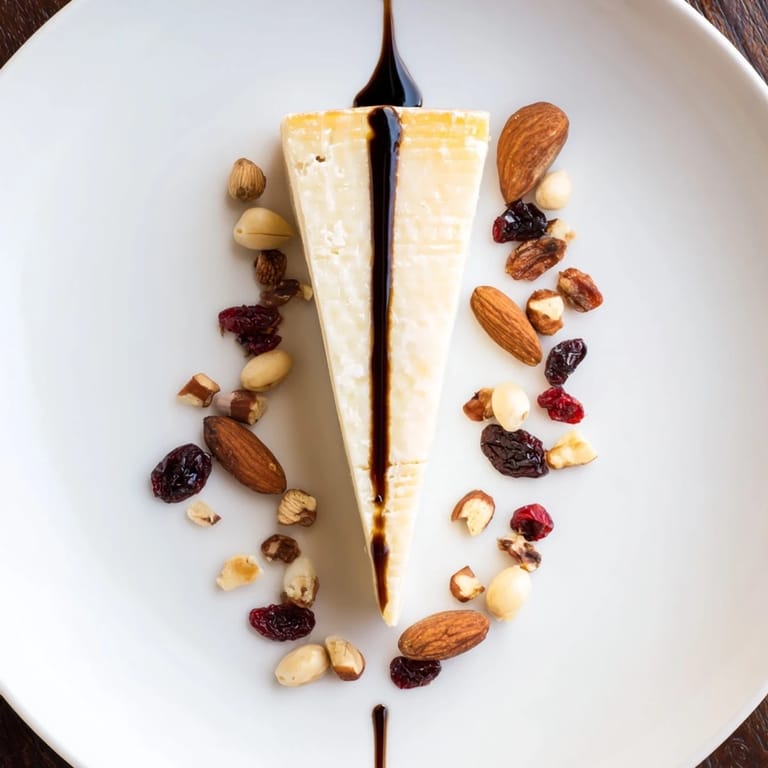
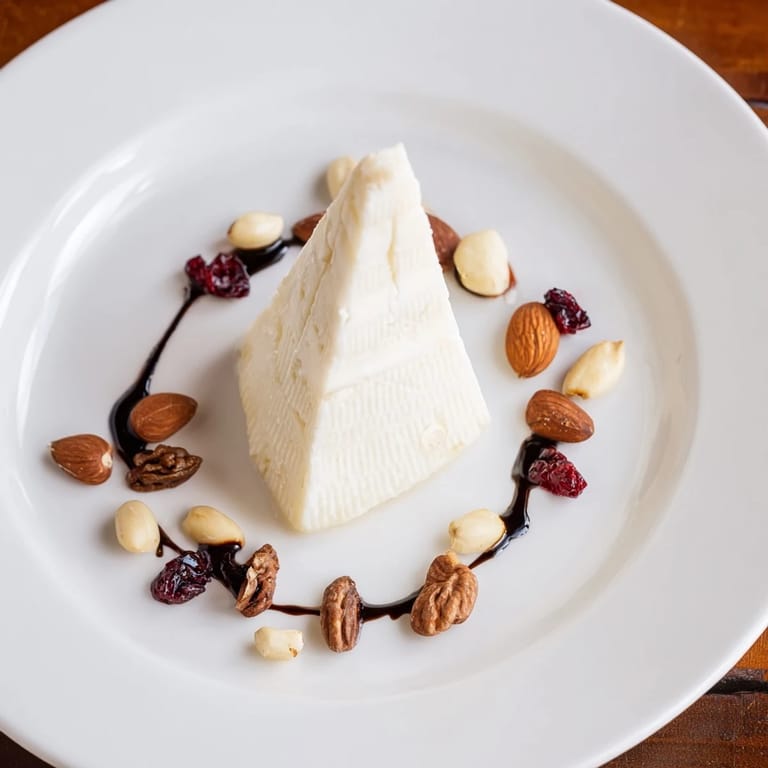
- Place the cheese wedge upright in the center of your largest round platter, pointing outward like a sundial's gnomon catching shadow. This is the moment where it starts looking intentional.
- Paint the shadow:
- Using a small spoon, drizzle a thick, continuous line of balsamic glaze radiating outward from the cheese, as if it's casting a shadow across the platter. Let it settle and glisten for a moment.
- Build the hours:
- Arrange twelve small clusters of mixed nuts in a circle around the cheese, spacing them evenly as if they're marking time on a clock face. This is where you can be loose and organic—they don't need to be perfectly measured.
- Add the final touches:
- Tuck dried cranberries into some of the nut clusters for color, then scatter any optional garnishes—grapes, figs, flowers, microgreens—wherever feels right visually. Step back and look.
- Serve with intention:
- Set out small cocktail picks or forks so people can pull individual bites without disrupting the whole arrangement.
 Pin It
 The first time I served this, a friend asked if it was inspired by sundials, and honestly I'd just been playing with the visual—but then they asked for the recipe to make it for their wedding shower. Watching someone recreate something you made almost by accident, and realizing it had become something they wanted to share, felt unexpectedly meaningful for a cheese plate.
Choosing Your Cheese
The cheese is your anchor, visually and flavor-wise. Aged hard cheeses work best because they're dense enough to stand upright without wobbling, and they've developed enough character that they taste like something worth centering a platter around. I tend to rotate between Parmigiano-Reggiano when I want something sharp and crystalline, Gouda when I'm after richness, and Manchego when I want something that tastes a bit like the Mediterranean. Each one casts a different kind of presence on the platter.
The Story of the Balsamic Shadow
The balsamic isn't just decoration—it's the visual hook that makes people stop and look before they reach for anything. Real balsamic glaze has an almost dark-chocolate depth that contrasts beautifully against the pale gold of hard cheese. The trick is not overthinking the line; it doesn't need to be perfectly straight, and in fact, a slightly organic drizzle looks more elegant and more honest.
Making It Your Own
This platter is a canvas, not a formula. Once you understand the basic sundial concept, you can swap in whatever nuts you have, whatever garnishes are in your kitchen, whatever cheese calls to you. I've made versions with spiced nuts, with dried apricots instead of cranberries, with microgreens arranged like hands pointing inward. The geometry stays the same, but every version tastes and looks slightly different.
- Try smoking your balsamic glaze lightly before serving for an unexpected depth of flavor.
- Toast your own nuts if you want them fresher or spiced to your liking—five minutes in a dry pan over medium heat changes everything.
- Make this a few hours ahead and cover it loosely; it actually gets more beautiful as the flavors settle.
 Pin It
 This platter has a way of becoming the thing people remember about an evening, not because it's complicated, but because it's beautiful and generous all at once. Make it once and you'll understand why.
Recipe FAQs
- → What types of cheese work best for the sundial platter?
Aged hard cheeses such as Parmigiano-Reggiano, aged Gouda, or Manchego work best due to their firm texture and rich flavor, which help form the sundial shape.
- → Can the nut clusters be substituted with other nuts?
Yes, you can use a variety of roasted or spiced nuts according to preference to add different textures and flavors.
- → How is the balsamic glaze applied to create the shadow effect?
Use a spoon to carefully drizzle a thick, straight line of balsamic glaze extending outward from the cheese wedge, mimicking the shadow of a sundial gnomon.
- → Are there vegan alternatives to the hard cheese used?
Plant-based hard cheeses can be substituted to create a similar visual and flavor effect for vegan diets.
- → What garnishes complement this cheese platter?
Fresh grapes, figs, edible flowers, or microgreens add color and elegance without overpowering the natural flavors.
- → How should this platter be served for easy sharing?
Provide cocktail picks or small forks, allowing guests to pick clusters and slices conveniently.