 Pin It
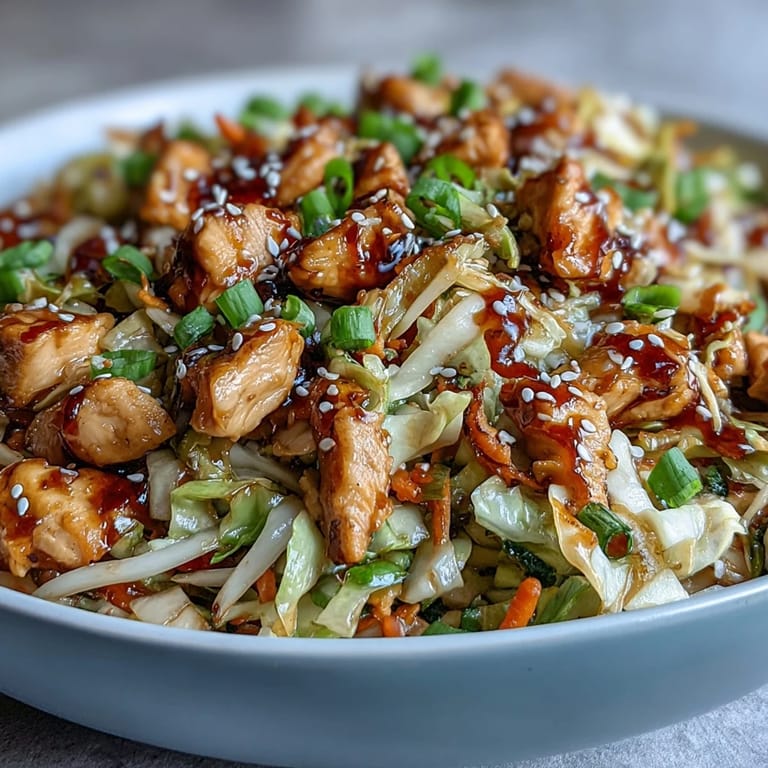
 I threw this together on a weeknight when takeout felt too heavy and I wanted something fast that still tasted deliberate. The sizzle of ginger hitting hot oil filled the kitchen, and suddenly I wasn't rushing anymore. Cabbage wilted just enough to stay crisp, chicken soaked up every bit of that soy-sesame glaze, and I realized I'd been craving exactly this without knowing it. Sometimes the best meals are the ones you don't plan, just feel your way through with what's already in the fridge.
The first time I made this for friends, I doubled the recipe and served it family-style in a big wooden bowl. Someone added too much chili crisp and spent the next ten minutes fanning their mouth, but they went back for seconds anyway. We sat around the table longer than usual, scraping up every last sesame seed. It became one of those meals people ask for by name, the kind that feels like a small celebration even on a Tuesday.
Ingredients
- Boneless, skinless chicken breasts: Slicing them thin ensures they cook fast and soak up the sauce instead of staying bland in the center.
- Neutral oil: Vegetable or canola works best because it can handle high heat without smoking or adding competing flavors.
- Yellow onion: Sweetens as it softens and adds a subtle backbone to the whole dish.
- Garlic and ginger: Fresh is non-negotiable here, the jarred stuff just doesn't bloom the same way in hot oil.
- Green cabbage: Shredding it yourself means you control the texture, and it stays crunchier than the pre-bagged kind.
- Carrots: They add color and a hint of sweetness that balances the salty soy sauce.
- Green onions: Slicing them on a diagonal makes them look prettier and gives you more surface area for flavor.
- Low-sodium soy sauce: Lets you control the salt level without the dish turning into a salt lick halfway through.
- Rice vinegar: Brightens everything and cuts through the richness of the oil and sesame.
- Toasted sesame oil: A little goes a long way, it's the secret that makes people ask what's in this.
- Sugar or honey: Just a teaspoon rounds out the sauce and helps everything cling to the vegetables.
- Toasted sesame seeds: Optional, but they add a nutty crunch that makes each bite more interesting.
- Sriracha or chili crisp: For those who like a little heat and crunch at the end.
Tired of Takeout? 🥡
Get 10 meals you can make faster than delivery arrives. Seriously.
One email. No spam. Unsubscribe anytime.
Instructions
- Prep everything first:
- Slice the chicken thin, shred the cabbage and carrots, mince the garlic and ginger, and chop the onions before you turn on the heat. Once the pan is hot, things move fast and you won't have time to hunt for a grater.
- Heat the oil:
- Get your skillet or wok over medium-high heat and let the oil shimmer before adding anything. If the pan is too cool, the onions will steam instead of soften.
- Cook the onion:
- Toss in the sliced onion and stir occasionally for about two minutes until it turns translucent and smells sweet. Don't let it brown too much or it'll taste bitter.
- Add garlic and ginger:
- Stir them in and cook for just thirty seconds, until the fragrance hits you in the face. Any longer and the garlic will burn and turn acrid.
- Brown the chicken:
- Season lightly with salt and pepper, then cook for five to seven minutes, stirring now and then, until no pink remains. The edges should get a little color for extra flavor.
- Push and add vegetables:
- Slide the chicken to one side of the pan and pile the cabbage and carrots on the other side. This lets the vegetables cook in direct contact with the hot pan instead of steaming on top of the chicken.
- Soften the vegetables:
- Toss them for three to four minutes until they start to wilt but still have some bite. Overcooked cabbage turns mushy and loses its charm.
- Combine everything:
- Mix the chicken and vegetables together so every forkful has a little of both. The pan should look crowded and colorful.
- Add the sauce:
- Pour in the soy sauce, rice vinegar, sesame oil, and sugar or honey, then toss everything to coat evenly. Cook for one to two minutes until the sauce clings to the chicken and vegetables and the kitchen smells amazing.
- Taste and adjust:
- This is your chance to fix anything, add more soy sauce if it tastes flat, a pinch of salt if it needs depth, or a crack of black pepper for a little heat. Trust your palate.
- Serve it up:
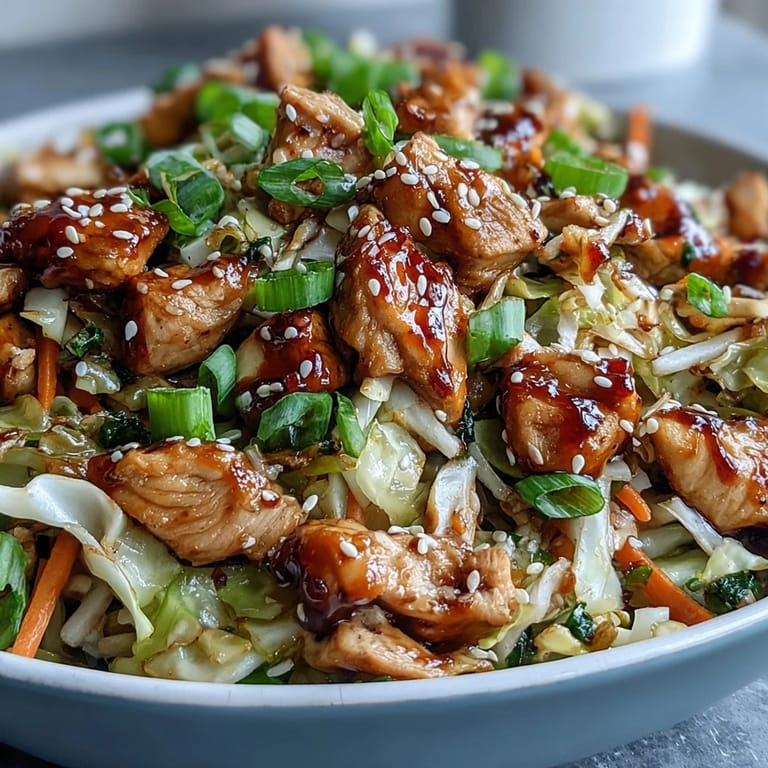
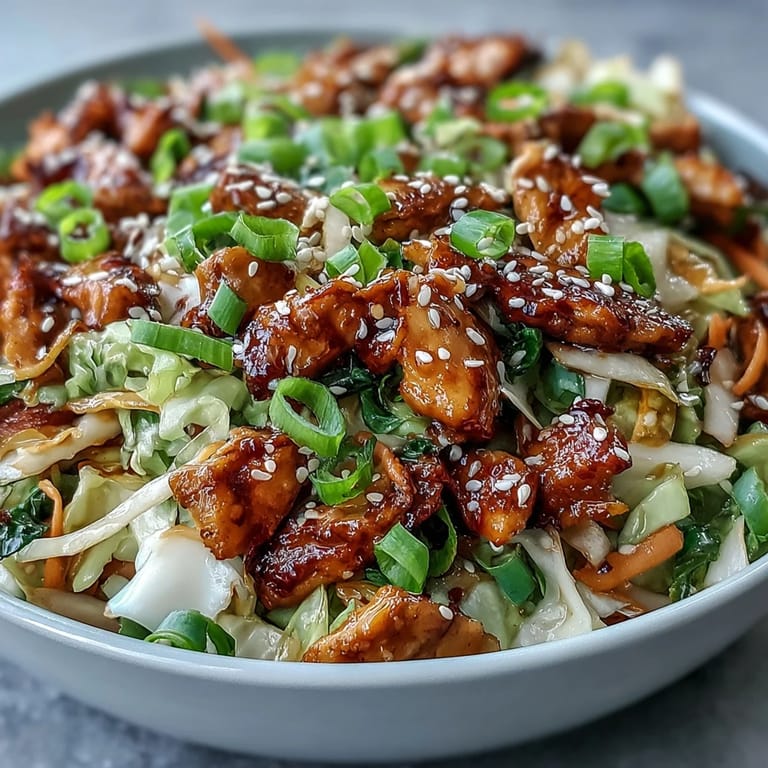
- Divide the mixture into bowls and top with sliced green onions, sesame seeds, and chili crisp if you want the heat. Serve immediately while everything is still hot and glossy.
 Pin It
 One night I made this after a long day and realized halfway through that I'd forgotten the carrots. I tossed in some thinly sliced bell pepper instead, and it worked beautifully. That's when I understood this recipe isn't precious, it's a template that bends to whatever you have on hand. It became my go-to for using up odds and ends, and somehow it always tastes like I meant it that way.
Protein Swaps That Work
Ground pork crisps up nicely and adds a richer, fattier flavor that clings to the cabbage. Ground turkey keeps things lean and mild, and firm tofu crumbles in the pan like scrambled eggs, soaking up the sauce without any fuss. Leftover rotisserie chicken is the fastest option, just shred it and toss it in at the end so it heats through without drying out. Each version has its own texture and mood, so pick based on what sounds good or what needs using up.
Serving Suggestions
I like this straight from the pan, but it's just as good over steamed jasmine rice if you want something more filling. Cauliflower rice keeps it low-carb and lets the vegetables stay the star. Some people add a fried egg on top, the runny yolk mixing into the sauce turns it into a whole different meal. A handful of crispy wonton strips on top adds crunch that mimics the original egg roll vibe.
Storage and Leftovers
This keeps in an airtight container in the fridge for up to three days, though the cabbage softens a bit more each day. Reheat it in a skillet over medium heat instead of the microwave so it doesn't turn soggy. If you're meal prepping, store the garnishes separately so the sesame seeds and green onions stay crisp. I've even eaten it cold straight from the container, standing at the counter, and it still tastes bright and satisfying.
- Add a splash of fish sauce or hoisin before reheating to wake up the flavors.
- Toss in fresh cabbage or greens if the leftovers need more crunch.
- Use it as a filling for lettuce wraps or stuff it into a tortilla for a quick lunch.
 Pin It
 This recipe has saved more weeknights than I can count, and it never feels like a compromise. Keep the ingredients simple, trust the sizzle, and you'll have something that tastes like care even when you're moving fast.
Recipe FAQs
- → Can I use a different protein instead of chicken?
Absolutely. Ground pork, turkey, or firm tofu work wonderfully in this dish. Adjust cooking times accordingly—ground meats cook faster, while tofu should be pressed and cubed for best results.
- → How do I keep the cabbage from getting too soft?
Cook the cabbage over medium-high heat for only 3–4 minutes, tossing occasionally. It should soften slightly while maintaining a pleasant crunch. Avoid overcrowding the pan to ensure proper heat distribution.
- → Can I make this ahead of time?
Yes, this dish stores well in an airtight container in the refrigerator for up to 3 days. Reheat gently in a skillet or microwave, adding a splash of water or soy sauce if needed to refresh the flavors.
- → What can I serve with this for a complete meal?
Serve over steamed white or brown rice, cauliflower rice for a low-carb option, or even rice noodles. A side of edamame or cucumber salad also complements the dish nicely.
- → How can I make this gluten-free?
Simply substitute the regular soy sauce with gluten-free tamari or coconut aminos. Check all other ingredient labels to ensure no hidden gluten sources.
- → What type of oil works best for this dish?
A neutral oil like vegetable, canola, or grapeseed oil is ideal for high-heat cooking. Avoid using sesame oil for cooking, as it has a low smoke point; save it for finishing the dish.