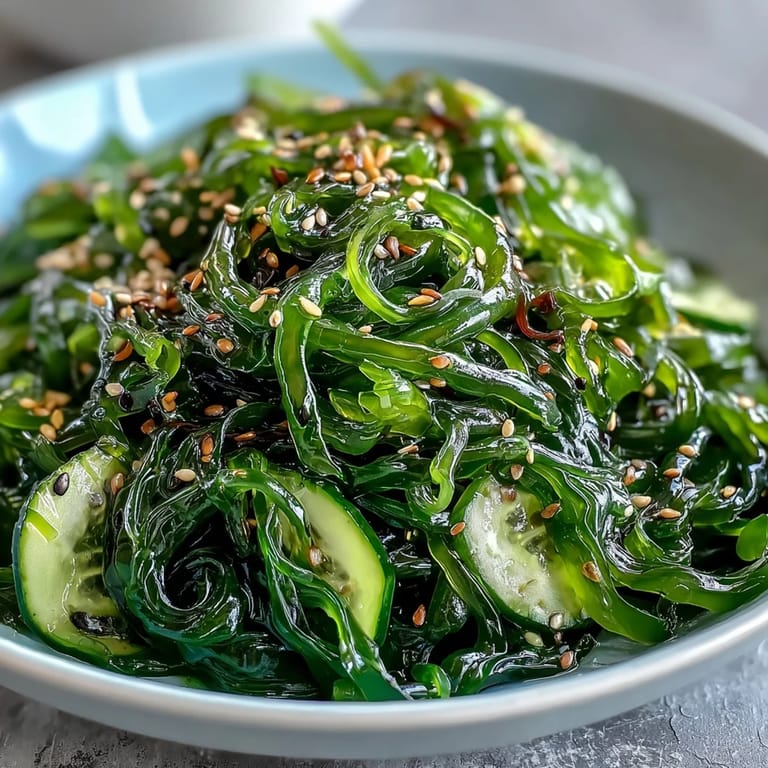
 Pin It
 There's a Japanese grocery store three blocks from my apartment, and I wandered in one afternoon just to escape the heat. The owner's daughter was arranging packages of dried wakame in the refrigerated section, and when she caught me staring blankly at the seaweed options, she smiled and said, "You make salad, yes?" Twenty minutes later, I was home with a bag of wakame and a mission. That first bowl of seaweed salad changed how I thought about vegetables entirely.
I made this for a dinner party on a Tuesday, which in retrospect was ambitious, but my friend Sarah had just come back from Tokyo raving about seaweed salad. When everyone took their first bite, there was this moment of quiet surprise, like they'd tasted something they didn't know existed. One guest asked for the recipe before dessert even arrived. That's when I realized this salad had become something I made for people I wanted to impress.
Ingredients
- Dried wakame seaweed: Start with about 30 grams (roughly 1 cup dried), which will triple in volume once rehydrated. Buy it from a Japanese market or the Asian section if you can, because it tastes noticeably fresher than what sits on shelves for months.
- Toasted sesame oil: Do not skip the word "toasted" or your dressing will taste one-dimensional. A little goes a long way, so 2 tablespoons is all you need.
- Rice vinegar: This is gentler than regular vinegar and brings a subtle sweetness that balances the saltiness of the soy sauce beautifully.
- Fresh ginger: The grated kind from a jar won't give you the same bright, alive flavor, so take 30 seconds to grate it fresh over a microplane.
- Soy sauce or tamari: If you're cooking for anyone avoiding gluten, tamari is your friend and tastes identical in this context.
- Cucumber and carrot: Slice them thin enough that they're almost delicate, which changes how they sit against the chewy seaweed.
- Sesame seeds: Toast them yourself in a dry pan if you have time, about 3 minutes over medium heat until they smell nutty and golden.
Tired of Takeout? 🥡
Get 10 meals you can make faster than delivery arrives. Seriously.
One email. No spam. Unsubscribe anytime.
Instructions
- Rehydrate the seaweed gently:
- Place the dried wakame in a bowl and pour cold water over it until it's submerged. You'll watch it unfurl and soften over 7 to 10 minutes, which is oddly satisfying. Once it's tender, drain it in a fine-mesh strainer and use your hands to squeeze out the excess water carefully so it doesn't turn to mush.
- Prep your vegetables with intention:
- Slice the cucumber into thin half-moons, julienne the carrot into matchsticks, and slice the scallions on a diagonal. This takes maybe 5 minutes and sets the stage for everything tasting cohesive rather than like separate ingredients.
- Whisk the dressing until it's balanced:
- In a small bowl, combine the sesame oil, rice vinegar, soy sauce, grated ginger, maple syrup, sesame seeds, and chili flakes. Whisk it until the sweetness and salt feel in conversation with each other, tasting as you go because everyone's preferences shift.
- Bring it all together with a gentle hand:
- Pour the dressing over the seaweed, cucumber, carrot, and scallions in a large bowl and toss gently so nothing gets bruised. You want everything coated and mingling but still recognizable.
- Finish with ceremony:
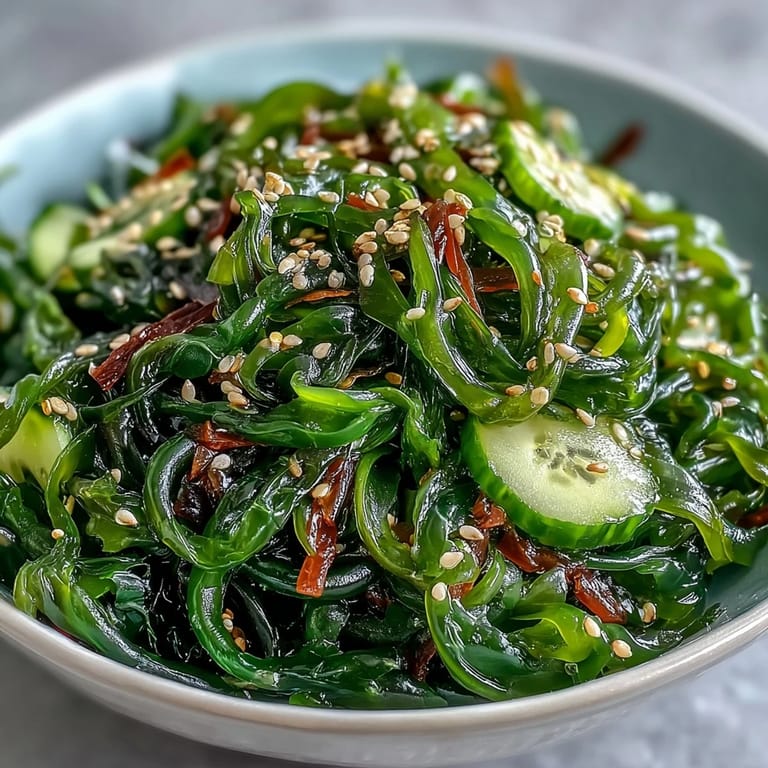
- Transfer to a serving bowl and sprinkle with sesame seeds and fresh cilantro or parsley. Let it sit for 15 to 30 minutes if you have time, which lets the flavors deepen and the textures settle.
 Pin It
 There was a moment when my neighbor tasted this salad and said it reminded her of a meal she hadn't thought about in fifteen years. She was quiet for a second, then smiled like she'd just recovered a small piece of herself. That's when I understood that food isn't just about hunger or nutrition; it's about giving people back their own memories and feelings.
Why This Salad Feels Different
Most seaweed salads you encounter are either aggressively salty or weirdly sweet, but this one lives in the middle where everything makes sense. The sesame oil brings warmth, the ginger brings clarity, and the maple syrup reminds you that balance is a real choice you get to make in the kitchen. Once you understand how these flavors work together, you'll start building other dressings the same way.
Make It Your Own
This recipe is a foundation, not a rule. Some people add thinly sliced radish for extra crunch or shredded red cabbage for color and earthiness. I've made versions with a splash of yuzu juice instead of some of the rice vinegar, and others where I've swapped the maple syrup for a touch of mirin for deeper sweetness. The seaweed stays the same, but everything else is negotiable.
Serving and Storage Wisdom
Serve this immediately for maximum crunch, or let it chill for 15 to 30 minutes if you want the flavors to meld and deepen. Leftovers keep in an airtight container for up to 2 days, though I've never had leftovers last much longer than that. It pairs beautifully with chilled sake or green tea, and it's elegant enough to serve at a dinner party but simple enough to make on a Tuesday night when you want to eat something that feels intentional.
- Make sure your seaweed is from a trusted source, as quality varies and some packages sit too long on shelves.
- Taste the dressing before you pour it over everything, because you might want it sweeter, saltier, or spicier depending on your mood.
- If you're cooking for someone with allergies, watch out for soy and sesame, and double-check that your seaweed hasn't been cross-contaminated in processing.
 Pin It
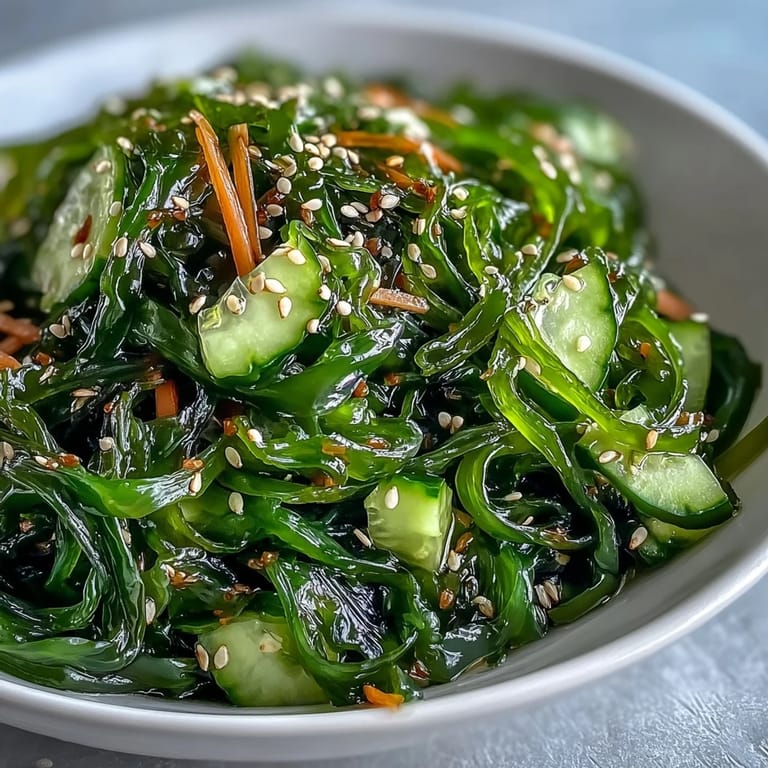
 This salad is proof that sometimes the best dishes are the simple ones, built on respect for good ingredients and the confidence to taste as you go. Once you make it once, you'll understand why it's become a quiet favorite in kitchens everywhere.
Recipe FAQs
- → What type of seaweed works best for this salad?
Dried wakame seaweed is ideal for this preparation. It rehydrates quickly, develops a tender texture, and absorbs the sesame-ginger dressing beautifully while maintaining a pleasant slight chew.
- → Can I prepare this seaweed salad in advance?
Yes, this salad actually benefits from chilling for 15-30 minutes before serving, allowing the flavors to meld. However, it's best consumed within 2 days as the vegetables will lose their crispness over time.
- → Is this dish suitable for gluten-free diets?
Absolutely. Simply substitute regular soy sauce with tamari to make this completely gluten-free. The remaining ingredients—seaweed, vegetables, sesame oil, and seasonings—are naturally gluten-free.
- → What vegetables can I add for more variety?
Thinly sliced radish, shredded red cabbage, or even bell peppers work wonderfully. These additions provide extra crunch and color while complementing the tangy sesame-ginger flavors.
- → How do I properly rehydrate dried seaweed?
Place the dried wakame in a bowl with cold water and soak for 7-10 minutes until fully tender. Drain thoroughly and gently squeeze out excess water before tossing with the vegetables and dressing.