 Pin It
 My first nori roll was a lopsided disaster that somehow tasted perfect. A friend visiting from Tokyo watched me fumble with the bamboo mat, laughing as I squeezed the roll so hard it nearly burst, then gently took over and showed me the quiet confidence of her hands working the seaweed and vegetables together. What struck me wasn't the technique—it was how something so simple could feel like a small act of care, especially when shared with someone who grew up eating these for lunch.
Years later, I made these for a picnic where everyone brought something store-bought except me. My rolls looked humble compared to the fancy spreads, but something about them—the fresh crunch, the way the nori hugged each piece—made people reach for seconds and ask for the recipe. That's when I realized homemade nori rolls have a different kind of appeal; they taste like intention.
Ingredients
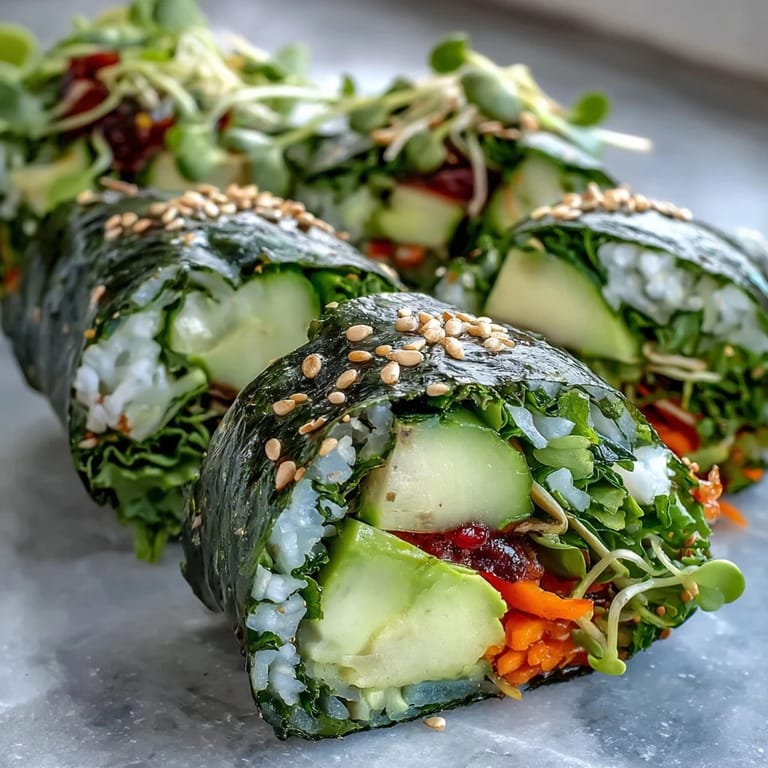
- Nori sheets: These thin, roasted seaweed rectangles are your edible wrapper, and the quality matters more than you'd think—cheaper ones can taste papery or too salty, so invest in a decent brand and store them in an airtight container or they'll lose their snap.
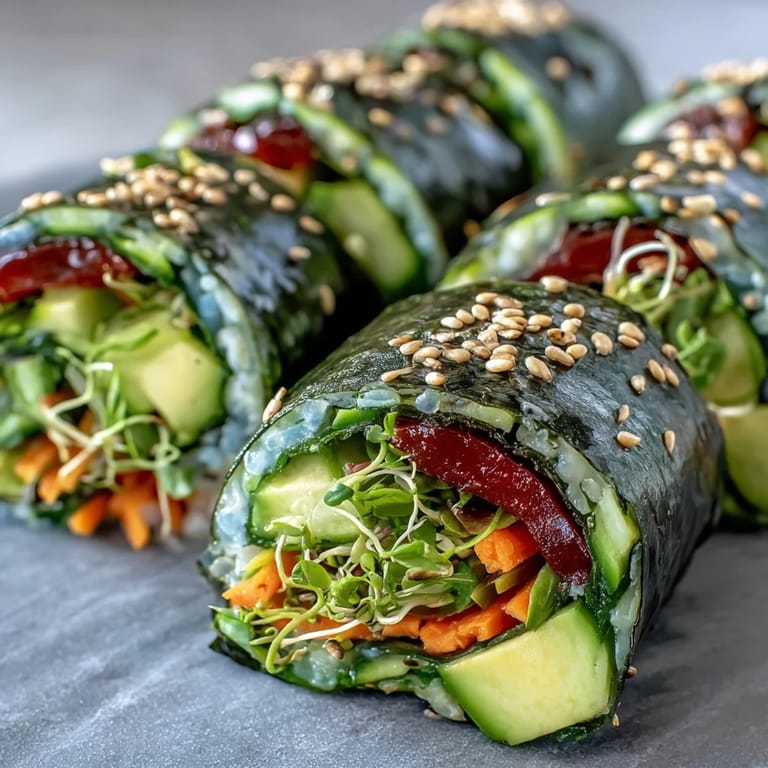
- Cucumber: Cut into thin, matchstick-like julienne so it stays crisp and doesn't make your roll soggy; this vegetable is your textural anchor.
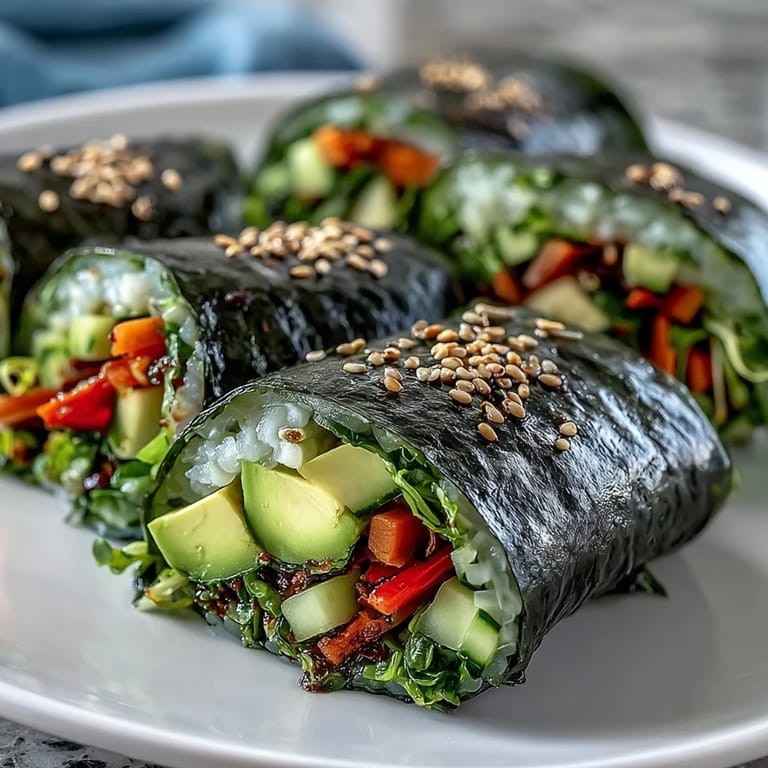
- Avocado: Choose one that's just ripe (you should be able to press it gently and have it yield slightly), and slice it lengthwise rather than dicing so the pieces stay intact during rolling.
- Mixed sprouts: Their tender crunch adds life to every bite, but rinse them well and pat dry so excess moisture doesn't compromise your roll.
- Carrot and red bell pepper: Both should be julienned thin and uniform for even rolling and a satisfying crispness that won't wilt.
- Sushi rice: The optional grain base that transforms these from vegetable wraps into more substantial rolls; if using, the rice vinegar mixture is what gives it that subtle tang and slight sweetness.
- Rice vinegar: Just a touch seasons the rice beautifully without overpowering the vegetables—think of it as the understated voice that lets everything else shine.
- Toasted sesame seeds: Scatter these over your filling for nutty flavor and a visual signal that you've put thought into your presentation.
Tired of Takeout? 🥡
Get 10 meals you can make faster than delivery arrives. Seriously.
One email. No spam. Unsubscribe anytime.
Instructions
- Prepare your rice if using:
- Fold the warm cooked rice gently with rice vinegar and let it cool completely; this step happens while you're prepping vegetables, so you're multitasking like a pro.
- Set your station:
- Lay out your bamboo mat on a clean surface with the nori shiny side down, and gather all your prepped vegetables within arm's reach—this is where things move quickly once you start rolling.
- Spread and layer:
- If using rice, spread a thin, even layer across the lower two-thirds of the nori, leaving that crucial top border bare so the roll can seal; then arrange your vegetables in a horizontal line, thinking of it like a garden planted in a single row.
- Build your roll:
- Lift the mat's bottom edge and fold it over the filling, pressing gently as you roll forward with steady, controlled movements; the mat does the work if you let it, and you should feel slight resistance but not struggle.
- Seal the edges:
- Use a lightly damp finger to brush the top edge of the nori as you complete the final roll, creating a natural adhesive that holds everything closed.
- Repeat and slice:
- Make your remaining rolls with the same calm approach, then use a sharp, damp knife with a single smooth motion per slice to avoid crushing the delicate fillings—wiping your blade between each cut makes all the difference.
- Serve with intention:
- Arrange your rolls on a plate with a small dish of soy sauce, and let each person dip and discover their favorite combination.
 Pin It
 I remember bringing these to a work potluck where someone with dietary restrictions felt genuinely included because they could eat what I'd made without worry or substitution. That quiet gratitude is something I've chased in my cooking ever since, and these rolls deliver it effortlessly.
Prepping Your Vegetables Like a Pro
The secret to nori rolls that don't fall apart is having your vegetables cut uniformly and small enough to eat without fighting for them. I learned this by watching my friend's hands move with practiced ease, and it clicked—consistency matters as much in your vegetable cuts as it does in your roll pressure. When everything is the same size, the roll compresses evenly, and flavors distribute with each bite instead of leaving you with a huge chunk of bell pepper in one roll and none in the next.
The Rice Question
Some nights I skip the sushi rice entirely and load my nori with extra vegetables for something lighter, almost like a seaweed salad you can hold in your hand. Other times, especially when I'm feeding people who expect traditional rolls, I use the rice and it transforms the whole experience into something more filling and substantial. Neither approach is wrong; it depends on what your body and your crowd need that day.
Make Them Your Own
The beauty of rolling your own is that you're not bound by restaurant conventions or nutritional compromise. I've added everything from marinated tofu to pickled radish, sometimes swapping avocado for a drizzle of tahini when I'm feeling experimental. The nori is your canvas, and these vegetables are just your starting point.
- Toast your sesame seeds fresh if you have time; the aroma alone will make your rolls feel special.
- Keep a small bowl of water nearby for dampening your fingers and knife between rolls—it's the difference between a clean execution and a sticky mess.
- If your avocado is under-ripe, slice it thin anyway and let it soften slightly at room temperature before rolling.
 Pin It
 There's something deeply grounding about sitting down with a plate of nori rolls you've rolled yourself, dipping them in soy sauce, and tasting the exact combination of flavors you intended. That's when these become more than a recipe.
Recipe FAQs
- → Do I need a bamboo rolling mat?
A bamboo sushi mat helps create tight, uniform rolls, but a clean kitchen towel works perfectly as a substitute. The key is applying gentle, even pressure while rolling to keep fillings secure inside the nori wrapper.
- → Can I make these ahead of time?
These are best enjoyed fresh within 2-3 hours of preparation. The nori can become soggy if refrigerated overnight. If meal prepping, store julienned vegetables separately and assemble just before eating for optimal texture and crunch.
- → What vegetables work best inside?
Cucumber, avocado, and carrot provide ideal crunch and creaminess. Other excellent options include red bell pepper, julienned daikon radish, shredded cabbage, steamed asparagus, or pickled vegetables. Aim for varying textures and colors for the most satisfying results.
- → Are nori rolls gluten-free?
Yes, nori sheets and vegetables are naturally gluten-free. Use tamari instead of soy sauce to avoid wheat, and verify that any condiments like pickled ginger or wasabi are certified gluten-free. Sushi rice is also gluten-free when made with pure rice vinegar.
- → How do I prevent nori from tearing?
Handle nori sheets with dry hands and keep them in their sealed packaging until ready to use. If the nori feels brittle, briefly wave it over steam to add slight moisture. Don't overfill with rice or vegetables, and roll firmly but gently without applying excessive pressure.
- → Can I add protein to make these more filling?
Absolutely! Marinated baked tofu strips, shredded cooked chicken, steamed shrimp, or smoked salmon work beautifully. For plant-based options, try edamame, thinly sliced tempeh, or marinated mushrooms. These additions transform light rolls into satisfying main courses.