 Pin It
 There's something about assembling a Buddha bowl that feels like creating art on a plate. I discovered this particular combination on a humid summer afternoon when my fridge was bursting with vegetables I'd bought with good intentions but hadn't quite used yet. The roasted eggplant was a last-minute addition, something I'd been avoiding for years, but that day it transformed into something so silky and caramelized that I couldn't stop thinking about it. What started as a way to use up produce became the bowl I now make whenever I need to feel grounded and nourished.
I made this for my sister during one of those visits where we're both too tired to cook but too hungry to order takeout. She watched the roasted vegetables come out of the oven, crispy at the edges and yielding in the middle, and asked if I'd finally learned to cook vegetables properly or if this was beginners luck. By the time we drizzled the dressing over everything, we were both quiet, just eating and occasionally saying how the flavors somehow made sense together.
Ingredients
- Mixed salad greens: Use whatever feels fresh and alive in your market that day, though arugula brings a peppery edge that plays beautifully against the creaminess of avocado and hummus.
- Zucchini: Cut into half-moons or small chunks so they get golden and slightly wrinkled at the edges, which concentrates their delicate flavor.
- Red bell pepper: Its sweetness becomes more pronounced when roasted, so don't skip the caramelization step.
- Red onion: The thin slices will soften and turn translucent, adding a gentle sharpness that balances the earthiness of the other vegetables.
- Eggplant: Dice it small and don't be shy with the olive oil, as eggplant is like a sponge and needs fat to become silky rather than rubbery.
- Olive oil: Use something you actually enjoy tasting, not the industrial stuff, because it's doing real work here.
- Dried oregano and smoked paprika: These two together create a Mediterranean backbone that makes humble roasted vegetables feel intentional and warm.
- Chickpeas: Whether from a can or cooked from dried, they're your protein anchor and deserve a moment of respect for keeping you satisfied.
- Avocado: Add it just before serving or it will turn that sad grayish color that makes people question your cooking.
- Kalamata olives: Their briny punch is non-negotiable, halving them so they distribute evenly without dominating any single bite.
- Hummus: If you have time, making it from scratch changes everything, but good store-bought versions are your honest friend here.
- Tahini: This is where the soul of the dressing lives, so find the kind with nothing added but sesame.
- Lemon juice: Fresh only, because bottled tastes like regret in a squeeze bottle.
- Garlic: One small clove minced fine so it dissolves into the dressing rather than announcing itself aggressively.
- Ground cumin: A whisper of warmth that connects all the components without overpowering them.
Tired of Takeout? 🥡
Get 10 meals you can make faster than delivery arrives. Seriously.
One email. No spam. Unsubscribe anytime.
Instructions
- Heat your oven and prepare the vegetables:
- Set the oven to 425°F and while it preheats, chop everything into roughly similar sized pieces so they roast evenly. The key is consistency, not perfection.
- Season and spread:
- Toss the vegetables with olive oil, oregano, smoked paprika, salt, and pepper in a bowl until everything gleams. Spread them across a baking sheet in a single layer, leaving some space between pieces so they roast rather than steam.
- Roast until golden:
- Set a timer for 12 to 15 minutes, then toss everything around and return it to the oven for another 12 to 15 minutes. You're looking for edges that have darkened slightly and vegetables that yield immediately when you press them with a fork.
- Make the dressing while vegetables roast:
- In a small bowl, whisk tahini with lemon juice, water, minced garlic, and cumin until you have something pourable but still substantial. Taste it and adjust salt, understanding that it will mellow once it coats all the components in the bowl.
- Assemble with intention:
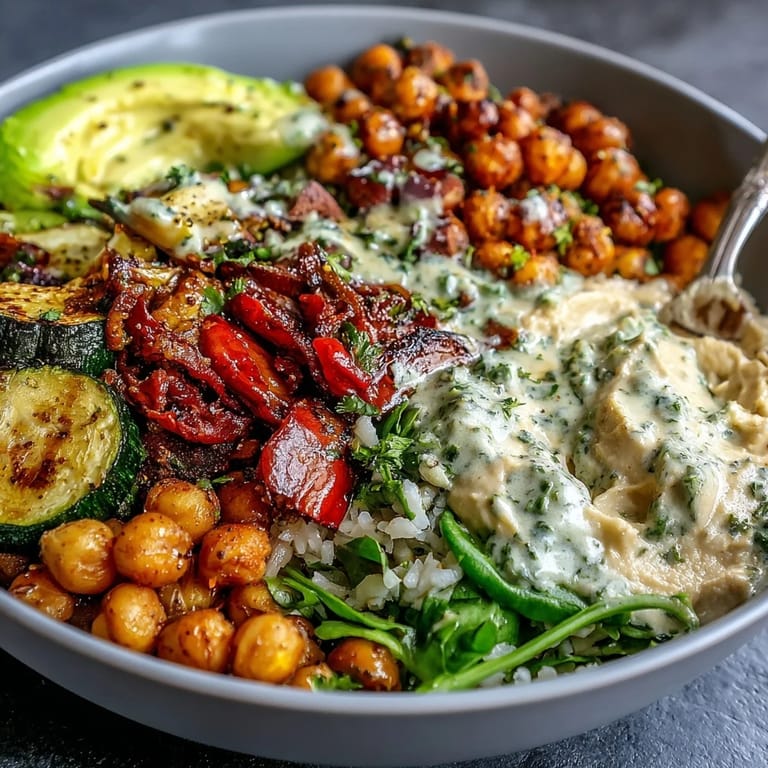
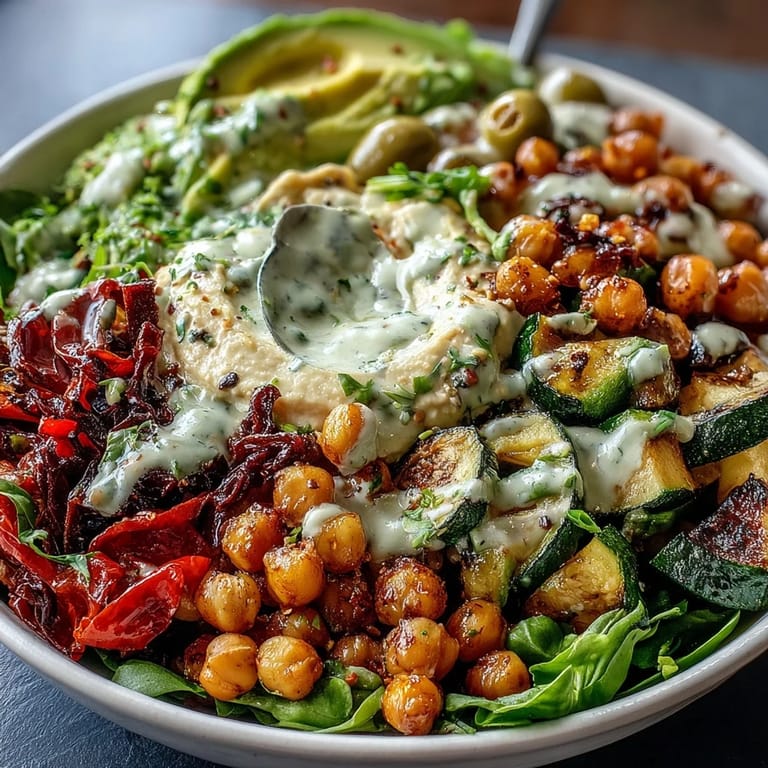
- Divide the greens among four bowls, then create a loose arrangement of chickpeas, roasted vegetables, avocado slices, and olives on top. Add a generous spoonful of hummus to each bowl, treating it as a creamy accent rather than trying to spread it everywhere.
- Dress and serve immediately:
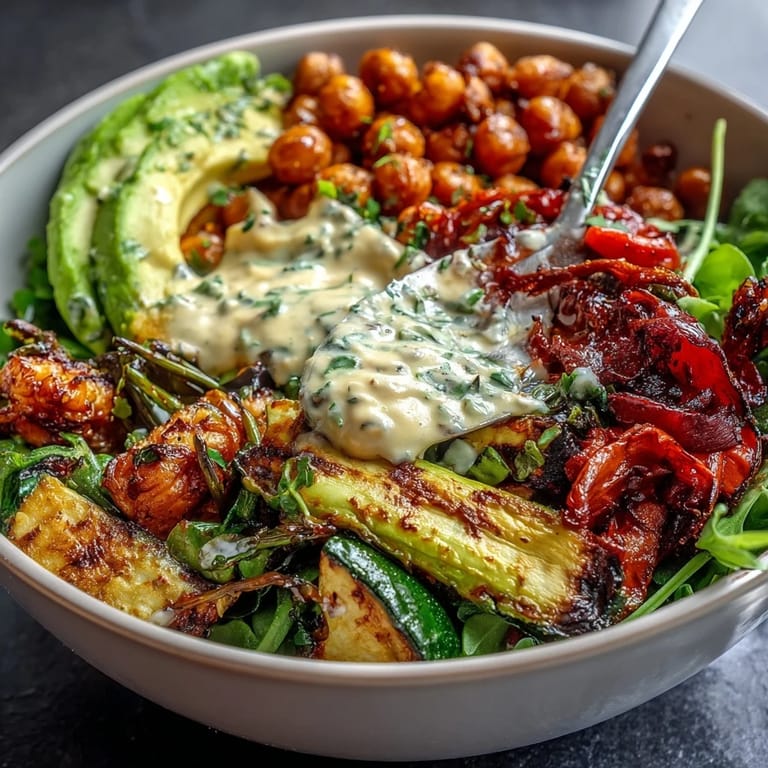
- Drizzle the tahini dressing over everything just before serving, watching it pool slightly in the corners of the bowl. Serve right away while the vegetables are still warm and the greens haven't started to wilt.
 Pin It
 There was a moment when my usually skeptical friend asked for the recipe after finishing her bowl, and that's when I realized this wasn't just health food trying to taste good. It was actually delicious, colorful, and made her feel like she could eat this way regularly without sacrifice.
Why Roasting Changes Everything
Raw vegetables in a bowl can feel virtuous but tired, whereas roasted vegetables taste like you've done something intentional with them. The heat concentrates their natural sugars, softens their edges, and creates those small caramelized spots that add complexity. This is where the bowl transcends being a collection of healthy ingredients and becomes something you're actually excited to eat.
The Dressing Is Everything
I used to make tahini dressing too thick because I was afraid it would separate, but then I realized the dressing should flow like a river through the bowl rather than sit in a puddle on top. The lemon juice and water create an emulsion that's silky and light, while the garlic and cumin add depth without making it taste like anything other than itself. Once you nail this ratio, you'll find yourself making extra because it's somehow good on almost everything.
Making It Your Own and Keeping It Fresh
The beauty of a Buddha bowl is that it's endlessly flexible, responding to what's in your market and what your body is asking for on any given day. Some weeks I add cooked grains for more substance, other times I load it with extra vegetables when I'm trying to eat lighter. The core stays the same, but the bowl never feels boring because you're rotating what goes into it.
- Layer the greens at the bottom so they stay crisp and don't wilt from the warm vegetables immediately.
- Keep the tahini dressing separate if you're packing this for lunch, adding it right before eating so everything stays fresh and distinct.
- Toast a handful of pine nuts or pumpkin seeds over medium heat for two minutes to add a textural contrast that makes every bite interesting.
 Pin It
 This bowl has become my go-to when I want to feel nourished without feeling like I'm on a diet, which might be the highest compliment a recipe can receive. It's the kind of food that makes you feel good both while you're eating it and afterward.
Recipe FAQs
- → Can I prepare the vegetables ahead of time?
Yes, you can roast the vegetables up to 3 days in advance and store them in an airtight container in the refrigerator. Reheat gently before assembling your bowls, or enjoy them cold for a refreshing variation.
- → What other grains work well with this bowl?
Quinoa, brown rice, farro, or bulgur make excellent additions for extra heartiness. Cook about 1/2 cup dry grains per serving and add them as a base layer beneath the greens.
- → How can I add more protein?
Incorporate crispy baked tofu, grilled tempeh, or roasted cauliflower steaks. You can also double the chickpeas or add white beans and lentils for additional plant-based protein.
- → Is the tahini dressing adjustable?
Absolutely. Add more water for a thinner consistency, or blend in fresh herbs like parsley, dill, or basil. For extra tang, increase lemon juice, or add a touch of maple syrup for sweetness.
- → Can I grill the vegetables instead of roasting?
Grilling works beautifully and adds a smoky char. Cut vegetables into larger slices, brush with oil, and grill over medium-high heat for 3-4 minutes per side until tender and marked.
- → What substitutions work for tahini?
If avoiding sesame, try almond butter, cashew butter, or sunflower seed butter blended with lemon and water. Each brings a slightly different flavor profile while maintaining creaminess.