 Pin It
 There's something about the first warm day of the year that makes me crave these cold sesame noodles—I was at a friend's rooftop dinner party, watching everyone wilt in the heat, when someone brought out a enormous bowl of slippery noodles coated in the silkiest sauce I'd ever tasted. I asked for the recipe that night, and now it's become my go-to move whenever I need to impress without spending hours in the kitchen.
I made this for my partner's team lunch last summer, and watching a group of tired office workers literally close their eyes after the first bite told me everything I needed to know about how good these noodles are. Someone asked for thirds, and honestly, that's when I knew this recipe was a keeper.
Ingredients
- Wheat noodles or spaghetti (350 g / 12 oz): I learned the hard way that thinner noodles work better here since they coat more evenly and don't get clumpy; rinsing them in cold water is non-negotiable.
- Sesame oil (1 tbsp): The first tablespoon goes into the cooked noodles to prevent them from sticking together into a solid block.
- Tahini or Chinese sesame paste (4 tbsp): This is the backbone of the sauce—tahini has a slightly milder flavor, while Chinese sesame paste tastes more toasty and intense.
- Smooth peanut butter (2 tbsp): It adds richness and helps keep the sauce creamy; chunky peanut butter will make the texture weird.
- Low-sodium soy sauce (3 tbsp): Regular soy sauce will oversalt everything, so I always stick with low-sodium and taste as I go.
- Rice vinegar (2 tbsp): This is what gives the sauce its subtle tang and keeps it from tasting flat.
- Honey (1 tbsp): It rounds out the flavors and adds a touch of sweetness that balances the salt and vinegar.
- Toasted sesame oil (1 tbsp): Don't use the light kind—you need the toasted version for that deep, nutty flavor.
- Garlic and ginger (2 cloves and 1 tbsp, grated): Fresh and grated is crucial here; it distributes through the sauce much better than minced.
- Chili oil (1–2 tsp, optional): If you like heat, this is where it comes from; I usually go for the one with the beautiful red color.
- Cold water (3–5 tbsp): Start with less and add gradually—you want the sauce pourable but still clinging to the noodles.
- Cucumber, carrots, spring onions (1 medium, 2 medium, 2): Julienne them thin so they stay crisp and eat cleanly with the noodles.
- Toasted sesame seeds and cilantro: These add a textural contrast that keeps the dish from feeling one-dimensional.
- Crushed roasted peanuts and lime wedges (optional): The peanuts add a second layer of crunch, and lime brings brightness right at the end.
Tired of Takeout? 🥡
Get 10 meals you can make faster than delivery arrives. Seriously.
One email. No spam. Unsubscribe anytime.
Instructions
- Cook and cool the noodles:
- Bring a big pot of water to a rolling boil and cook the noodles exactly according to the package timing—don't overdo it or they'll get mushy and clump. Drain them and run cold water over them until they're completely cool to the touch, then toss with that tablespoon of sesame oil right away so they don't stick to each other.
- Build the sauce:
- Put the tahini, peanut butter, soy sauce, rice vinegar, honey, toasted sesame oil, grated garlic, and ginger into a mixing bowl and whisk like you mean it. Start with just 3 tablespoons of cold water and whisk until it looks like pourable sour cream—you can always add more water a tablespoon at a time, but you can't take it out.
- Coat the noodles:
- Put your cooled noodles into a large bowl and pour that sauce all over them, then toss and toss and toss until every single noodle is coated and glistening. It should smell incredible at this point.
- Assemble the bowls:
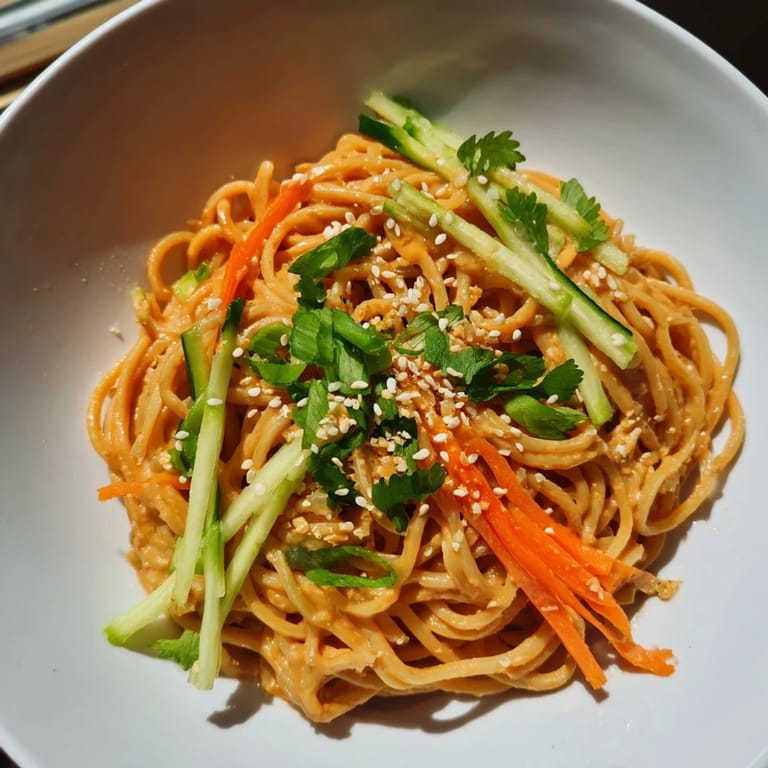
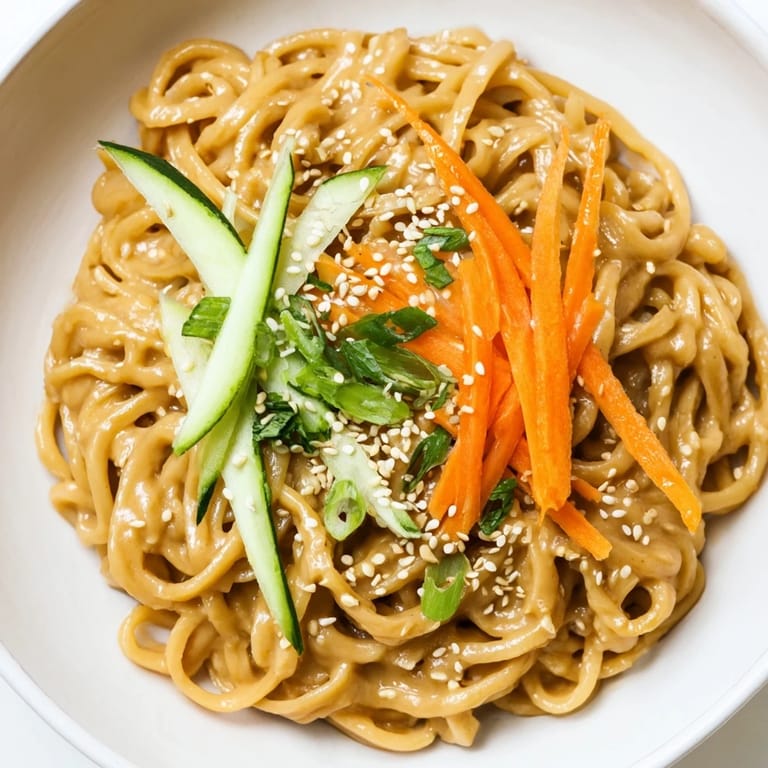
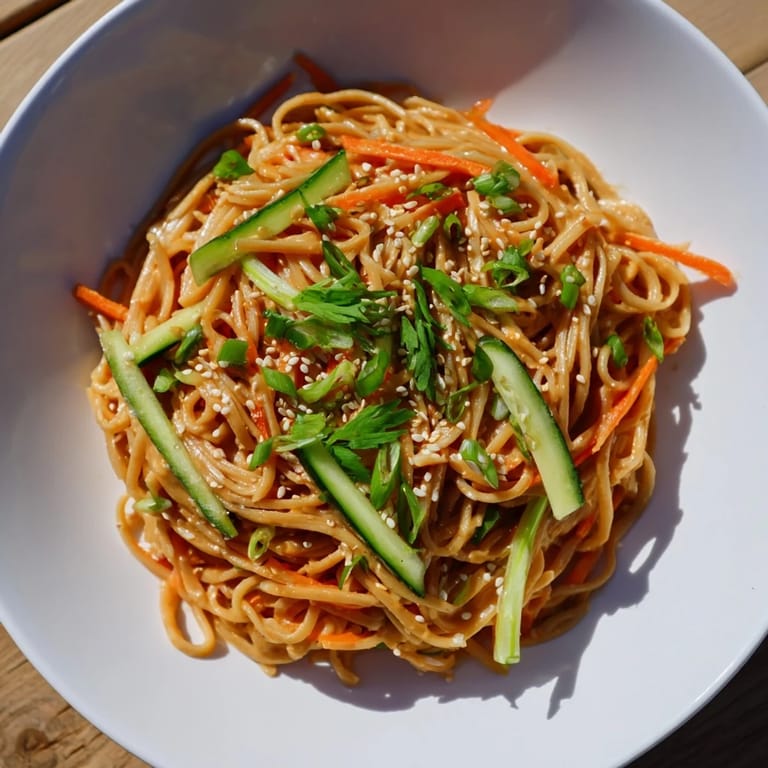
- Divide the noodles between serving bowls and arrange your julienned cucumber, carrots, and sliced spring onions on top, then scatter sesame seeds and cilantro over everything. Add peanuts if you're using them and set lime wedges on the side for squeezing.
- Chill or serve:
- If you have time, let everything chill for 10 to 15 minutes so the flavors get cozy with each other—but honestly, this is equally good served right away if you're hungry.
 Pin It
 The thing that really clicked for me was realizing this dish works just as well as a midnight snack straight from the fridge as it does served fresh—I've found myself standing over the sink eating cold sesame noodles at 11 PM more times than I'd like to admit. It's the kind of food that tastes like a hug and a high five at the same time.
The Magic of Sesame in Every Bite
What makes this sauce so impossibly silky is the combination of tahini and peanut butter working together—neither one alone would give you that same depth, but together they create something that coats your mouth in the best way. I spent a summer experimenting with different ratios before landing on this one, and I'm pretty sure it's the closest thing to perfection I've ever made in my kitchen.
Make-Ahead Magic and Storage
I've tested whether these noodles are better fresh or made the night before, and honestly, they're brilliant either way—but they do taste even better the next day once all the flavors have had time to mingle. The vegetables will soften slightly overnight, but the sauce only gets more delicious.
Customizing Your Bowl
The beauty of this recipe is that it's basically a canvas for whatever vegetables you have hanging around or whatever protein sounds good that day. I've added shredded rotisserie chicken, crispy tofu, cooked shrimp, and even sliced hard-boiled eggs, and every version tastes like a completely different meal.
- For a protein boost, top with shredded cooked chicken, crumbled tofu, or chilled shrimp.
- If you're gluten-free, swap in gluten-free noodles and tamari instead of soy sauce without changing anything else.
- Serve with ice-cold white wine or chilled green tea to keep the whole experience refreshing.
 Pin It
 These cold sesame noodles have become the thing I make when I want to feel like I've taken care of myself and everyone around me at the same time. There's something about twirling slippery noodles coated in sesame sauce that makes even the hottest day feel manageable.
Recipe FAQs
- → How do I prevent the noodles from sticking?
After cooking and rinsing the noodles under cold water, toss them with sesame oil to keep them separated and prevent sticking.
- → Can I adjust the sauce consistency?
Yes, gradually add cold water to the sauce while whisking until it reaches a smooth, pourable texture.
- → What vegetables complement this dish?
Julienned cucumber and carrots, thinly sliced spring onions, and fresh cilantro provide crispness and freshness.
- → Are there alternatives for peanut butter in the sauce?
Using additional tahini or Chinese sesame paste can replace peanut butter for those with allergies or dietary preferences.
- → How can I make this gluten-free?
Substitute wheat noodles with gluten-free noodles and use tamari instead of soy sauce to avoid gluten.
- → What proteins can be added to enrich this dish?
Shredded cooked chicken, tofu, or shrimp can be added to increase protein content and make the dish heartier.