 Pin It
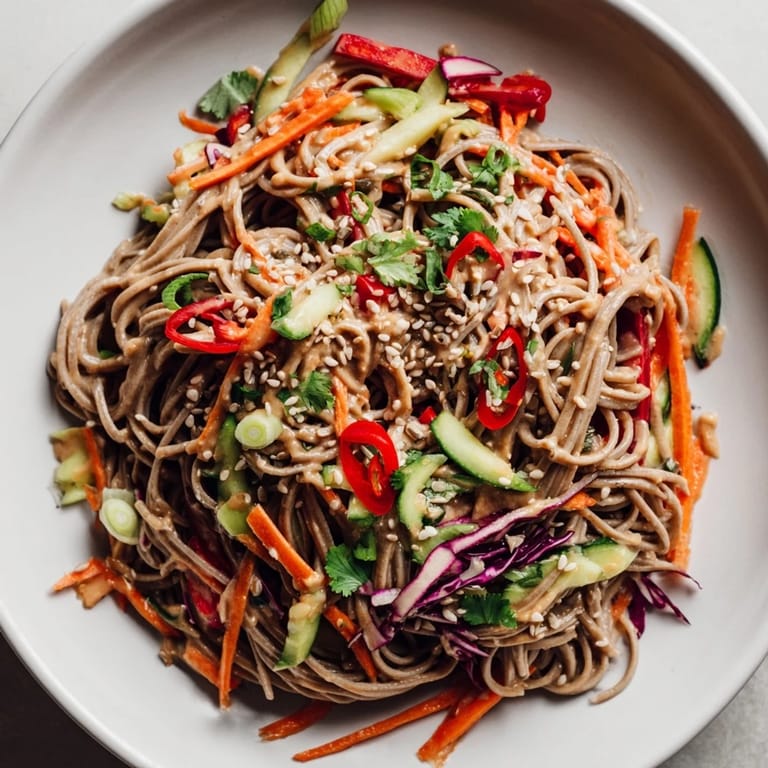
 Summer in my tiny apartment kitchen was always a bit chaotic until the day I discovered soba noodles at a local Asian market. The vendor mentioned them so casually—just buckwheat noodles, nothing fancy—but when I boiled them and the water turned slightly cloudy, I realized they were nothing like the pasta I'd grown up with. That first bowl, dressed simply with sesame oil and a handful of vegetables, tasted clean and alive in a way that made the heat outside feel less oppressive. I've been making variations ever since, and this one with the creamy peanut dressing has become my go-to when I need something that feels both nourishing and effortless.
I made this for a potluck where everyone brought something heavy and complicated, and someone actually asked for the recipe before they'd finished their bowl. The simplicity of it surprised them—they expected something more involved, but there's honesty in a salad that lets each ingredient shine without pretense. That moment stuck with me because it reminded me that the best dishes aren't always the ones that take hours.
Ingredients
- Soba noodles (250 g): These are buckwheat-based and cook in minutes, giving you a slightly nutty flavor and firm texture that holds up beautifully under dressing without getting mushy like regular pasta would.
- Carrot (1 medium, julienned): The natural sweetness balances the savory dressing, and julienning them thin lets them absorb flavor while staying crisp.
- Cucumber (1 small, thinly sliced): This keeps things fresh and cool; slice it as close to serving as possible so it doesn't weep into the bowl.
- Red bell pepper (1, thinly sliced): Choose one that's truly red if you can find it—the sweetness is noticeably deeper than the green ones.
- Spring onions (2, finely sliced): These are where the subtle sharpness lives; don't skip them even if you think they're optional.
- Red cabbage (1 cup shredded): It stays crunchy no matter how long the salad sits, and the color never fades, which matters more than you'd think for something you want to look appetizing.
- Peanut butter (3 tbsp): Use the smooth kind without added sugar if you can; it whisks into the dressing without graininess and the natural saltiness adds depth.
- Soy sauce (2 tbsp): This is the backbone of umami; don't dilute it with tamari unless you need to for gluten-free, as the flavor shifts noticeably.
- Rice vinegar (1 tbsp): The mild acidity brightens everything without overwhelming delicate vegetables the way stronger vinegars would.
- Toasted sesame oil (1 tbsp): Make sure it says toasted on the bottle; raw sesame oil tastes like something's missing and you'll keep adding more.
- Maple syrup or honey (1 tbsp): A tiny bit of sweetness rounds out the salty-savory-tangy triangle, but resist the urge to add more or it becomes dessert.
- Fresh ginger (1 tsp, grated): This is where the salad starts to taste alive; use a microplane and don't bother peeling it first.
- Garlic (1 small clove, minced): One clove is usually enough unless you're the type who loves garlic more than your friends do.
- Water (1–2 tbsp): You'll use this to loosen the dressing to the right consistency; some peanut butters need more than others depending on how thick they are.
- Toasted sesame seeds (2 tbsp): Toast them yourself in a dry pan if you have time; the difference between store-bought and fresh-toasted is the difference between good and memorable.
- Fresh cilantro (2 tbsp, chopped): If cilantro tastes like soap to you genetically, fresh mint works equally well and nobody will know you switched.
- Red chili (1 small, thinly sliced, optional): This is for heat and visual pop; use it if you want the salad to have an edge, skip it if your guests are spice-averse.
- Lime wedges (for serving): A squeeze at the end brightens everything and gives people the sense that they're finishing the dish themselves, which they appreciate.
Tired of Takeout? 🥡
Get 10 meals you can make faster than delivery arrives. Seriously.
One email. No spam. Unsubscribe anytime.
Instructions
- Boil the noodles until tender:
- Bring a large pot of salted water to a rolling boil and add the soba noodles, stirring so they don't clump together at the bottom. Follow the package timing (usually five to seven minutes) and taste one to make sure it's cooked through but still has a slight firmness to it. The moment they're done, drain them into a colander and rinse under cold running water, stirring gently with your fingers to wash away the starchy coating that makes them gluey.
- Make the dressing while noodles cool:
- In a large mixing bowl, add the peanut butter, soy sauce, rice vinegar, sesame oil, maple syrup, ginger, and minced garlic. Whisk it all together, and the mixture will look broken and separated at first, which is normal and fine. Add the water slowly, one tablespoon at a time, whisking between additions, until you have something that moves like thick cream and coats the back of a spoon.
- Combine everything gently:
- Once the noodles are completely cool (cold noodles won't wilt the vegetables and the dressing will taste bright instead of flat), add them to the bowl along with the carrot, cucumber, bell pepper, spring onions, and cabbage. Use two forks or salad servers to toss everything together, lifting from the bottom so the dressing coats every strand and vegetable without crushing anything. Taste and adjust: a pinch more soy sauce if it needs salt, a squeeze of lime if it needs brightness, a drizzle of sesame oil if it needs richness.
- Plate and garnish just before eating:
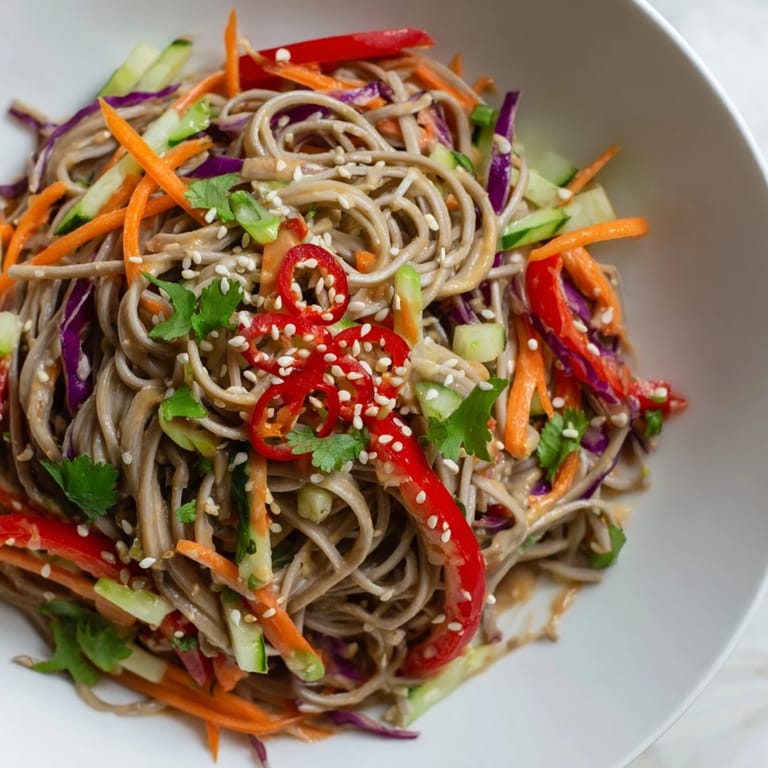
- Divide the salad among serving bowls and scatter the toasted sesame seeds, cilantro, and chili slices across the top. Serve with lime wedges on the side so people can adjust the tartness to their taste.
 Pin It
 I once brought this salad to a friend's house and she asked if I'd bought it from somewhere fancy, which felt like the highest compliment even though I'd made it in her kitchen while she poured wine. That's when I realized this dish has a kind of elegance that comes from simplicity, not from trying too hard.
How to Keep It Fresh
This salad was designed to sit in the fridge without falling apart, which is rare for vegetable salads and one of the reasons I make it constantly. The noodles absorb dressing slowly over time and the raw vegetables stay crisp because they're not drowning in liquid from day one. Just before you eat the leftovers, spritz everything with a little lime juice to wake up the flavors and maybe add a splash more sesame oil if it looks dry.
Variations Worth Trying
The beauty of this salad is that it's a framework, not a strict formula. I've added grilled tofu for protein, tossed in edamame because I had them in the freezer, and once threw in some shredded rotisserie chicken when I was trying to use up what was in the fridge. Each variation tasted distinct but equally balanced, which tells me the dressing is stable and forgiving enough to handle whatever you want to add without falling apart.
Nut-Free and Dietary Swaps
If peanuts are off-limits or you just want that deeper sesame flavor, tahini swaps in without changing anything else about the method or proportions, though you might need slightly more water to thin it out since tahini can be a bit thicker than peanut butter. For gluten-free, check the label on your soba noodles to make sure they're 100 percent buckwheat and swap regular soy sauce for tamari, which tastes nearly identical but without the wheat. Everything else in this salad is naturally vegan and dairy-free, so there's really no limitation stopping you from making it exactly as you want it.
- Tahini gives you earthiness if you want to lean into the sesame flavor more heavily.
- Tamari is a one-to-one swap for soy sauce and honestly tastes slightly better, so some people switch even when they don't have to.
- Grilled tofu cubes add protein and a slightly smoky note that complements the dressing beautifully.
 Pin It
 This salad tastes best served cold and eaten slowly, the kind of lunch that makes an ordinary day feel a little bit special. It's the dish I reach for when I want to feed people something they'll actually remember.
Recipe FAQs
- → How do I prevent soba noodles from sticking?
Rinse cooked soba noodles thoroughly under cold running water to remove excess starch, then drain well. Tossing them lightly with a bit of sesame oil can also help prevent sticking.
- → Can the peanut butter dressing be substituted?
Yes, tahini can replace peanut butter for a sesame-forward flavor, and it's also a good choice for nut-free versions.
- → What vegetables work best in this salad?
Crunchy, fresh vegetables like julienned carrots, cucumber strips, thinly sliced red bell pepper, spring onions, and shredded red cabbage add great texture and color.
- → Is this salad suitable for gluten-free diets?
Use 100% buckwheat soba noodles and tamari instead of soy sauce to make this dish gluten-free.
- → How should leftovers be stored?
Keep the salad refrigerated for up to 2 days. Refresh the flavors by adding a squeeze of lime before serving again.